Companion Plants
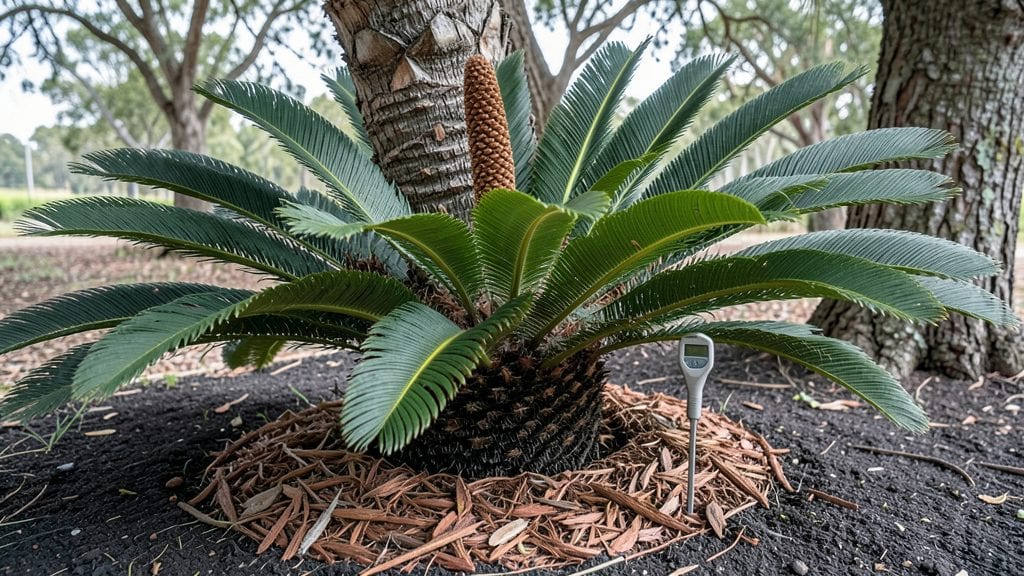
Naked seed plants, or gymnosperms, produce seeds without enclosing them in flowers or fruits, relying instead on cones or similar structures for reproduction. These ancient plants include conifers, cycads, and ginkgoes, thriving in diverse climates from forests to deserts.
Naked seed plants, or gymnosperms, are fascinating because they represent some of the oldest seed-producing plants on Earth. 🌲 Unlike flowering plants, they don't rely on bright, colorful blooms to attract pollinators—instead, they use wind to carry pollen between male and female cones.
This adaptation lets them thrive in harsh conditions, from the coldest boreal forests to arid deserts.
What makes them stand out is their resilience. Many gymnosperms, like pine trees, have deep root systems that stabilize soil and provide habitat for wildlife. Their cones serve as both protective seed pods and a key part of their reproductive strategy.
Whether you're designing a drought-resistant garden or studying plant evolution, these hardy plants offer unique advantages.
💡 In This Article
- How Gymnosperms Reproduce Without Flowers
- Top 5 Naked Seed Plants for Landscaping and Ecosystem Benefits
How gymnosperms reproduce without flowers
Gymnosperms have evolved a sophisticated wind-based reproductive system that eliminates the need for flowers. Instead of producing colorful blooms to attract pollinators, they develop specialized cones that house their reproductive organs. Male cones produce pollen grains containing sperm cells, while female cones develop ovules that will become seeds once fertilized.
This process relies entirely on wind currents to transport pollen, which is why gymnosperms often grow in dense stands or along wind corridors.
The pollen dispersal mechanism is remarkably efficient over long distances. A single pine tree can release millions of pollen grains, each measuring about 0.05-0.1 millimeters in diameter—small enough to stay airborne for hours.
When these grains land on female cones, they germinate and grow a pollen tube that travels through the cone's tissues to reach the ovule. This process can take several weeks to months, depending on species and environmental conditions.
The lack of animal pollinators means gymnosperms have adapted to produce vast quantities of pollen to ensure successful fertilization.
Female cones play a dual role in this system. Initially soft and green, they harden and turn woody as seeds mature, providing physical protection. Unlike angiosperms that develop fruits to encase seeds, gymnosperm seeds remain exposed on cone scales, earning them the "naked seed" classification.
This exposure allows seeds to disperse easily when cones open, often dropping seeds directly to the ground where they can germinate. The entire reproductive cycle—from pollen release to seed maturation—can span 1-3 years, depending on the species.
This wind-based strategy contrasts sharply with angiosperms, which rely on animal pollinators like bees or butterflies. While angiosperms invest energy in producing nectar and bright petals, gymnosperms allocate resources to cone development and pollen production.
The trade-off allows gymnosperms to thrive in environments where pollinators are scarce, such as high-altitude regions or open plains. Their reproductive success comes from volume rather than precision—producing massive quantities of pollen to compensate for the low success rate of individual grains finding female cones.
Consider the classic example of pine trees: male cones release clouds of pollen that can travel up to 100 miles under ideal wind conditions. Female cones, which may remain closed for years, only open when seeds are fully developed.
This delayed maturation strategy helps ensure seeds are released during optimal growing conditions. The result is a reproductive system perfectly adapted to environments where flowers would be impractical or ineffective.
The evolutionary advantage becomes clear when examining gymnosperm distribution. These plants dominate many of Earth's most extreme environments, from the Arctic tundra to deserts where water is scarce. Their ability to reproduce without relying on animal pollinators gives them a competitive edge in these challenging ecosystems. 🌬️