
Pruning
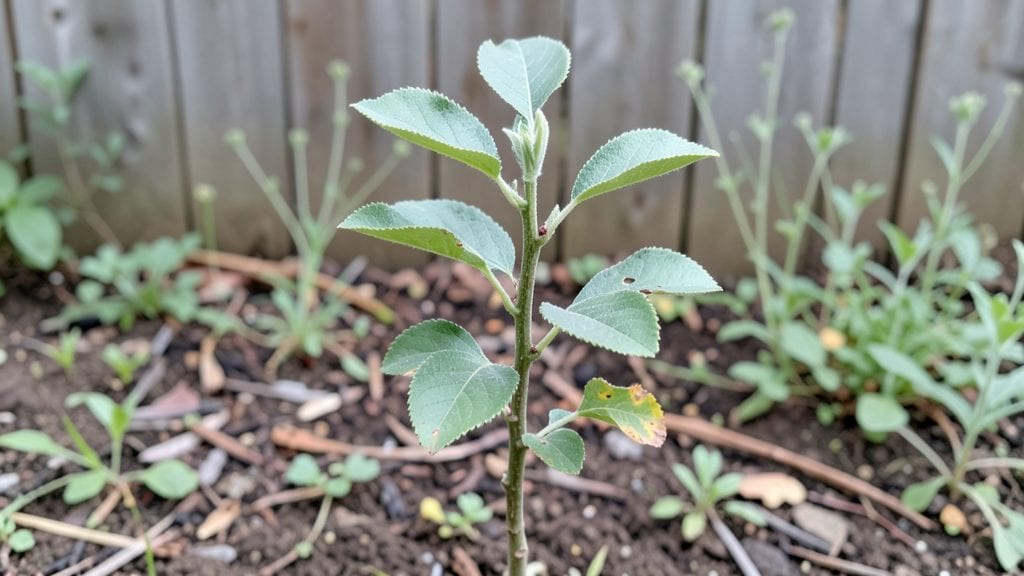
The identification of an apple tree seedling begins with its leaves—spot the signature sawtooth edges and soft, rounded tips that instantly distinguish it from crabapples or other young trees. 🌱 I’ve spent years watching seedlings grow, and those jagged leaf edges... are the first clue most people miss.
The bark is another dead giveaway: young apple tree trunks have smooth, silvery-gray skin that develops horizontal lenticels as they mature.
Crabapples often have smaller, more oval leaves with finer teeth, while true apple seedlings tend to grow faster and taller in their first year. I once mistook a crabapple for an apple tree until I noticed the crab’s tighter clusters of buds—apple buds are usually spaced farther apart.
Grab a magnifying glass if needed; the details matter when you’re choosing which seedlings to nurture.
Correct identification means the difference between a thriving orchard and wasted effort—poor pruning or grafting mistakes can set you back years. Use the free PlantNet app to snap photos for verification, or ask your local extension office for a second opinion.
Once you’ve confirmed it’s an apple, you’ll know exactly how to prune for strong structure and which varieties to graft onto it.
Even experienced gardeners get it wrong at first—don’t rush the process. Compare your seedling’s growth habits to mature apple trees in your area, and watch how it reacts to seasonal changes. A little patience now saves headaches later when you’re ready to harvest.
Root Causes of Misidentifying Seedlings
Accurately identifying an apple tree seedling can be tricky, especially when visual clues are subtle or misleading. The confusion often stems from a mix of natural biological factors, environmental influences, and human error.
Understanding these core causes helps gardeners and arborists spot seedlings correctly—and avoid costly mistakes. Here’s why misidentification happens, broken down by the most common culprits.
Not all apple tree seedlings are created equal. Even if they sprout from the same fruit, their traits can vary wildly due to genetic recombination.
When an apple seed germinates, it inherits a random mix of genes from both parents (the tree that bore the fruit and the pollen donor). This means:
- Leaf shape may differ significantly—some seedlings might have serrated edges like a Honeycrisp, while others resemble a Granny Smith’s smoother, rounded leaves.
- Growth habits can vary: one seedling might grow upright like a standard apple tree, while another could develop a sprawling, almost crabapple-like structure.
- Fruit potential is unpredictable. A seedling from a delicious Jonathan apple might produce tart, inedible fruit—or nothing at all.
💡 Pro Tip: If you’re hoping for a specific apple variety, grafting (not seedling growth) is your best bet. Seedlings are essentially genetic roulette!
Seedlings don’t grow in a lab—they’re shaped by their surroundings. Harsh or inconsistent conditions can alter their appearance, making identification harder. Key factors include:
| Factor | Effect on Seedling | Example |
|---|---|---|
| 🌞 Sunlight exposure | Too much sun can cause etiolation (stretched, weak stems) or leaf scorch, while shade may lead to smaller, darker leaves. | A seedling in full sun might look like a drought-stressed crabapple instead of a healthy apple tree. |
| 💧 Water availability | Overwatering can lead to yellowing leaves (chlorosis), while underwatering causes curled, brittle foliage. | A "drought-stressed" seedling might be mistaken for a different species entirely. |
| 🌡️ Temperature fluctuations | Cold snaps or heatwaves can stunt growth or trigger early dormancy, altering leaf size and bark texture. | A seedling that barely survived winter might look stunted and be misidentified as a young crabapple. |
🔥 Actionable Fix: Grow seedlings in controlled conditions (e.g., a nursery bed with consistent moisture and light) to reduce variability. If outdoors, choose a sheltered spot to minimize stress.
Apple tree seedlings aren’t the only young trees with similar features. Several plants can mimic apple seedlings, especially in early growth stages. The biggest impostors include:
- Crabapple trees (Malus spp.): Their leaves and bark resemble apple seedlings, but crabapples typically have smaller, thinner leaves and more numerous, clustered flowers in spring.
- Hawthorn (Crataegus spp.): These have lobed leaves (like some apple varieties) but often feature sharp thorns and white pomes (fruit) instead of apples.
- Mountain ash (Sorbus spp.): Their compound leaves can fool beginners, but mountain ash trees have feather-like leaflets and red berries, not apples.
- Pear or quince seedlings: These may have similar leaf shapes but usually grow more slowly and have distinct fruit (pears or quinces) once mature.
🎯 Key Clue: Check for bark texture (apple seedlings have smoother, grayish bark as they age) and leaf arrangement (apple leaves alternate along the stem, while hawthorn leaves may be more clustered).
Many people assume that if a seed came from an apple, the seedling must be an apple tree. But here’s the catch:
- Fruit presence ≠ variety identification. A seedling might not produce fruit for 5–10 years, leaving you guessing based on leaves and bark alone.
- Cultural assumptions play a role. If you planted a seed from a store-bought apple (like a Gala or Fuji), you might expect the seedling to match—but it won’t, because commercial apples are often hybrids or grafted trees, not true-to-type seeds.
- Selective observation. Gardeners may focus on one trait (e.g., leaf shape) and ignore others (e.g., bark, growth pattern), leading to errors.
✨ Expert Hack: Use a field guide or app (like iNaturalist or the USDA Plant Database) to cross-reference multiple traits. Never rely on a single characteristic!
By recognizing these root causes, you’ll be better equipped to spot the subtle differences between apple seedlings and their mimics. The key? Patience, attention to detail, and a little scientific curiosity!
Quick Fixes for Common Seedling Struggles
Identifying an apple tree seedling is just the first step—keeping it thriving requires action. Whether your young sapling is wilting, stunted, or struggling with pests, these practical, step-by-step solutions will help you diagnose and resolve issues fast.
Below, we’ve mapped common problems to easy fixes, plus prevention tips to avoid future headaches.
Cause: Overwatering, underwatering, or nutrient deficiency (often nitrogen or iron). How to Fix It:
- 💧 Check the soil moisture – Stick your finger 1–2 inches deep. If it’s soggy, reduce watering and improve drainage by adding compost or sand to heavy clay soil. If dry, water deeply once a week (adjust for climate).
- 🍃 Boost nutrients – Apply a balanced fertilizer (10-10-10) in early spring or a slow-release organic option like fish emulsion. For iron deficiency (yellowing between veins), use chelated iron or spray with a diluted solution of Epsom salt (1 tbsp per gallon of water).
- ☀️ Adjust sunlight exposure – If leaves scorch (brown edges), move the seedling to partial shade for a few weeks until it acclimates.
💡 Prevention Tip:
- Mulch around the base (2–3 inches of wood chips or straw) to retain moisture and regulate soil temperature.
- Water at the base, not overhead, to prevent fungal diseases like apple scab.
Cause: Sap-sucking insects (aphids), leaf-eating larvae (caterpillars), or wood-boring pests (borers) weaken seedlings. How to Fix It:
- 🔍 Inspect leaves and bark – Look for sticky residue (honeydew), chewed leaves, or tiny holes. Aphids cluster on new growth; borers create sawdust-like frass near the trunk.
- 🚿 Blast off pests – Spray seedlings with a strong stream of water to dislodge aphids. For caterpillars, handpick them or use neem oil spray (1 tsp neem oil + 1 tsp mild soap per quart of water).
- 🌿 Natural barriers – Wrap the trunk with aluminum foil or tree guard to deter borers. Apply diatomaceous earth (food-grade) around the base for crawling pests.
💡 Prevention Tip:
- Encourage beneficial insects like ladybugs and lacewings by planting dill, fennel, or marigolds nearby.
- Prune infected branches immediately and dispose of them in sealed bags (don’t compost!).
Cause: Poor soil quality, root damage, or transplant shock. How to Fix It:
- 🕳️ Check the roots – Gently loosen the top 2 inches of soil. If roots are circling, mushy, or sparse, trim any damaged roots with sterilized pruners and replant with fresh well-draining soil.
- 🌿 Fertilize strategically – Use a low-nitrogen, high-phosphorus fertilizer (e.g., 5-10-10) to encourage root development. Avoid high-nitrogen fertilizers, which promote leafy growth at the expense of roots.
- 🌳 Support young trees – If the trunk is weak, stake it temporarily (use soft ties, not wire) to prevent wind damage.
💡 Prevention Tip:
- Plant in early spring or fall when temperatures are mild, reducing transplant shock.
- Avoid compacting soil around the base—keep it loose for oxygen flow to roots.
Cause: Freeze-thaw cycles, harsh winds, or improper protection. How to Fix It:
- 🔥 Prune dead branches – Use clean, sharp pruners to remove any blackened or brittle limbs in late winter. Sterilize tools with rubbing alcohol to prevent disease spread.
- 🛡️ Protect the trunk – Wrap young trees with tree wrap or burlap to shield bark from sun scald (winter sun damage). Avoid plastic wrap, which can trap moisture.
- 🌿 Mulch heavily – Pile 4–6 inches of mulch around the base (but not touching the trunk) to insulate roots.
💡 Prevention Tip:
- Water before the first hard freeze to reduce drought stress.
- Choose cold-hardy varieties (e.g., ‘Liberty’ or ‘Enterprise’) if you live in a colder climate.
| Issue | Quick Fix | Prevention |
|---|---|---|
| Slow growth | Fertilize with phosphorus-rich soil | Test soil pH (ideal: 6.0–7.0) |
| Fungal spots | Remove infected leaves, spray copper fungicide | Improve air circulation, avoid overhead watering |
| Wilting | Deep watering + check for root rot | Use raised beds if drainage is poor |
| Pests return | Rotate natural sprays (neem, insecticidal soap) | Plant companion plants like garlic or thyme |
Final Pro Tip: 🌟 Label your seedlings with variety names and planting dates to track growth patterns and spot issues early. A little record-keeping saves time (and trees!) in the long run.
Frequently asked questions
How can I tell if my young tree is an apple seedling vs. a crabapple?
Look for larger, coarser teeth on apple leaves (like a serrated knife) compared to crabapples' finer, more delicate edges. Apple seedlings also grow faster in their first year and have smoother, grayish bark with horizontal lenticels. Check for spaced-apart buds—apple buds are usually farther apart than crabapple clusters.
What's the best way to verify my seedling's identity if I'm unsure?
Use a plant identification app like PlantNet or iNaturalist to upload photos of leaves, bark, and buds. For definitive answers, consult your local cooperative extension office—they often have experts who can confirm species. Bring samples of leaves and bark for comparison with known apple varieties.
Why do apple seedlings look so different from the fruit they came from?
Apple seeds inherit a random mix of genes from both parent trees (the tree that bore the fruit and the pollen donor), creating unpredictable traits. This means a seedling from a Honeycrisp might resemble a Granny Smith—or produce completely different fruit. For consistent varieties, grafting is far more reliable than growing from seed.
How long does it take for an apple seedling to show definitive characteristics?
Most distinguishing features (leaf shape, bark texture) appear within the first 2-3 years. However, fruit production (which confirms true apple identity) typically takes 5-10 years. During this time, focus on growth patterns and seasonal changes—apple seedlings often show faster vertical growth compared to lookalikes.
Can I trust online forums for identifying my apple seedling?
Forums can provide helpful insights, but they're no substitute for expert verification. Many common mistakes occur when people rely on photos alone without considering local climate variations or seedling age. Always cross-reference with multiple sources and consult regional experts familiar with your specific growing conditions.