Pruning
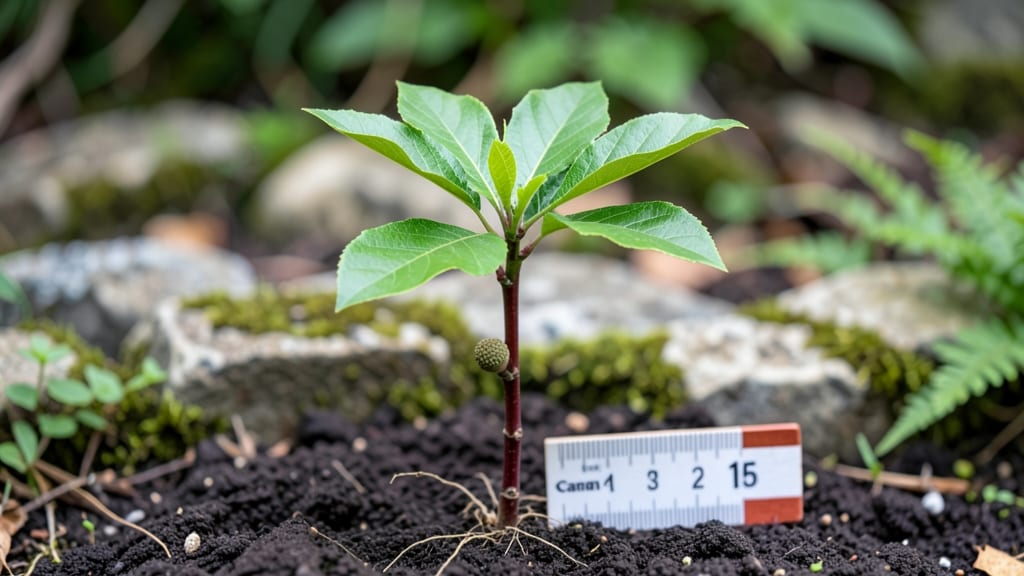
Mastering tree seedling identification by leaf shape and bark will spare you years of mystery—and a yard full of surprising oaks. I’ve spent too many spring mornings staring at tiny sprouts, wondering if they’d grow into the shade tree I wanted or something with roots deeper than my patience.
The good news? A few close-up observations can tell you everything you need to know before they outgrow your curiosity.
The key is paying attention to three details: leaf shape (needle-like, lobed, or smooth-edged?), bark texture (smooth, ridged, or fuzzy?), and growth pattern (single trunk or multiple stems?).
My first mistake was ignoring the bark—until I realized a seedling’s rough, peeling texture meant it was a future maple, not the smooth-barked birch I’d hoped for. Grab a magnifying glass and a notebook, and you’ll spot the differences in minutes.
Once you’ve got the ID down, early care becomes easier: watering deeply but not drowning the roots, pruning only to shape (not to "train" them), and transplanting at the right time.
A correctly identified seedling means you’ll know exactly how fast it grows, how much sun it craves, and whether it’ll steal your neighbor’s fence before you know it. Think of it as the first step toward a forest—or just a better backyard.
For the doubters, there are apps like LeafSnap and field guides that double-check your work. And if you’re still unsure? Plant it somewhere it won’t crowd your prized roses, and watch how it behaves over a season. Every seedling tells a story—you just have to learn its language first.
The Hidden Factors Behind Misidentification
Correctly identifying tree seedlings can feel like solving a puzzle—especially when visual clues seem misleading or inconsistent. The truth is, several scientific and environmental factors play a role in why seedlings might look different from their mature counterparts or even resemble other species.
Understanding these causes helps gardeners, foresters, and eco-enthusiasts avoid costly mistakes. Here’s why misidentification happens, broken down into key culprits:
One of the biggest red flags in seedling identification is the dramatic shift in leaf shape as a tree matures. Many species, like Quercus (oak) or Acer (maple), produce entirely different leaf structures in their seedling stage compared to adulthood. This phenomenon, called heterophylly, occurs due to:
- Hormonal shifts: Seedlings prioritize rapid growth and energy storage, leading to simpler, lobed, or serrated leaves. As the tree ages, hormones like auxin and cytokinin rebalance, triggering complex leaf development.
- Light competition: Young seedlings in shaded understories often develop broader, thinner leaves to maximize photosynthesis. Once they reach the canopy, leaves adapt to higher light exposure by becoming tougher and more efficient.
- Genetic programming: Some species are hardwired to mimic other plants during early stages to deter herbivores or improve dispersal. For example, a Fagus sylvatica (beech) seedling’s leaves might resemble those of a Carpinus (hornbeam) until it’s several years old.
Actionable tip: 🔍 Cross-reference with bark and bud scales. While leaves may deceive, bark texture (smooth vs. ridged) and terminal bud shapes often remain consistent from seedling to sapling stages.
Seedlings are highly adaptable—a survival trait that backfires during identification. Environmental stressors can warp their appearance, making them resemble unrelated species. Common triggers include:
| Stressor | Effect on Seedling | Example |
|---|---|---|
| Waterlogging | Leaves turn yellowish-green, stems elongate (etiolation), and roots may develop aerial "knees" (e.g., bald cypress seedlings). | A Pinus seedling in a swamp might look like a Taxodium. |
| Drought | Leaves curl, shrink, or develop thick cuticles; growth stunts. Needles on conifers may turn grayish. | A stressed Juniperus seedling could mimic Cupressus. |
| Soil nutrient deficiency | Chlorosis (yellowing), stunted growth, or abnormal leaf patterns (e.g., mottling). | Iron-deficient Fagus seedlings may resemble Betula (birch). |
| Herbivory or disease | Irregular leaf margins, holes, or discoloration that obscures true species traits. | Gypsy moth-damaged Quercus seedlings may be mistaken for Castanea. |
Pro tip: 🌡️ Observe growth patterns over time. Healthy seedlings of the same species in identical conditions should show consistent traits. If one looks "off," note whether it’s recovering or declining—this can hint at stress vs. misidentification.
Nature loves to mix things up, and tree seedlings are no exception. Hybridization occurs when two closely related species cross-pollinate, producing offspring with blended or unpredictable traits. This is especially common in:
- Wind-pollinated genera: Species like Populus (poplar) or Salix (willow) frequently hybridize, creating seedlings with leaf shapes that don’t match either parent. For example, a Populus deltoides × Populus nigra hybrid might have leaves resembling neither species.
- Invasive species crossbreeding: Non-native trees (e.g., Robinia pseudoacacia or Ailanthus altissima) often hybridize with natives, producing seedlings that confuse even experts.
- Polyploid hybrids: Some hybrids have extra sets of chromosomes, leading to giant, robust seedlings with oversized leaves (e.g., Crataegus hawthorns).
Key clue: ✨ Check for intermediate traits. If a seedling’s leaves have both lobed edges (like oak) and serrated margins (like hickory), hybridization is likely. Use a genetic test or consult a local arboretum for confirmation.
Even with the best tools, subjective biases and oversimplified guides can lead to misidentification. Common pitfalls include:
- Over-reliance on leaf shape alone: While leaf morphology is critical, ignoring arrangement (alternate vs. opposite), venation patterns, or stem hairiness narrows the field significantly.
- Seasonal confusion: Some species (e.g., Ginkgo biloba) have distinct spring vs. summer foliage. A seedling’s first leaves might not emerge until late spring, delaying identification.
- Cultural assumptions: Assuming a seedling is native because it’s in a "typical" habitat (e.g., a Paulownia tomentosa tree in a U.S. forest) ignores invasive species’ adaptability.
Quick fix: 🎯 Use a multi-step checklist. Start with broad categories (e.g., "needled" vs. "broadleaf"), then narrow down by:
- Leaf arrangement (whorled? alternate?).
- Bark texture (smooth? fissured?).
- Growth habit (erect? sprawling?).
- Seed or fruit remnants (if present).
By recognizing these underlying causes, you’ll sharpen your seedling ID skills—and avoid planting the wrong tree in your landscape! For further clarity, pair visual guides with regional field manuals or apps like iNaturalist to cross-verify findings.
Quick Fixes for Seedling ID Confusion
Struggling to tell your oak sapling from your maple? Don’t stress—these practical solutions will sharpen your eye and turn guesswork into confidence. Below, we break down common challenges with clear, step-by-step fixes and prevention tips to keep your identification skills sharp for years to come.
Cause: Many seedlings (e.g., ash vs. hickory, beech vs. birch) share vague similarities, especially in early spring or fall when foliage is sparse.
Fix:
- 🍃 Compare Leaf Arrangement
- Opposite leaves? Likely ash, maple, or dogwood.
- Alternate leaves? Could be oak, hickory, or birch.
- Pro Tip: 💡 Hold a ruler alongside the stem—opposite leaves will align perfectly at the node, while alternate leaves will stagger.
- 🌿 Examine Leaf Margins
- Lobed? Oak (but count the lobes—3–7 for red oak, rounded for white oak).
- Serrated (sharp teeth)? Birch or walnut.
- Smooth edges? Beech or sycamore.
- Pro Tip: 🌡️ Use a magnifying glass for subtle details like hairy undersides (common in willow or poplar seedlings).
- 📸 Snap a Photo & Compare Download the iNaturalist or LeafSnap app to cross-reference your findings with a database of 10,000+ species.
Prevention:
- 📅 Track seasonal changes: Take notes in spring (buds), summer (full leaves), and fall (color shifts). A single species can look completely different at each stage.
- **🌳 Study bark and leaves: Young bark is smooth (birch, beech), while older bark develops ridges (oak, hickory).
Cause: No foliage = no easy ID. This happens in winter, after storms, or if the seedling is diseased.
Fix:
- 🌲 Focus on Buds & Branches
- Branch arrangement:** Twigs that grow in pairs? Likely dogwood or buckeye.
- Pro Tip: ✨ Scratch-test: Some barks (like sycamore) have a unique texture—run your thumb along it. Sycamore feels almost velvety when young.
- Pinecones? Pine or spruce.
- Winged samaras? Maple.
- Acorns? Oak (but check cap shape—round for white oak, flat for red oak).
- Pro Tip: 🎯 Collect a few samples in a labeled jar for later comparison.
- Taproot? Likely oak or pine.
- Fibrous roots? Maple or birch.
- Warning: Only dig if necessary—young roots are fragile!
Prevention:
- 📅 Plant a "reference tree": If you’re unsure, grow a known species nearby (e.g., a labeled nursery tree) to compare side by side.
- 📸 Winter prep: Take photos of bark and bud patterns in fall to review later.
Cause: Your area might have 5+ similar-looking seedlings (e.g., Eastern U.S. has ash, hickory, walnut, and butternut confusion).
Fix:
- 🗺️ Narrow Down by Habitat
- Wet areas? Willow, alder, or silver maple.
- Dry, sunny spots? Pine, hawthorn, or juniper.
- Shady forests? Beech, hemlock, or sugar maple.
- 📊 Create a "Cheat Sheet" Make a table with your top 3 suspected species and compare:
| Feature | Species A | Species B | Species C |
|---|---|---|---|
| Leaf Shape | Lobed | Serrated | Smooth |
| Bark Texture | Ridged | Smooth | Scaly |
| Buds | Pointy | Round | Sticky |
- 👨🔬 Consult Local Experts
- Post photos on r/whatsthisplant (Reddit) or tag your local extension office on Facebook.
- Visit native plant nurseries—staff often know regional quirks.
Prevention:
- 🌍 Join a plant ID group: Facebook or Meetup groups often host "tree walks" where experts help ID seedlings in person.
- 📖 Read regional field guides: Skip generic books—opt for titles like "Trees of the Eastern U.S." or "Pacific Northwest Trees."
Cause: Fungal spots, insect holes, or animal gnawing can distort normal features, making ID harder.
Fix:
- 🦟 Rule Out Pests First
- Chew marks? Deer, rabbits, or squirrels.
- Holes? Beetle larvae (common in ash or willow).
- Black spots? Fungal infection (e.g., anthracnose on maple).
- 🌿 Focus on Healthy Parts
- Even if most leaves are damaged, one undamaged leaf can give clues.
- Check new growth—it’s often less affected by old damage.
- 💡 When in Doubt, Wait
- Many seedlings recover in spring. If possible, mark the spot (with a flag or photo) and revisit in 3–6 months.
Prevention:
- 🛡️ Protect young seedlings: Use tree guards to deter animals and fungicide spray (like neem oil) if fungal issues are common in your area.
- 🌱 Plant resistant species: If pests are a recurring problem, opt for disease-resistant varieties (e.g., disease-resistant elms).
Final Reminder: ⏳ Practice makes perfect. The more seedlings you observe, the easier patterns will become. Start with 5 common species in your area, master their traits, then expand!
Frequently asked questions about tree seedling identification
What are the most reliable features to identify a tree seedling?
Focus on three key traits: leaf shape (needle-like, lobed, or smooth-edged), bark texture (smooth, ridged, or peeling), and growth pattern (single trunk or multiple stems). For example, smooth bark with opposite leaves likely means maple, while rough bark with lobed leaves suggests oak. Always cross-check with bud shapes and branch arrangements for accuracy.
Can I use my smartphone to identify tree seedlings?
Apps like LeafSnap or iNaturalist use image recognition to match seedlings against their databases. Just snap clear photos of leaves, bark, and buds—avoid shadows—and the app will suggest possible species. For best results, include a reference object (like a coin) to show scale.
Why do some seedlings look different from mature trees?
Seedlings often have simpler leaves or smoother bark than adults due to hormonal shifts and environmental adaptations. For instance, oak seedlings may have fewer lobes than mature trees, and pine bark starts smooth before developing ridges. Observe growth over time—many traits stabilize as the tree matures.
How do I handle hybrid seedlings that don’t match any known species?
Hybrids are common in wind-pollinated trees like willows or poplars. Look for intermediate traits (e.g., leaves with both lobed and serrated edges) and consult a local arboretum or genetic testing service. If unsure, plant the seedling in a temporary spot and monitor its development—hybrids often reveal their parentage over time.
What’s the best time of year to identify tree seedlings?
Spring and early summer are ideal when leaves are fully developed but before pests or diseases distort features. Avoid winter (no leaves) and late fall (leaf drop). If you must identify in winter, focus on bud shapes and bark texture. Always revisit seedlings in multiple seasons to confirm your ID.