Flowers
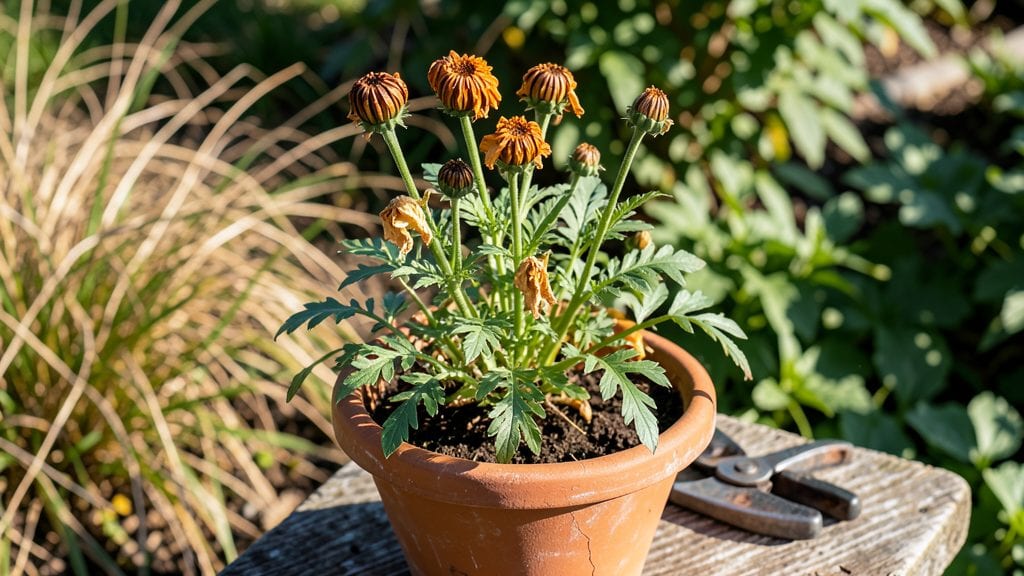
Harvesting calendula seed heads at the right time ensures vibrant, potent dried flowers. Look for brown, papery centers—usually 60-90 days after planting—and snip stems cleanly. Hang them upside down in bundles to dry for 2-3 weeks in a dark, well-ventilated space.
Timing matters because calendula seed heads lose potency if harvested too early or too late. 🌿 The brown, papery centers signal full maturity, making them ideal for drying while retaining their medicinal properties. I always check for a slight crispness to the petals—this indicates they're ready for preservation.
Proper drying prevents mold and preserves the bright orange hues that make calendula so popular in herbal remedies and crafts.
Once dried, store the seed heads in airtight containers away from direct sunlight to maintain their therapeutic benefits. Many gardeners also save the seeds for next year's planting, as calendula is an annual that self-seeds easily.
The key is patience—rushing the drying process can ruin both the appearance and effectiveness of your harvest.
💡 In This Article
- Identifying Mature Calendula Seed Heads for Harvesting
- Preserving Calendula Seed Heads for Long-Term Use
Identifying mature calendula seed heads for harvesting
The key to harvesting calendula seed heads lies in observing their botanical transformation from vibrant blooms to mature seed pods. Here's what's actually happening: the flower's reproductive cycle begins when the petals fade from bright orange to a dull yellow, signaling the start of seed development.
The center then hardens into a papery, brown disc—this is your cue that the seeds inside are fully mature and ready for harvest.
The texture shifts from soft and fleshy to dry and brittle, almost like crumpled parchment. 🌼 This transformation typically occurs 60-90 days after planting, though varieties like 'Bonanza Orange' may mature slightly faster than heirloom types.
Weather plays a crucial role in timing. Harvest on a dry, sunny morning when humidity is low—this prevents moisture from accelerating mold growth during drying. In cooler climates (USDA Zones 3-6), seed heads often mature 2-3 weeks later than in warm zones (7-10) due to slower photosynthesis.
The ideal temperature range for harvest is 60-75°F, as extreme heat can cause premature drying while cool, damp conditions promote fungal growth. Always check for slight crispness in the petals—this indicates the plant has redirected its energy from blooming to seed production, a clear sign of readiness.
Distinguishing viable seed heads from spent blooms requires close inspection.
Look for these three key indicators:
- The center must be uniformly brown and dry—any green remnants mean the seeds aren't fully developed.
- The petals should be mostly fallen or wilting, though some varieties like 'Pacifica' retain color longer.
- Gently squeeze the seed head—if seeds rattle inside, they're ready. 🌱 What most people don't realize is that harvesting too early reduces seed viability by up to 40%**, while waiting too long causes the seed pods to shatter and scatter seeds prematurely.
Climate variations create distinct harvesting windows. In arid regions, calendula often matures 10-14 days faster due to intense sunlight accelerating photosynthesis. Conversely, in humid coastal areas, fungal pressure may delay maturity by 2 weeks or more.
The 'Touch of Class' variety, for instance, typically flowers 45 days after planting but takes 15-18 days longer to reach seed maturity than standard types. This is why gardeners in Florida might harvest in late September while those in Maine wait until early October.
Here's a practical tip: harvest seed heads in the late afternoon when temperatures drop slightly. This gives the cut stems time to "seal" overnight, preventing excessive moisture loss during the critical first 24 hours of drying.
I've found that using clean, sharp scissors and cutting stems at a 45-degree angle just above a leaf node maximizes water uptake and minimizes stem rot during the drying process. The angle increases surface area for water evaporation while the leaf node provides structural support to the seed head.
One common mistake is harvesting based solely on flower color. While faded petals are a good indicator, the true maturity sign is the seed pod's internal structure. Cut open a test seed head—if the seeds inside are dark brown and plump, you're ready.
If they're still green or shriveled, wait another 5-7 days.
This internal check is especially important for medicinal varieties, where seed potency directly correlates with maturity. 💡 Pro tip: Save a few seed heads to test—this ensures you're harvesting at peak viability while giving you a backup if weather disrupts your drying schedule.