Vegetables
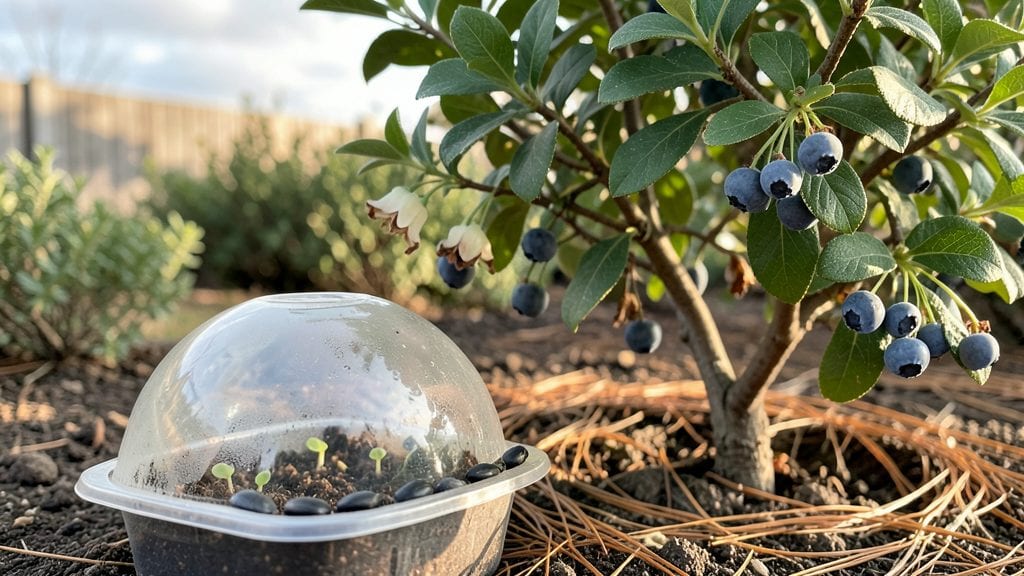
The tiny blueberry seeds inside are perfectly edible and harmless, though their minuscule size makes them easy to overlook. Their flavor packs a concentrated punch—bitter and tangy with a crunchy, almost nutty bite that stands out against the berry’s sweetness.
Those little specks aren’t just safe—they’re packed with subtle botanical surprises. 💫 The seeds (called achenes) develop from the flower’s ovary and serve as nature’s way to disperse the plant, which explains why they’re harder than the juicy flesh.
While they contain trace fiber and antioxidants, their real appeal lies in that unexpected crunch and earthy undertone that foodies often seek in foraging. Store-bought berries tend to have fewer viable seeds, but homegrown ones can yield surprisingly high germination rates if you’re into seed-saving projects.
Fun fact: the bitterness in these seeds mirrors what happens when blueberries overripen—their sugars convert to acids, creating that same sharp contrast. That’s why some chefs intentionally leave seeds in jams or sauces for texture and depth, though most people simply swallow them without a second thought.
💡 In This Article
- Why Blueberry Seeds Feel Harsh and Their Nutritional Role
- Harvesting Blueberries for Seed Saving and Gardening
Why blueberry seeds feel harsh and their nutritional role
Blueberry seeds—technically called achenes—are nature's hardy survival packages. Each seed is encased in a sclerified (hardened) outer layer that protects the embryo during dispersal, which is why they feel so firm against your tongue.
This structural toughness evolved to withstand digestive systems of animals that eat the fruit, ensuring seeds pass through intact to germinate elsewhere.
The contrast between the soft, sweet berry flesh and these tiny, crunchy seeds creates a sensory surprise that many describe as almost nutty or earthy—like biting into a tiny acorn.
The bitterness comes from concentrated phenolic compounds and tannins, which are also present in the fruit but at much lower levels. These compounds serve as natural preservatives, preventing spoilage and deterring pests from eating the seeds before they can germinate.
For comparison, a single blueberry contains about 10-15 achenes, each measuring just 1-2 millimeters in length—so small that most people swallow them whole without noticing. Unlike larger seeds (like apricot pits), blueberry achenes don’t contain significant amounts of cyanide or other toxins, making them completely safe to consume.
Nutritionally, these tiny seeds pack a modest punch. Each 100 grams of blueberries contains roughly 2.4 grams of fiber, with a portion coming from the achenes' cell walls. They also contribute trace amounts of antioxidants like anthocyanins, though the concentrations are dwarfed by those in the fruit's flesh.
The real value lies in their texture: that slight crunch adds dimension to dishes, much like how poppy seeds or sesame seeds elevate baked goods. Some foragers even collect and dry blueberry seeds for use in homemade granola or trail mixes, where their unique bite stands out.
Here's what makes them different from larger fruit seeds: apricot pits, for example, contain amygdalin, a compound that converts to cyanide when crushed—a serious health risk. Blueberry achenes lack this compound entirely, making them one of the safest edible seeds in nature.
Their small size also means they don’t pose a choking hazard, unlike larger seeds or pits. 💫 The evolutionary trade-off is clear: blueberries prioritize seed dispersal over defense mechanisms like toxins, relying instead on sheer numbers and hardiness to ensure survival.
For those curious about culinary uses, chefs sometimes leave seeds intact in blueberry jams or sauces to add subtle texture, though they’re rarely the focus. The seeds' bitterness actually enhances the fruit's natural sweetness, creating a balanced flavor profile similar to how black pepper seeds elevate dishes.
In traditional medicine, blueberry seeds have been used in small amounts for their mild astringent properties, though modern science hasn’t validated these claims beyond their basic nutritional content.
The next time you bite into a blueberry, take a moment to notice those tiny specks—they’re a testament to nature’s efficiency. Their harsh texture and concentrated flavor are deliberate adaptations, not flaws.
And while they won’t replace a full serving of fiber or antioxidants, they’re a fun reminder that even the smallest parts of our food have stories to tell. 🌟