
Pests and Diseases
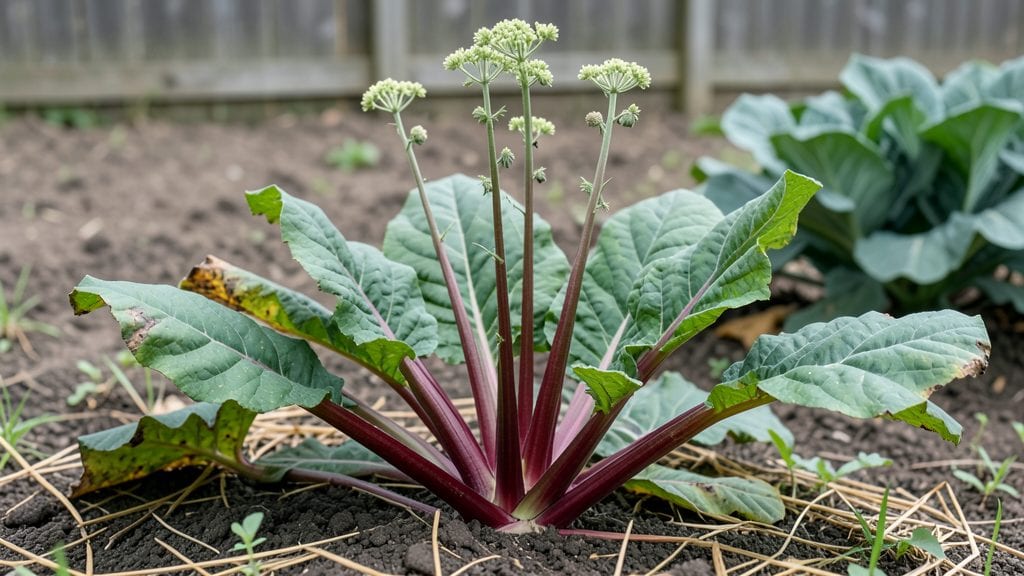
When rhubarb goes to seed, your harvest is about to take a nosedive—unless you know how to stop it. 🌱 I’ve seen gardeners lose entire plants to bolting, but the right adjustments can keep your stalks thick and productive for years.
The problem starts when rhubarb senses stress from heat, age, or poor conditions, and suddenly, those prized stalks turn woody and flower.
Here’s the thing—rhubarb bolts because it thinks it’s time to reproduce, not produce. Too much sun in summer, old crowns, or inconsistent watering all trigger the shift.
But with the right variety (like ‘Victoria’ or ‘Valentine’), cooler planting spots, and regular harvests, you can delay bolting for 5-7 years—that’s decades of harvests right there.
Once you spot the flower stalk, act fast: cut it off at the base and focus on harvesting more stalks. Keep soil moist but not soggy, mulch to regulate temperature, and avoid letting the crown dry out.
Your rhubarb will reward you with tender, vibrant stalks for months longer than the neighbors’ plants.
Even if bolting happens, don’t toss the plant—just adjust next year’s care. The key is consistency: shade in peak summer, steady water, and regular harvests. Your rhubarb will stay productive, and you’ll enjoy those tart stalks long after others give up.
The Hidden Triggers Behind Rhubarb Bolting
When your rhubarb plants suddenly send up tall, flower-stalked stems instead of lush, edible stalks, it’s a sign of bolting—a natural but frustrating process. While some gardeners assume it’s just "time," several key factors actually push rhubarb into seed production mode.
Understanding these triggers is the first step to keeping your plants focused on growth (and your kitchen focused on harvesting).
Rhubarb plants are perennial powerhouses, but like all living things, they eventually shift priorities. After 3–5 years of vigorous growth, older plants may start directing energy toward reproduction rather than leaf and stalk production. This is especially true if:
- Crowns become congested: A crowded root system (from years of regrowth or poor division) competes for resources, signaling the plant to "reproduce and move on." Solution: Divide mature clumps every 3–4 years to rejuvenate growth.
- Stalks thin out: Smaller, weaker stalks in spring are a red flag. The plant may be senescing (aging) and prioritizing seed production over food storage.
- Flower stalks appear in early spring: If you spot them before harvest season, the plant has already decided to bolt—often due to hormonal shifts triggered by age.
💡 Pro Tip: If your rhubarb is over 5 years old, consider replacing it with a younger, more productive plant. For established crowns, removing flower stalks early can delay bolting for another season.
Rhubarb is hardy, but extreme or erratic weather can throw its internal clock off balance. Bolting often spikes when plants experience:
| Trigger | Why It Causes Bolting | How to Mitigate |
|---|---|---|
| Cold snaps followed by warm spells | Rhubarb perceives winter’s end and ramps up flowering hormones (florigen) prematurely. A sudden 10°F+ temperature swing in early spring can accelerate this. | Use row covers or mulch heavily to moderate soil temps. Avoid disturbing plants during unpredictable weather. |
| Drought or waterlogging | Stress from too little or too much water disrupts the plant’s energy balance. Under stress, rhubarb may bolt as a survival tactic to reproduce quickly. | Keep soil consistently moist (1–2 inches deep) but well-drained. Drip irrigation is ideal. |
| Long daylight hours (early spring) | Rhubarb is a short-day plant, meaning it bolts when daylight exceeds 12–14 hours. If winter is mild and days lengthen too soon, it triggers premature flowering. | Shade cloth (30–50%) can delay bolting by 1–2 weeks in very early spring. |
Rhubarb is heavy-feeder, and when its nutritional needs aren’t met, it may bolt as a last-resort reproductive strategy. Key deficiencies include:
- Low phosphorus (P): Critical for root and stalk development. A deficiency forces the plant to redirect energy to seed production. Test for: Dark green leaves with purple stems.
- Excess nitrogen (N): While nitrogen fuels leafy growth, too much can lead to luxuriant foliage but weak stalks, signaling the plant to bolt. Sign: All-leaf, no edible stalks.
- Compacted or depleted soil: Over time, soil loses organic matter, reducing nutrient availability. Rhubarb in poor soil may bolt to spread seeds before dying.
🌡️ Actionable Fix:
- Test soil pH (ideal: 6.0–6.8) and amend with compost or well-rotted manure.
- Apply a balanced fertilizer (10-10-10) in early spring, avoiding high-N formulas.
- Top-dress with bone meal (3-4-0) for phosphorus to support stalk growth.
Rhubarb has a delicate crown—its underground "heart"—that’s easily disrupted. Any trauma can trigger bolting as the plant’s survival response:
- Root or crown injury: Digging too close to the base, cutting stalks below the crown, or even walking on the bed can damage roots, prompting flowering.
- Transplant shock: Moving mature rhubarb (even if done correctly) stresses the plant. It may bolt the first year as a way to "recover."
- Over-harvesting: Taking more than 1/3 of the stalks in a season depletes the plant’s energy reserves, forcing it into reproductive mode.
✨ Prevention Tip: Always harvest stalks 2–3 inches above the crown and avoid disturbing the soil around the base. If transplanting, do so in early spring and keep the root ball intact.
Fixing and Preventing Rhubarb Bolting
Now that you understand why rhubarb bolts, let’s tackle the solutions—practical, step-by-step fixes to save your crop and keep your plants productive for years. Below, we’ve mapped common causes to actionable fixes, plus prevention tips to avoid future headaches.
If your rhubarb is older than 5–6 years, it’s likely prioritizing reproduction over leafy stalks. Fix it fast with these steps:
- 🔪 Prune Aggressively
- Cut back all stalks to the ground in early spring (before new growth starts).
- Remove any flower stalks immediately—they siphon energy from your harvest.
- Pro tip: 💡 Use clean, sharp shears to avoid spreading disease.
- 🌱 Divide and Renew
- Dig up the entire plant and split the crown into smaller sections (each with 1–2 buds).
- Replant the strongest divisions in fresh soil with compost.
- Why it works: Younger plants (under 3 years old) bolt less and produce more stalks.
- 🌡️ Adjust Planting Depth
- Bury the crown 2–3 inches deeper than before. This encourages root growth over flowering.
If your rhubarb bolts in late winter or early spring, heat stress (or hormonal shifts) is likely the culprit. Cool it down and reset growth:
- 🌿 Provide Shade Cloth
- Install 30–50% shade cloth over plants in late winter if temperatures rise above 60°F (15°C).
- Remove it once nights cool again (typically after the last frost).
- 💦 Increase Watering
- Water deeply 2–3 times per week during heatwaves to reduce stress.
- Pro tip: 🎯 Use drip irrigation to keep roots consistently moist.
- 🍃 Delay Harvesting
- Avoid picking stalks until after the last frost. Early harvests can signal the plant to bolt faster.
Rhubarb needs rich, slightly acidic soil (pH 6.0–6.8) to thrive. If it’s malnourished, it’ll bolt prematurely.
- 🔄 Test and Amend Soil - Conduct a soil test (available at garden centers).
If pH is off, add: - Lime (to raise pH) or sulfur (to lower pH). - Compost or well-rotted manure for organic matter. - Fix: 💡 Work in 2–3 inches of compost annually in early spring.
- 🌿 Fertilize Correctly
- Use a balanced fertilizer (10-10-10) in early spring, then switch to a low-nitrogen, high-phosphorus (5-10-10) in summer to encourage root and stalk growth.
- Avoid: High-nitrogen fertilizers in late summer—they can trigger bolting.
- 🚫 Avoid Over-Fertilizing
- Too much nitrogen = lush leaves but weak stalks. Stick to moderate feeding.
If aphids, crown rot, or other pests weaken your rhubarb, it’ll bolt as a survival tactic.
- 🐜 Treat Pests Immediately
- Aphids: Spray with soapy water (1 tsp mild soap per quart of water) or introduce ladybugs.
- Crown rot: Remove infected plants and sterilize tools with rubbing alcohol. Replace soil in the bed.
- 🌧️ Improve Drainage
- Rhubarb hates soggy roots. Amend soil with perlite or sand if drainage is poor.
- Prevent: 🌡️ Plant in raised beds if your area has heavy clay soil.
- 🌱 Rotate Plantings
- Don’t replant rhubarb in the same spot for at least 3–4 years to prevent disease buildup.
Once you’ve fixed the issue, lock in long-term success with these habits:
- 📅 Plant at the Right Time: Start rhubarb in early spring (not fall) to avoid winter stress.
- 🌡️ Choose the Right Variety: Cold-hardy types like ‘Victoria’ or ‘Strawberry’ bolt less in warm climates.
- 🍃 Mulch Heavily: Use straw or wood chips (3–4 inches) to regulate soil temperature and retain moisture.
- 🚫 Stop Harvesting in Year 1: Let young plants establish roots before picking stalks.
- ⏰ Harvest Strategically: Pick stalks only in the first 2 years of growth to delay bolting.
For a side-by-side reference, here’s how to diagnose and act:
| Cause | Signs | Solution | Prevention |
|---|---|---|---|
| Over-maturity | Tall flower stalks, fewer leaves | Prune + divide crown | Replace every 5–6 years |
| Heat stress | Early bolting (Feb–March) | Shade cloth + deep watering | Delay harvesting until frost passes |
| Poor soil/nutrients | Weak stalks, yellowing leaves | Soil test + compost + balanced fertilizer | Annual soil amendments |
| Pest/disease damage | Wilting, holes, moldy crown | Treat pests + improve drainage | Crop rotation + sterile tools |
Final Thought: Bolting rhubarb isn’t a death sentence—it’s a call to action. With these fixes, you’ll revive your plants, extend harvests, and enjoy plump stalks for years. 🚜🌿 Now grab your gloves and get growing!
Frequently asked questions about rhubarb bolting
Why does my rhubarb suddenly send up flower stalks instead of edible stalks?
Rhubarb bolts when it senses stress or age-related signals to reproduce. Common triggers include heat stress, over-maturity (5+ years old), or nutrient deficiencies. Even mild winter followed by warm spells can accelerate flowering hormones. The plant prioritizes seed production over leafy growth when conditions aren't ideal.
Can I still harvest rhubarb if it starts bolting?
Yes, but act quickly! Remove any flower stalks immediately—they drain energy from your harvest. Focus on harvesting outer stalks first (leave inner ones to feed the plant). For established plants, you can still get 2-3 more harvests before bolting fully takes over. Just avoid picking in the first year after transplanting or dividing.
How can I tell if my rhubarb is too old to save?
Watch for these signs: thin, weak stalks, crowded crowns, or flower stalks appearing before spring harvest. If your plant is over 6 years old and showing these traits, it's time to divide or replace it. Younger plants (3-4 years) bolt less and produce more consistently.
Will cutting back bolted rhubarb help next year?
Cut back all stalks to the ground in early spring before new growth starts. This resets the plant's energy focus. Combine this with dividing congested crowns and adding compost to refresh the soil. With proper care, you can often get 2-3 more productive years from an established plant.
Are there rhubarb varieties that bolt less frequently?
Yes! Cold-hardy varieties like 'Victoria' and 'Strawberry' are more resistant to early bolting. For warm climates, try 'Valentine' or 'Champagne'—these varieties handle heat better. When selecting new plants, choose younger crowns (1-2 years old) for maximum harvest potential.