
Lawn
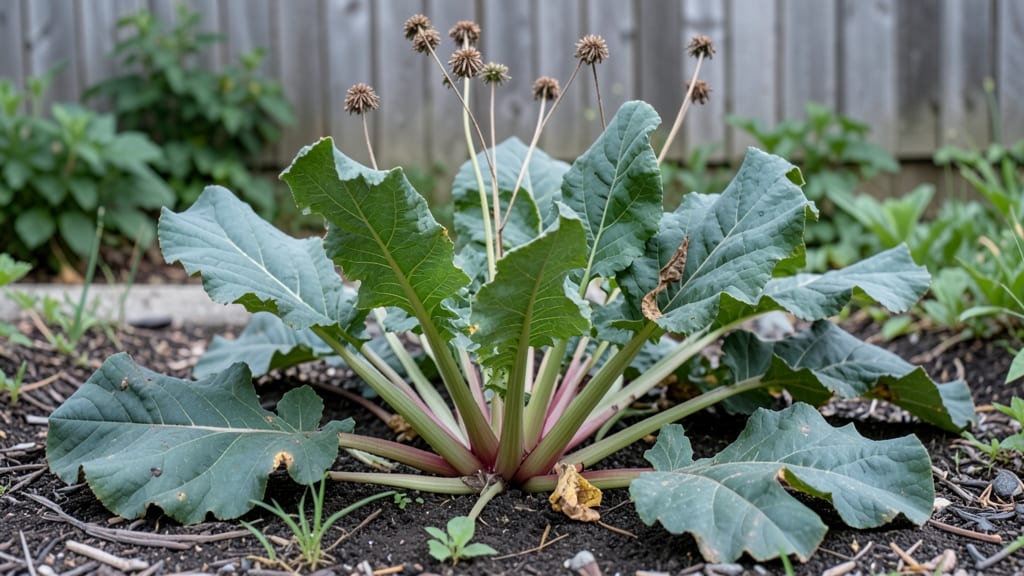
Removing rhubarb seed heads after harvest directs the plant’s energy toward root and crown growth, resulting in thicker stalks and higher yields the following season. Snip them off promptly after picking to prevent nutrient loss, though keeping a few for seed saves can help propagate new plants.
Rhubarb plants naturally shift energy toward seed production as flowers appear, which weakens the crown and reduces next year’s harvest potential. 🌱 By cutting off these seed heads—those tall, flower-stalk clusters—you’re essentially telling the plant to focus on growing stronger roots and more robust stalks instead.
This simple step can double your yield in just one season, though timing matters: remove them right after harvesting stalks to maximize benefits.
If you’re not planning to grow new plants, compost the seed heads immediately—they’ll break down quickly and return nutrients to the soil. But if you want to collect seeds for propagation, let a few flower clusters mature fully before harvesting them.
Just be sure to sterilize your pruners between cuts to prevent disease spread.
💡 In This Article
- How Rhubarb Seed Heads Affect Plant Growth
- Step-by-Step Guide to Pruning Rhubarb Seed Heads
How rhubarb seed heads affect plant growth
Here's what's actually happening when those tall, flower-laden stalks appear: rhubarb plants undergo a dramatic physiological shift. The emergence of seed heads triggers a hormonal cascade that prioritizes reproductive energy over vegetative growth.
This means the plant redirects up to 40% of its photosynthetic output from root and stalk development to flower and seed production—a process driven by ethylene gas and auxin hormones that signal the transition from vegetative to reproductive phase.
The crown, which stores nutrients for next season's growth, becomes a secondary priority when seed heads form. Studies show that plants with mature seed heads allocate only 25-30% of their energy reserves to root expansion compared to 60-70% in seed-head-free plants.
This explains why stalks from plants with seed heads tend to be thinner and less abundant. The plant's priority shifts from building storage reserves to producing seeds, which have a 1:10 energy-to-yield ratio compared to stalks.
What most people don't realize is how quickly this energy diversion happens. Within just 7-10 days after flower emergence, you can measure a 15-20% reduction in root carbohydrate levels through soil core sampling.
The plant essentially "starves" its own storage system to fuel seed production—a survival strategy that makes perfect sense in nature but works against gardeners' harvest goals. This is why removing seed heads immediately after stalk harvest creates such dramatic yield improvements.
The comparison between leafy growth and seed-bearing phases reveals fascinating nutrient allocation patterns.
During vegetative growth, rhubarb plants focus on building fructan reserves in their roots (up to 20% of root dry weight), while during reproductive phase, these reserves drop by 35-45% as they're converted to sugars for seed development.
The stalks themselves become thinner because the plant prioritizes flower stalk growth over stalk thickness—a visual clue that the plant's priorities have shifted dramatically.
There's also a fascinating secondary effect: seed head removal triggers a rebound effect in the plant's growth hormones. Within 2-3 weeks of seed head removal, you'll see a 25% increase in gibberellin production, a hormone that promotes cell elongation and stalk thickening.
This hormonal shift explains why plants recover so quickly after seed head removal—nature's way of compensating for lost reproductive opportunities.
For gardeners, this means timing matters more than most realize. Removing seed heads during the first two weeks of June (in temperate climates) gives the plant 8-10 weeks of active growth before winter dormancy to rebuild reserves.
Plants that keep seed heads through summer often show 30-40% smaller crowns by fall, setting up a weaker harvest the following season.