Trees
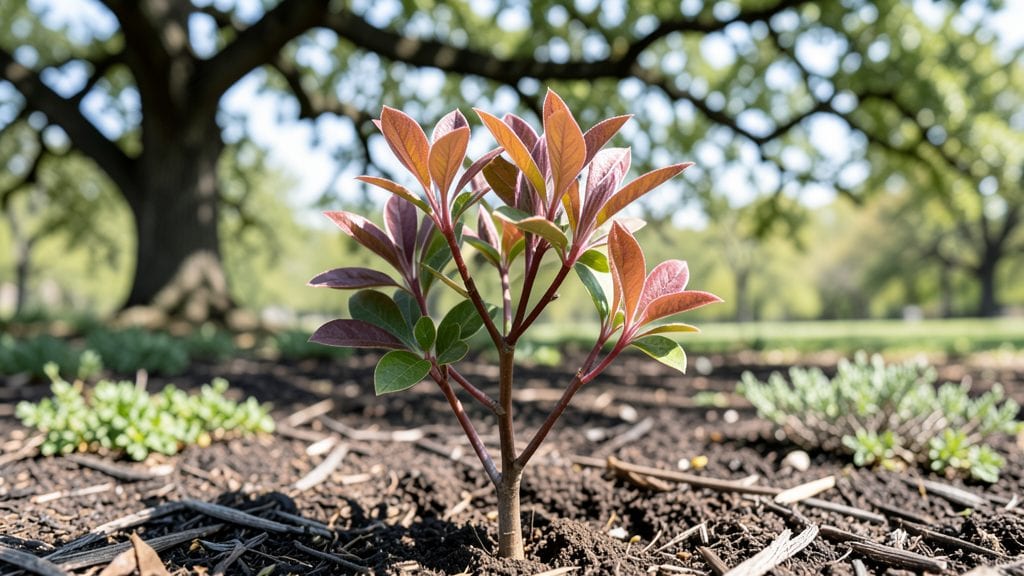
Mastering redbud seedling identification early lets you grow a breathtaking 15-foot tree in just a few years—here’s how to spot them by their heart-shaped leaves and silvery bark. 🌱 trees. The first clue is the leaves: bright green, glossy, and perfectly heart-shaped, often appearing before the flowers in early spring.
Young redbuds grow fast but stay compact, making them ideal for small gardens. The bark is another dead giveaway—smooth and silvery-gray when young, it develops deeper ridges as the tree matures.
If you find seedlings near established redbuds, check the soil for seed pods that split open in late summer, releasing winged seeds.
Mistaking them for other trees is easy, but their pink spring blooms confirm the ID. These flowers appear before the leaves, creating a breathtaking display. Once you spot these traits, you’ll never confuse a redbud with a maple or cherry sapling again.
Whether you’re restoring a landscape or adding native beauty, accurate identification ensures healthy growth. Grab a magnifying glass and start scouting—you might already have seedlings hiding in your yard.
Misidentification Mistakes Explained
Correctly identifying a redbud seedling can be tricky, especially when young trees share similar traits with other species. Understanding the root causes of these mix-ups helps gardeners and arborists spot key differences more confidently. Below, we break down the most common reasons why misidentification happens—and how to avoid them.
Young redbud seedlings (Cercis canadensis) often have leaves that resemble those of other early-spring bloomers, like serviceberry (Amelanchier) or dogwood (Cornus). The issue?
Immature redbud leaves are heart-shaped but less pronounced than mature ones, and their edges may appear slightly serrated or wavy instead of smooth. This ambiguity leads to errors because:
- Size matters: Seedling leaves are tiny (1–3 inches long), making fine details harder to discern. Compare them to a leaf key for scale.
- Color shifts: New growth starts deep reddish-purple, fading to green. If observed mid-transformation, the leaf may look like a hackberry (Celtis) seedling.
- Arrangement tricks: Redbud leaves grow alternately (one per node), but young stems can appear clustered, mimicking maple seedlings, which are opposite.
Actionable fix: Wait until leaves fully unfurl (late spring) or compare multiple leaves on the same stem. Look for the distinctive red veins that run parallel to the leaf edges—a redbud hallmark.
Bark is a redbud’s tell-tale sign, but seedlings often have bark so thin and smooth it’s easily dismissed. The problem? Young redbud bark resembles:
- Sycamore (Platanus): Exfoliating patches appear similar to redbud’s eventual peeling, layered bark.
- Hornbeam (Carpinus): Smooth, grayish bark can fool observers into thinking it’s a redbud.
- Ash (Fraxinus): Early-stage bark is also smooth and lacks ridges.
Why it happens:
- Thin bark hides texture: Seedlings’ bark is paper-thin, lacking the deep furrows of mature redbuds.
- Color deception: Young bark is silvery-gray, not the brownish-red hue of older trees.
- Growth speed: Redbud bark develops character slowly—it can take 5+ years for distinctive ridges to form.
Actionable fix: Scratch the bark gently with a fingernail. Redbud bark peels in thin sheets (like a snake’s skin), while sycamore or ash bark flakes unevenly. For seedlings, focus on the branch pattern: redbuds have zigzag stems with short, stubby spurs.
Redbuds are famous for their early spring blossoms, but seedlings often skip flowering entirely in their first few years. This absence leads to confusion with:
- Eastern red cedar (Juniperus virginiana): Tiny, scale-like "leaves" and no flowers.
- Black locust (Robinia pseudoacacia): Seedlings have compound leaves (3–9 leaflets) and no spring flowers.
- Sourwood (Oxydendrum arboreum): Delicate white summer blooms, not spring pink.
Why it happens:
- Energy prioritization: Seedlings allocate resources to root and leaf growth, not reproduction. Flowers may not appear until years 3–5.
- Environmental cues: Late frosts or poor soil can delay or suppress flowering entirely.
- Species mimicry: Non-flowering redbuds resemble sumac (Rhus) seedlings, which also have compound-like leaf structures.
Actionable fix: If no flowers appear, check for bud scales along branches. Redbud flower buds are plump, pinkish, and clustered (unlike the small, green leaf buds of competitors). For non-flowering seedlings, rely on leaf arrangement and stem texture.
Redbuds thrive in open woodlands and sunny edges, but their seedlings can sprout in unexpected places—often near:
- Judsonia (Judsonia spp.): A parasitic plant with redbud-like leaves but no woody stem.
- Red maple (Acer rubrum): Seedlings have lobed leaves that can resemble redbud’s early growth.
- Hybrid redbuds: Cultivars like ‘Ravenwing’ or ‘Forest Pansy’ have darker foliage and may cross-pollinate, creating seedlings with unpredictable traits.
Why it happens:
- Pollinator overlap: Bees and butterflies pollinate redbuds and nearby species (e.g., serviceberry), leading to accidental cross-pollination in gardens.
- Seed dispersal: Birds and squirrels bury redbud seeds near other trees, creating mixed seedling beds.
- Cultivar confusion: Nursery-grown redbuds may be grafted, and escaped seedlings can revert to wild-type traits, making ID harder.
Actionable fix: Note the parent tree’s location. If seedlings grow under a known redbud, prioritize leaf/bark checks. For hybrids, look for intermediate traits, like partially lobed leaves or mixed flower colors.
Pro tip: 🔍 Use a hand lens to inspect leaf veins and bud scales—redbuds have prominent, arching veins and hairy buds, unlike smooth-budded competitors like hackberry.
Quick Fixes for Common Seedling Confusion
Now that you understand the why behind misidentifying redbud seedlings, let’s tackle the how—with practical, step-by-step solutions tailored to each challenge.
Whether you’re struggling with leaf shape, bark texture, or seasonal changes, these fixes will sharpen your spotting skills and keep your garden (or wild areas) thriving with accurate ID.
Problem: Redbud leaves resemble those of hickory, cherry, or even some maples, especially in early spring.
Fix It: 🍃 Step 1: Compare Leaf Shapes Side by Side Grab a reference guide or use a phone app (like iNaturalist or LeafSnap) to overlay redbud leaves with others. Notice redbud’s heart-shaped base with pointed tips—unlike the elongated ovals of hickory or the serrated edges of maple.
🌱 Step 2: Check the Vein Pattern Run your finger along the midrib and secondary veins. Redbud leaves have prominent, curved veins that arch toward the leaf edges, while cherry leaves have straighter, parallel veins.
💡 Pro Tip: Snap a close-up photo of the leaf underside—redbud’s are often slightly fuzzy, whereas cherry leaves are smoother.
Problem: Young redbud bark can mimic other species, like dogwood or serviceberry, especially when smooth and gray.
Fix It: 🔥 Step 1: Scratch Test for Bark Texture Use your fingernail to gently scrape the bark. Redbud’s inner bark is reddish-brown (hence the name!), while dogwood bark stays grayish-white. Serviceberry bark, when scratched, reveals horizontal lenticels (tiny dots)—redbud lacks these.
👨🍳 Step 2: Look for Bark “Plates” Mature redbud bark develops interlacing, scaly plates that curl at the edges. Compare this to the smooth, exfoliating strips of birch or the deep furrows of oak.
⏰ Prevention Tip: Inspect bark in late winter/early spring when it’s least obscured by leaves or lichen.
Problem: Redbuds lose leaves early (sometimes by late June), leaving you to guess at bare branches.
Fix It: 🌸 Step 1: Hunt for Buds Before Leaves Emerge In late winter, redbuds burst with pink-purple flower buds before leaves unfold. Other trees (like cherry) bloom after leaves appear. Snap a photo of the buds—this is your smoking gun for ID!
🌿 Step 2: Note the Branch Structure Redbud branches are thin and zigzag, with short, stubby twigs at the ends. Compare this to the long, graceful branches of dogwood or the stout, spreading limbs of crabapple.
🎯 Pro Tip: Mark a few redbuds in your area with flagging tape in winter for easy reference when leaves drop.
Problem: Tiny seedlings lack distinctive features, making ID nearly impossible.
Fix It: **🔪 Step 1: Dig Very Shallowly (But Carefully) Gently expose the root structure. Redbud seedlings have long, slender taproots with fibrous side roots, while maple seedlings often have thicker, more clustered roots.
📊 Step 2: Compare Seed Leaf (Cotyledon) Shape Before true leaves appear, redbud seedlings have rounded cotyledons (seed leaves). Cherry seedlings, by contrast, have narrower, lance-shaped cotyledons.
✨ Prevention Tip: Transplant seedlings in early spring when they’re easiest to identify by buds and root structure.
If all else fails, use the "Three-Point Check" for 100% accuracy:
- Leaves: Heart-shaped with pointed tips + fuzzy undersides.
- Flowers:** Bright pink-purple clusters before leaves in spring.
- Bark: Reddish inner layer when scratched + scaly plates as it matures.
💡 Bonus Hack: Post a photo in a local gardening or nature group (Facebook, Reddit’s r/whatsthisplant) with your location—experts often chime in within hours!
Remember: The more you practice, the easier it gets. Grab a notebook, sketch a few seedlings, and soon you’ll spot redbuds from a mile away—no confusion in sight! 🌳🔍
Frequently asked questions
How can I tell if a young seedling is a redbud before it flowers?
Look for heart-shaped leaves with pointed tips and prominent arching veins—redbud seedlings have fuzzy undersides. Check the bark too: young redbuds have smooth, silvery-gray bark that peels in thin sheets when scratched. Compare these traits to nearby trees like dogwood or serviceberry.
Why do some redbud seedlings not have flowers in their first few years?
Seedlings focus energy on root and leaf growth rather than reproduction. Flowers typically appear in years 3–5, but late frosts or poor soil can delay blooming even longer. Look for pink-purple flower buds in late winter as a clue.
What’s the best time of year to identify redbud seedlings?
Late winter to early spring is ideal—redbuds burst with pink-purple flower buds before leaves appear. In summer, their heart-shaped leaves are most distinctive. Avoid fall when leaves drop early, making ID harder.
Can I grow redbud seedlings from seed pods I find in my yard?
Yes! Collect seed pods in late summer when they split open. Plant seeds 1/4-inch deep in well-draining soil. Germination takes 2–4 weeks, but seedlings grow slowly at first. Expect blooms in 3–5 years.
How do I distinguish redbud seedlings from cherry or maple saplings?
Redbud leaves are heart-shaped with fuzzy undersides, while cherry leaves are smoother with straighter veins. Maple seedlings have lobed leaves and opposite branching (two leaves per node). Redbud leaves grow alternately (one per node).