Watering
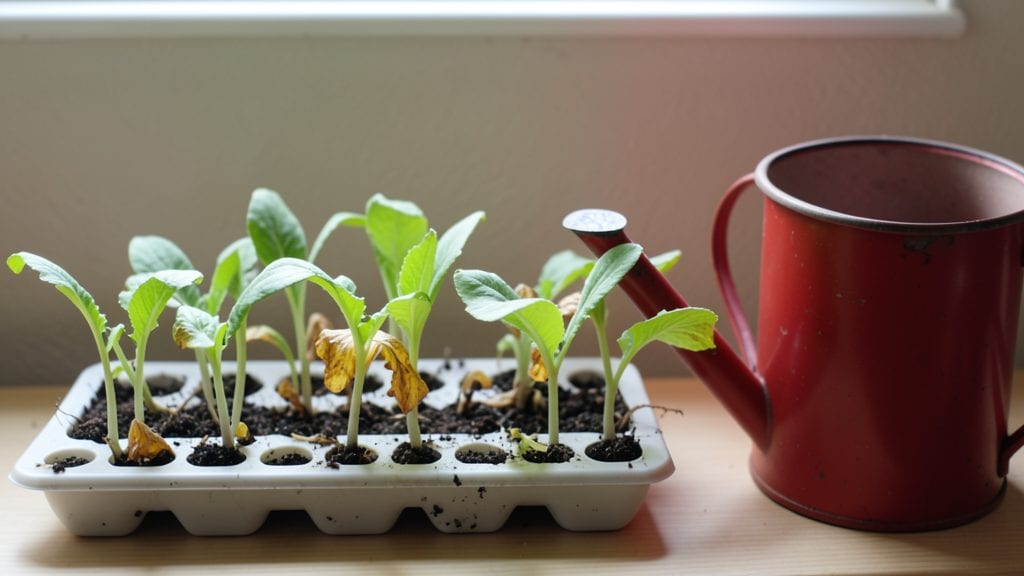
You can overwater seeds, and doing so creates anaerobic conditions that trigger root rot, fungal growth, and seed suffocation by cutting off oxygen, which halts germination and weakens young seedlings. The key is maintaining consistent moisture without saturation—aim for damp (not soggy) soil and prioritize drainage.
Overwatering seeds disrupts their natural breathing process, smothering them in excess moisture that blocks oxygen flow to the roots. 🌱 This creates the perfect environment for mold and bacteria to thrive, turning your seed tray into a breeding ground for problems.
I’ve seen seedlings drown within days when kept in overly wet conditions, even with seemingly "light" watering. The solution? Use a spray bottle for gentle misting and always check soil moisture by pressing your finger an inch deep—if it feels damp but not wet, you're golden.
Different seeds have varying tolerance levels—fine seeds like lettuce need barely damp conditions, while larger seeds like beans can handle slightly more moisture. The trick is balancing humidity and airflow: cover trays with plastic wrap temporarily to retain moisture, but remove it once sprouts appear to prevent condensation buildup.
For outdoor plantings, morning watering gives excess moisture time to evaporate before nightfall.
💡 In This Article
- How Overwatering Damages Seed Germination
- Proper Watering Techniques for New Seedlings
How overwatering damages seed germination
When seeds sit in overly wet soil, they suffocate because excess water displaces oxygen from the pore spaces between soil particles. This creates anaerobic conditions where roots can't respire properly—similar to how a fish would suffocate in a sealed jar.
The damage starts within 24-48 hours as enzymes needed for germination break down without oxygen, leading to seed decay. 🌱 Fungal pathogens like Pythium thrive in these conditions, attacking tender seedling roots before they can establish themselves.
The ideal moisture balance maintains 40-60% humidity around seeds while keeping soil damp (not saturated). Fine seeds like basil or parsley need barely moist conditions—think of a wrung-out sponge—while larger seeds like sunflower can tolerate slightly more moisture.
The key difference lies in their size: smaller seeds have less internal water storage, making them far more sensitive to drowning. Overwatering also causes seeds to imbibe too quickly, swelling their seed coats until they burst or develop weak, leggy stems.
Physiologically, overwatering triggers ethylene gas production in seeds, which signals premature aging. This hormone accelerates the breakdown of cell walls, causing seedlings to rot at the base before emerging.
The texture of overwatered soil becomes compacted and airless, resembling wet clay rather than the loose, crumbly texture needed for root penetration. This physical barrier prevents radicles (embryonic roots) from pushing through soil to access nutrients.
Different seed types exhibit varying tolerance levels: hard-coated seeds (like beans) can handle brief saturation, while delicate seeds (like tomatoes) require precise moisture control. The damage isn't just immediate—overwatered seeds that somehow germinate often produce weak, chlorotic (yellowing) seedlings because their root systems never develop properly.
Even after visible sprouting, these plants remain vulnerable to disease and environmental stress for weeks.
What most gardeners miss is how humidity interacts with soil moisture. High humidity in a seed tray creates condensation that mimics rain, while poor airflow prevents evaporation. This double whammy keeps seeds in a perpetually damp state, ideal for mold growth.
The solution? Use clear plastic domes only when necessary, and always ventilate containers daily to maintain airflow. For outdoor sowing, morning watering gives excess moisture time to evaporate before nightfall humidity sets in.
Consider this: a single tablespoon of water can hold 10,000-20,000 seeds if spread evenly—but that same water becomes a death sentence if pooled around them.
The difference between success and failure often comes down to drainage: containers without holes act like bathtubs, while those with proper drainage mimic natural soil conditions where excess water drains away. This subtle shift can mean the difference between a thriving seedling and a moldy mess. 💫