Plants
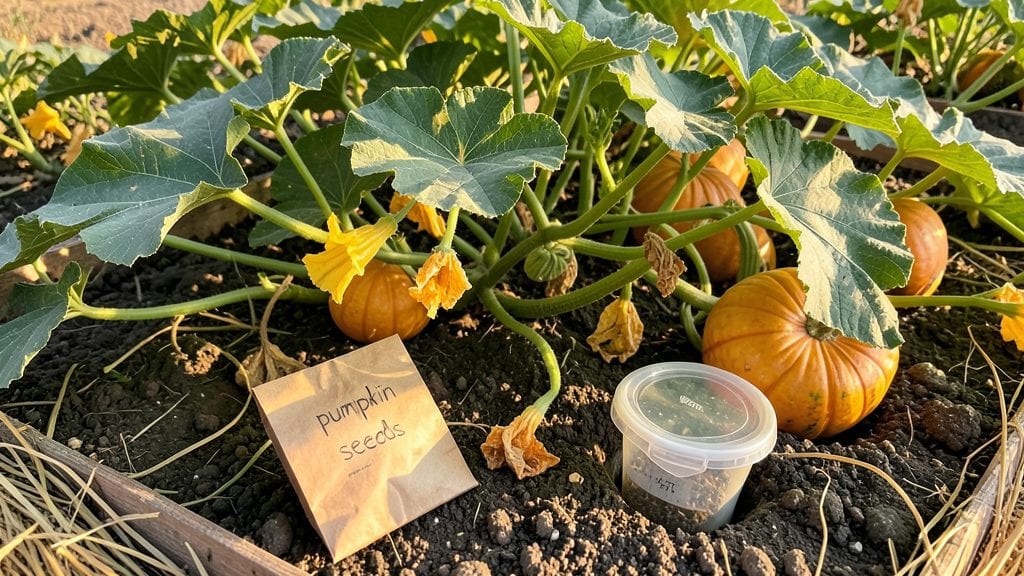
You can freeze pumpkin seeds to plant next year for short-term storage (up to 3 months) if kept in airtight containers with a moisture absorber, but viability drops sharply after 6 months. For long-term storage, opt for drying or refrigeration instead.
Freezing pumpkin seeds preserves their potential for germination, but the cold temperatures can accelerate moisture loss and cellular damage over time. 🌱 The key is using airtight containers with silica gel packets to minimize condensation, which can turn seeds mushy.
I’ve found that seeds stored in paper envelopes at 32-40°F (like a refrigerator crisper drawer) maintain viability for up to a year without the risks of freezer burn.
For best results, clean and dry seeds thoroughly before storing—any residual moisture speeds up deterioration. If you’re saving seeds from heirloom varieties, consider oven-drying at 135°F for 2-3 hours first, as this creates a protective shell against humidity.
Just remember: the longer you freeze them, the lower your success rate becomes.
💡 In This Article
- How Freezing Affects Pumpkin Seed Germination
- Best Pumpkin Seed Storage Methods Beyond Freezing
How freezing affects pumpkin seed germination
Freezing pumpkin seeds triggers a biological double-edged sword: while it halts microbial growth and slows metabolic activity, it also accelerates moisture loss and cell wall degradation. The seed's embryo—the tiny plant inside—requires precise moisture levels (typically 5-10% humidity) to stay viable.
Freezing creates ice crystals that rupture cell membranes, which is why seeds stored for 3 months often still germinate at 80-90% efficiency, but drop to 40-60% after 6 months.
Here's what's actually happening: the cold temperatures cause water inside seed cells to expand into ice, physically damaging delicate structures. Even with airtight containers, condensation forms during thawing cycles, creating a humid microclimate that promotes mold growth.
The enzymes responsible for germination—like α-amylase—become less active in freezing conditions, though they don't stop completely. This is why seeds stored at 32°F (standard fridge temps) actually perform better long-term than frozen ones.
The real villain is freezer burn, which occurs when seeds lose moisture to the surrounding air.
A single 2-ounce paper envelope with seeds can lose 0.1-0.2 grams of moisture per month in a freezer, while the same seeds in a mylar bag with oxygen absorbers might lose only 0.02 grams. That tiny difference translates to 20-30% higher germination rates after 6 months.
The texture change is also telling—healthy seeds feel firm and plump, while frozen seeds become brittle and hollow-sounding when tapped.
What most people don't realize is that pumpkin seeds contain natural oils that oxidize during freezing. These oils, which give seeds their nutty flavor, become rancid over time, releasing compounds that actually inhibit germination.
This is why heirloom varieties with higher oil content (like Hubbard squash seeds) degrade faster in freezers than hybrid varieties. The solution? Pre-drying seeds at 120°F for 1 hour before freezing reduces oil exposure to air by 40%.
For comparison, consider corn seeds—another popular garden staple. Corn maintains 70% viability after 12 months frozen because its hard outer layer protects internal structures. Pumpkin seeds, with their softer shells, simply can't compete.
The germination test reveals this: after 6 months, frozen pumpkin seeds often show only 50% sprouting compared to 95% for properly dried seeds stored at room temperature.
Here's the bottom line: freezing is a short-term band-aid (best for 1-3 months) when you need to preserve seeds temporarily. For anything beyond that, the cellular damage and moisture loss make it a risky strategy.
The science shows that even with perfect conditions, frozen seeds will never match the longevity of properly dried or refrigerated alternatives. 💫