
Trees
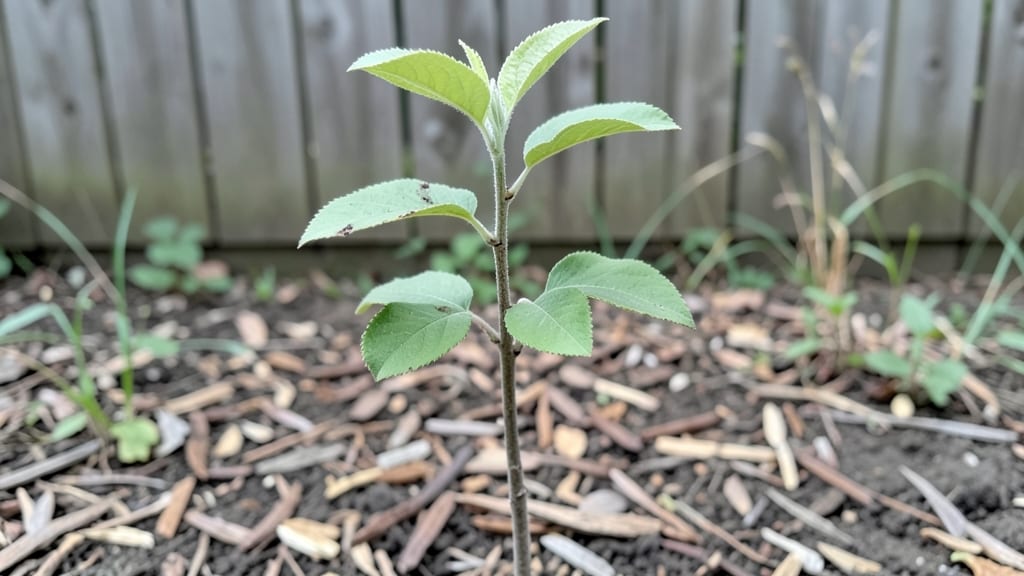
Apple tree seedling leaves reveal the true variety through shape, color, and vein patterns—round or lobed for common types, serrated edges for heirlooms—while healthy leaves stay glossy green without yellowing, browning, or curling edges. Disease or pests often cause discoloration or spots.
Seedling leaves are like nature's fingerprint for apple trees, offering early clues about the mature fruit's flavor and growth habits. 🌱 For example, a Granny Smith seedling might show elongated, slightly pointed leaves with deep serrations, while Honeycrisp seedlings often have broader, more rounded lobes.
The leaf's underside can also hint at disease resistance—some heirloom varieties develop a waxy coating that repels pests naturally.
Beyond variety identification, these leaves act as health barometers. A glossy green surface signals vitality, while yellowing edges or black spots typically indicate overwatering or fungal infections like apple scab. I've found that seedlings with curling edges often struggle with aphid infestations, which thrive in new growth.
Regular inspection during the first growing season can prevent small issues from becoming full-blown problems.
💡 In This Article
- How Leaf Shape and Texture Reveal Apple Tree Varieties
- Common Apple Seedling Leaf Problems and Fixes
How leaf shape and texture reveal apple tree varieties
Apple tree leaves act like botanical fingerprints, with each variety exhibiting unique morphological traits that become apparent even in seedlings. Take Granny Smith seedlings, for example—their leaves typically feature 5-7 shallow lobes with serrations that resemble fine teeth along the edges, resembling a saw blade.
In contrast, Honeycrisp seedlings often display broader, more rounded lobes with 3-5 main veins radiating from the central stem, creating a softer, almost scalloped appearance when mature.
The depth and pattern of serrations can also distinguish varieties. Fuji seedlings, for instance, develop leaves with deeper serrations (about 1-2mm deep) that create a jagged silhouette, while Gala leaves tend to have shallower, more rounded serrations (around 0.5-1mm deep).
These differences stem from genetic variations in the leaf epidermis and mesophyll structure, which influence how the leaf margin develops during growth. The underside of the leaf often reveals additional clues—some varieties, like Pink Lady, develop a slightly pubescent (hairy) texture on the underside, while others remain smooth.
Seedling leaves may appear slightly simpler than mature leaves, but they follow the same basic patterns. For example, a McIntosh seedling's leaves might start with 3-5 lobes and develop into the classic 5-7 lobes seen in mature trees.
The key is observing the growth pattern—if the lobes are already forming at the seedling stage, they'll likely maintain that structure.
The leaf glossiness also provides critical information: healthy seedlings of most varieties should have a semi-glossy upper surface, while dull or matte leaves may indicate stress or poor growing conditions.
Vein structure offers another layer of identification. Malus domestica varieties (common apples) typically exhibit pinnate venation, where veins branch out from a central midrib.
However, the density and angle of these veins can vary—Arkansas Black seedlings, for instance, develop leaves with veins that form acute angles (less than 45 degrees) compared to the more gradual angles (around 60 degrees) found in Golden Delicious seedlings.
These differences arise from variations in the vascular bundle arrangement within the leaf's petiole.
One common misconception is that seedling leaves will always match mature leaves perfectly. In reality, environmental factors like sunlight exposure, soil nutrients, and water availability can cause up to 15% variation in leaf shape between seedlings and mature trees.
For example, a Granny Smith seedling grown in partial shade might develop broader leaves with fewer lobes than one grown in full sun. To minimize confusion, always compare seedlings to known reference images of mature leaves from the same variety.
Beyond identification, leaf texture can hint at disease resistance. Varieties like Liberty develop a natural waxy coating on their leaves, which repels water and reduces fungal attachment points. This trait often appears in seedlings as a slightly shiny, almost greasy texture when viewed under light.
In contrast, varieties prone to apple scab (like McIntosh) may show early signs of dark brown spots on seedling leaves when grown in humid conditions.
Here's what to watch for when examining seedlings: leaf margin integrity (smooth vs. jagged), lobe count (3-5 vs. 5-7), serration depth (0.5mm vs. 2mm), and underside texture (smooth vs. hairy).
These visual cues, combined with vein patterns, create a reliable system for early variety identification that can save years of trial-and-error gardening. 🌿