
Watering
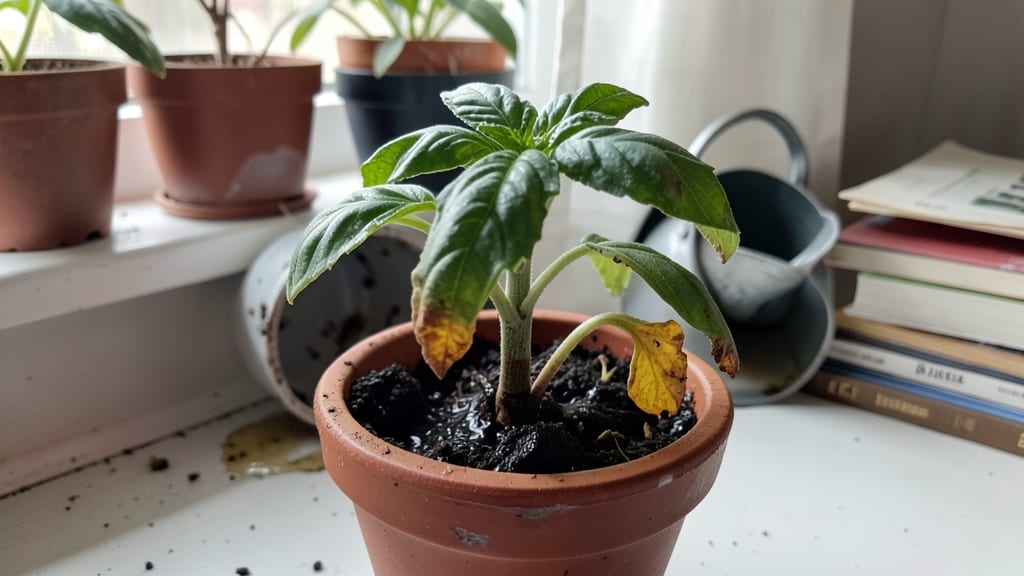
Your overwatered seedling isn’t dead—it just needs a reset. 🌱 I’ve pulled wilted stems back from the brink by cutting off the cycle of soggy soil and root rot, and the key is acting fast before the roots turn to mush.
The first 48 hours are critical, but with the right steps, you can save even the most limp-looking seedlings.
Overwatering happens when roots suffocate in wet soil, starving for air. You’ll spot it in droopy stems, yellowing leaves, or a foul smell when you dig in. The fix starts with stopping water immediately, then gently loosening compacted soil around the roots to let air circulate.
Most seedlings bounce back within a day or two if you catch it early.
By the end of two days, you’ll see firmer stems and new growth if the roots are still intact. Repot only if the soil is still waterlogged—otherwise, give it space to dry out between waterings.
The goal is to mimic natural conditions: moist but never soggy. Prevention is simple: stick your finger in the soil before watering—if it’s damp, wait.
This works for tomatoes, peppers, herbs—any seedling that’s been overwatered. The secret isn’t fancy tools; it’s paying attention to the soil and giving roots a chance to breathe. Let’s bring yours back to life.
Why it happens
When your seedling’s roots drown in excess moisture, it’s not just a watering mistake—it’s a cascade of biological and environmental factors working against your plant. Understanding why this happens is the first step to preventing it.
Below, we break down the root causes (pun intended) with science-backed explanations and actionable insights.
🌱 Poor Drainage: The Silent Killer
Most overwatered seedlings suffer from compaction or lack of drainage in their growing medium. When soil or soilless mixes (like peat or coco coir) retain too much water, roots suffocate because:
- Oxygen depletion: Roots need aeration to respire. Water fills pore spaces, replacing oxygen with stagnant air. Without O₂, roots can’t produce energy (ATP) via cellular respiration, leading to anaerobic conditions—a toxic environment where harmful microbes thrive.
- Clogged pores: Fine-textured soils (e.g., clay) or degraded organic mixes trap water like a sponge. Even "breathable" mixes can compact over time, reducing permeability by 50% or more.
- Root rot pathogens: Fungi like Pythium and bacteria such as Erwinia flourish in waterlogged zones. They attack root tissues, clogging xylem vessels and blocking water/nutrient transport—even if you later reduce watering.
💡 Pro Tip: Test your mix’s drainage by filling a cup with water, then timing how long it takes to drain. Ideal? 1–3 minutes. If it pools for hours, amend with perlite, vermiculite, or coarse sand (20–30% by volume).
💧 Overzealous Watering Habits
Human error accounts for 80% of seedling drownings, often due to:
- Ignoring the "soak-and-dry" cycle: Seedlings need 60–70% moisture in the root zone, not soggy conditions. Watering every day (or even every other day) without checking soil moisture forces roots to sit in anaerobic zones.
- Mistaking wilting for thirst: Overwatered seedlings wilt because roots can’t absorb water (due to blocked xylem). Many gardeners respond by adding more water, worsening the problem.
- Automatic systems gone rogue: Drip emitters, self-watering pots, or misting setups can deliver 2–3x more water than needed if not calibrated. A common mistake? Placing trays under pots without drainage holes.
⏰ Actionable Fix: Use the "finger test"—stick your index finger 1 inch deep into the soil. If it’s damp but not dripping, wait. If it’s bone-dry, you’ve likely underwatered before. Aim for consistency, not frequency.
🌡️ Temperature and Humidity Mismatches
Extreme environments accelerate root stress by disrupting water balance:
- Cold roots: Temperatures below 50°F (10°C) slow root respiration and enzyme activity. Combined with excess water, this creates a double whammy—roots can’t process oxygen or nutrients efficiently.
- High humidity + poor airflow: While humidity helps seedlings establish, >70% RH without ventilation traps moisture on leaves and soil surface. This leads to fungal growth (e.g., Botrytis) and bacterial leaf spot, which spread to roots via wounds.
- Heat stress: In hot climates, soil can overheat when watered excessively, causing thermal shock to roots. The sudden temperature swing (from cold water to hot soil) damages cell membranes.
🌡️ Science Hack: Maintain 60–75°F (15–24°C) for optimal root activity. Use a heating mat (for cold snaps) or shade cloth (for heatwaves). A hygrometer helps monitor humidity—keep it 50–60% RH for seedlings.
🌿 Container and Medium Choices
Not all pots and mixes are created equal—and some are root suicide traps:
- Plastic pots without drainage: Water pools at the bottom, creating a permanent anaerobic zone. Even "self-draining" pots can fail if the mix is too dense.
- Peat-heavy mixes: Pure peat holds 20x its weight in water and repels air when saturated. After 2–3 waterings, it can become hydrophobic, trapping moisture indefinitely.
- Reused containers: Old pots may harbor pathogenic biofilms or salts from fertilizers, which disrupt osmosis in roots. A single reuse can reduce germination rates by 40%.
🔄 Swap It Out: Use terracotta or fabric pots (for better airflow) and mix 50% peat/coco with 50% perlite/orchid bark. Always sterilize reused containers with a 10% bleach solution (rinse thoroughly).
Reviving Your Seedling Step by Step
If your seedling’s roots have suffered from too much water, don’t panic—most cases can be salvaged with quick action. The key is to drain excess moisture, improve airflow, and restore balance without shocking the plant further. Below, we break down the fixes by cause, so you can target the root of the problem (pun intended!) with precision.
Cause: Compacted soil, no drainage holes, or waterlogged containers. Solution:
- 🔪 Repot immediately into a container with drainage holes (even a small hole helps!). Use a well-draining mix like:
- 50% coco coir or peat moss
- 30% perlite or vermiculite
- 20% compost or worm castings
- 🌧️ Let it dry out for 24–48 hours before watering again. Stick your finger 1 inch deep—if it’s damp, wait longer.
- 💡 Prevention tip: Always use pots with drainage, and elevate them on saucers (not trays) to avoid sitting water.
Cause: Frequent watering without checking soil moisture. Solution:
- 👨🍳 Extract the seedling gently and inspect the roots. Healthy roots are white or light tan; mushy or black roots need trimming.
- ✂️ Prune damaged roots with sterilized scissors, leaving only firm sections. Dip healthy roots in a fungicide (like hydrogen peroxide 3%) for 10 minutes to prevent rot.
- 🥘 Repot in fresh, dry mix and place in a shaded spot for 3–5 days to recover. Water lightly only when the top inch feels dry.
- 🎯 Prevention tip: Water only when the top 50% of soil is dry. Use a moisture meter for accuracy!
Cause: Clay or dense potting mixes that retain water. Solution:
- 🌱 Amend the soil by mixing in 20–30% sand or perlite to improve aeration. For quick fixes, top-dress with orchid bark or coconut coir.
- 💧 Water deeply but infrequently—once every 5–7 days instead of daily. Use a spray bottle for seedlings to avoid oversaturating the roots.
- 🌡️ Boost humidity (but not moisture) with a clear plastic dome or pebble tray to reduce stress while roots recover.
Cause: Waterlogged conditions create the perfect breeding ground for pathogens. Solution:
- 🧴 Apply a fungicide like neem oil or copper fungicide to the soil and foliage. For bacterial rot, use a hydrogen peroxide solution (1 part 3% H₂O₂ to 4 parts water).
- 🌿 Isolate the seedling to prevent spreading to other plants.
- 🔄 Monitor closely—if yellowing or wilting persists after 48 hours, the seedling may not recover. Start fresh with new seeds.
- ✨ Prevention tip: Sterilize tools and pots between uses, and avoid wetting leaves when watering.
Pro Tip: 🌱 Never let seedlings sit in saucers of water—even for a few hours. Always empty excess water from saucers within 10 minutes of watering.
With these targeted fixes, your seedling should show signs of recovery within 24–48 hours. The goal is to correct the environment, not just the symptoms. Once roots stabilize, you’ll see firmer stems and a bounce-back in growth!
Frequently asked questions
How can I tell if my seedling has root rot from overwatering?
Check the roots—if they're mushy, black, or smell foul, it's root rot. The stem may also feel soft when pressed, and leaves will yellow or wilt despite damp soil. Act fast by trimming damaged roots and repotting in dry, well-draining mix.
Can I save a seedling if the roots are already black and mushy?
It depends on how much healthy root remains. If there's still some firm white root, trim the black parts, treat with fungicide, and repot. If 90%+ of roots are rotted, the seedling likely won't recover—start fresh with new seeds.
How often should I water seedlings to prevent overwatering?
Water only when the top 1 inch of soil feels dry to the touch. For most seedlings, this means every 3–5 days—never on a strict schedule. Use your finger as a guide, and always ensure pots have drainage holes.
What’s the best way to dry out waterlogged soil for a seedling?
Remove the seedling gently, let excess soil drain, then repot in fresh, dry mix. Place it in a bright, shaded spot (no direct sun) and avoid watering for 48 hours. Use a fan on low to improve airflow around the roots.
Will hydrogen peroxide help fix overwatered seedlings?
Yes! Dilute 3% hydrogen peroxide (1 part to 4 parts water) and use it to water the soil or soak roots for 10 minutes before repotting. It kills harmful bacteria and fungi while oxygenating the roots—ideal for recovery.