
Lawn
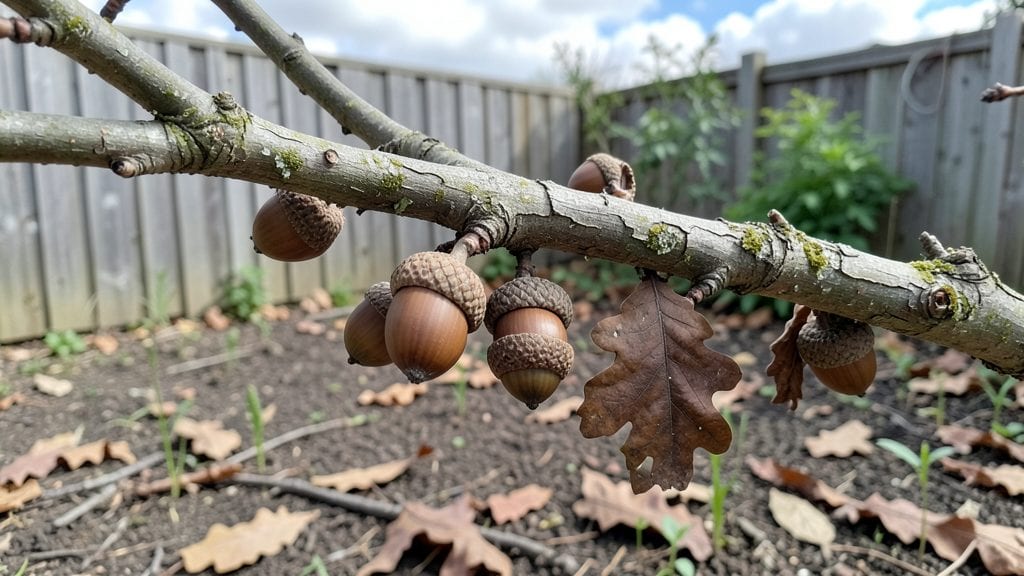
To harvest oak seed pods successfully, collect them when fully mature but before they drop in late fall. Select plump, intact pods without pests or cracks, then store them in a cool, dry environment to prevent mold until planting season.
Harvesting oak seed pods at the right time ensures strong germination rates. 🌳 Different oak species mature at slightly different times—white oaks typically release their acorns in late fall, while red oaks may hold onto them longer.
The key is to look for fully closed caps and firm shells, as these indicate readiness for collection. Once gathered, proper storage in a breathable container with minimal moisture mimics natural conditions, helping maintain viability until you're ready to plant.
For best results, I recommend processing pods within a few weeks of harvest. This includes removing any remaining husks and performing a cold stratification period to break dormancy.
Many gardeners swear by mixing acorns with slightly damp sand and refrigerating them for several months before planting—this mimics winter conditions and significantly boosts sprouting success.
💡 In This Article
- Identifying Oak Seed Pods by Species and Maturity
- Optimal Harvesting and Storage Techniques for Oak Seed Viability
Identifying oak seed pods by species and maturity
Distinguishing oak seed pods starts with understanding the two most common species: white oak and red oak. White oak pods have a smoother, more rounded cap that remains closed tightly around the acorn, while red oak caps are more pointed and often split open slightly when mature.
The acorn itself is the key identifier—white oak acorns are typically larger (about 1.5-2 inches long) with a flatter, broader shape, while red oak acorns are slightly smaller (1-1.5 inches) and more elongated.
The shell's texture also differs: white oak shells are harder and less prone to cracking, whereas red oak shells are slightly softer.
The maturity of an oak seed pod is best judged by three visual and tactile cues. First, check the cap color: mature pods develop a brownish hue, while immature ones remain greenish. Second, press gently on the shell—mature acorns feel firm with no give, indicating full seed development.
Third, the cap should be fully closed (for white oak) or only partially open (for red oak).
Immature pods often have caps that remain tightly sealed or show signs of insect damage. 🌰 The weight matters too: a mature acorn feels noticeably heavier for its size due to fully developed seed content.
Size variations between species also affect germination potential. White oak acorns, with their thicker shells and higher tannin content, require longer stratification periods (up to 90 days) to break dormancy, while red oak acorns germinate faster (often within 30-60 days) because their shells are thinner.
This difference stems from evolutionary adaptations—white oak trees grow slower and invest more energy in seed protection, while red oaks prioritize rapid germination to outcompete other species. When harvesting, prioritize pods that match these species-specific traits to maximize your chances of successful planting.
Avoid collecting pods with these common flaws: hollow-sounding acorns (tap them—they should make a solid "thud"), those with visible cracks or holes, or pods showing signs of weevil infestation (tiny exit holes or frass around the cap).
Even a single damaged acorn can contaminate your entire collection, as pests spread rapidly. For best results, harvest on dry days when pods are less likely to harbor mold spores.
The ideal time window is typically between October and November, when most oak species reach peak maturity but before winter rains increase rot risk.
Pro tip: Use a simple float test to check viability. Fill a bucket with water and drop acorns inside—those that sink are viable, while floaters contain little to no seed. This works because mature acorns are denser due to their high starch content.
For white oak, aim to collect 50-100 pods per tree to ensure genetic diversity, while red oak's faster germination means you can work with slightly smaller batches. Always wear gloves when handling large quantities, as oak tannins can cause skin irritation in sensitive individuals.
One advanced technique is to examine the acorn's "hilum"—the small scar where it attached to the pod. In mature acorns, this area appears slightly raised and brownish, while immature acorns show a smoother, lighter-colored hilum. This subtle detail can help you spot perfectly mature pods even when caps look similar.
For collectors working in mixed oak forests, carrying a small magnifying glass helps distinguish between species when visual traits are ambiguous.