Pruning
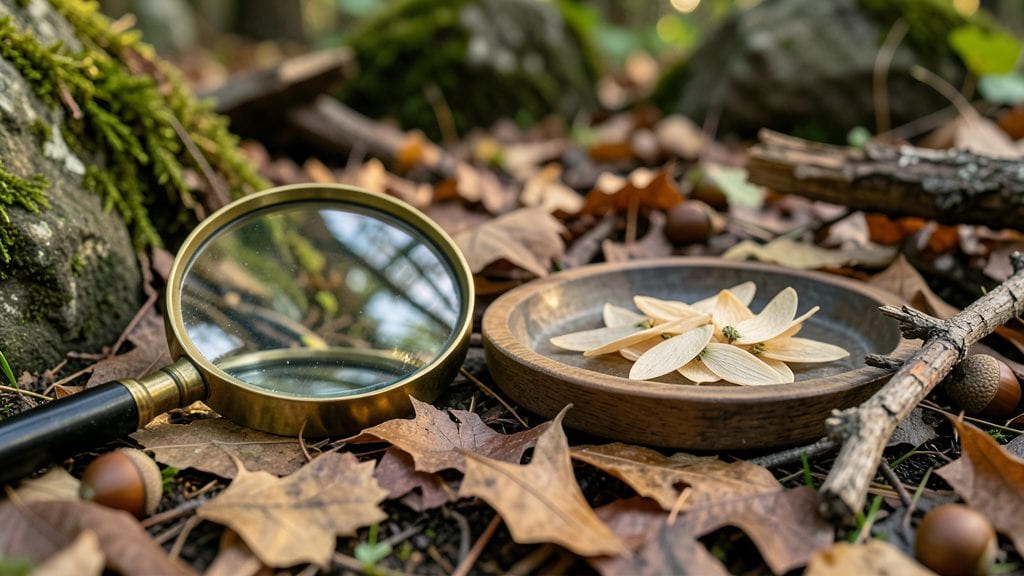
Identifying tree seeds starts with noticing their shape, size, and tiny details most people overlook. 🌿 I’ve spent years collecting seeds from my backyard and local parks, and the key is comparing what you find to reference photos—winged samaras, fuzzy maple "helicopters," or the smooth, oval acorns that roll away like tiny marbles.
The wrong ID can mean planting invasive species or handling toxic seeds, so this guide cuts through the confusion with clear visual cues and regional examples.
Most seeds fall into three broad categories: winged (like hickory or ash), fleshy (such as serviceberry), or hard-shelled (acorns, walnuts). A magnifying glass or phone camera with a macro setting reveals textures—whether a seed is hairy, ribbed, or glossy—that narrow down the options.
Apps like Seek or iNaturalist instantly match seeds to your location, while field guides like Peterson’s Eastern Trees include seed illustrations that are surprisingly accurate.
Once you’ve narrowed it down, test viability by floating seeds in water—sinkers are usually good, floaters often aren’t. But here’s the catch: some seeds need cold stratification (like oaks) or scarification (scratching the shell) to germinate, so don’t rush planting.
A damp paper towel in a baggie can reveal sprouts in as little as a week for fast starters like maple, while others may take months.
Before you dig deeper, check local regulations—some native seeds are protected, and invasive species like Bradford pear can wreck ecosystems if planted.
When in doubt, start with common, non-invasive trees like redbud or black walnut, which are hard to mess up and reward you with stunning spring blooms or edible nuts. Let’s get those seeds sorted!
Hidden Traits That Trick Identification
Identifying tree seeds can feel like solving a botanical puzzle—especially when nature throws in a few curveballs. Misidentification often happens because seeds share surprising similarities or because key traits are hidden, overlooked, or misleading.
Here’s why even experienced gardeners and arborists sometimes struggle to pinpoint the right species, and how to spot the red flags.
Some seeds are masters of disguise, mimicking the shape, color, or texture of other species to evade predators or improve dispersal. For example:
- Winged seeds: Maple (Acer) and ash (Fraxinus) seeds both have papery wings, but maple seeds are opposite (paired at right angles) while ash seeds grow alternate (single along a stem). A quick glance can fool even seasoned observers.
- Spiny or fuzzy coatings: Seeds like those of the Ginkgo biloba (maidenhair tree) have a soft, fleshy outer layer that dries into a leathery shell. Without close inspection, it might be mistaken for a nut or even a fruit.
- Seed pods that split: Some pods (like those of the Lupinus or bluebonnet) release seeds in clusters, making it hard to isolate a single specimen for ID. The pod’s structure—whether it’s dehiscent (splitting open) or indehiscent (remaining closed)—is a critical clue often ignored.
💡 Pro Tip: Always examine the entire seed or fruit, including any remnants of the pod, stem, or attachment point. Use a magnifying glass for fine details like venation patterns or surface textures.
Seeds don’t appear in a vacuum—they’re influenced by when and where they fall. This timing and setting can lead to mix-ups:
- Overlapping seed drops: In spring, oak (Quercus) and hickory (Carya) seeds often fall simultaneously, and their similar nut-like shapes can cause confusion. Hickory nuts have a four-sided shell, while oak acorns are more rounded.
- Wind vs. animal dispersal: Wind-dispersed seeds (like dandelion or pine) may land far from their parent tree, while animal-dispersed seeds (e.g., Viburnum or Cornus) might be found near bird droppings or squirrel caches. Context matters!
- Weathering effects: Seeds exposed to rain, sun, or freezing temperatures can shrink, crack, or darken, altering their appearance. A once-smooth walnut seed might look pitted and unrecognizable after a winter.
🌡️ Actionable Fix: Note the season and location where you find seeds. Cross-reference with local tree bloom times (e.g., spring-flowering trees like cherry drop seeds earlier than summer-flowering oaks).
Without a baseline for comparison, seeds can seem identical. Common pitfalls include:
- Assuming all "nuts" are the same: True nuts (like hazelnut) are enclosed in a hard shell, while drupes (e.g., peach pits) have a fleshy outer layer and a stony pit. A samara (winged seed) is neither—a hybrid of seed and fruit!
- Ignoring regional variations: A red maple seed might look different from a sugar maple seed due to subtle wing shape or seed body size. Local field guides are your best friend.
- Over-reliance on color: Fresh seeds are vibrant, but dried or rotting seeds lose their hue. A bright red hawthorn berry might turn brown and shrivel, resembling a mulberry seed.
📊 Data-Driven Tip: Create a seed ID cheat sheet with side-by-side images of common local species. Include notes on size (compare to a dime), shape (oval, triangular, spiral), and surface (smooth, ridged, hairy).
Not all seeds follow the "rulebook." Hybrid trees or genetically distinct varieties can produce seeds that defy expectations:
- Hybrid seeds: A cross between red oak and white oak might yield seeds that don’t match either parent’s classic traits. Look for intermediate features, like a slightly lobed acorn cap.
- Polyembryony: Some seeds (like those of citrus or mango trees) contain multiple embryos, leading to "twins" or "triplets" that grow into genetically identical but physically distinct seedlings.
- Mutations or sports: Rarely, a seed may sprout into a tree with unusual seed characteristics due to genetic mutations (e.g., a weeping willow with abnormally large samaras).
✨ Wildcard Solution: When in doubt, germinate the seed and observe the seedling’s first leaves. Many trees have distinctive cotyledons (seed leaves) or early growth patterns that reveal their identity.
Understanding these hidden factors turns seed identification from a guess into a science. Next, we’ll dive into field-tested tools to cut through the confusion and nail down your finds with confidence.
Mastering Seed Identification Made Simple
If you’ve ever stared at a collection of tree seeds and wondered, "What on earth is this?"—you’re not alone. But with the right approach, identifying tree seeds becomes a rewarding skill, whether you’re a gardener, a nature enthusiast, or just curious.
Below are practical solutions tailored to common challenges, from misidentifying seeds to struggling with visual clues, plus prevention tips to make future identifications a breeze.
Some seeds—like those from maples, elms, or oaks—can resemble each other at first glance. The fix? Focus on three key traits:
📏 Step 1: Measure & Compare
- Use a ruler or caliper to note length, width, and thickness (e.g., a walnut is ~1.5" long, while a sycamore seed is ~0.5").
- Pro tip: 💡 Take a photo next to a coin for scale—this helps later when comparing online databases.
🌿 Step 2: Examine the Seed Coat
- Smooth vs. ridged? Acorns have a classic "cap" (cupule), while hickory nuts have deep grooves.
- Color clues: A black seed might be a cherry pit; a brown with a fuzzy tuft is likely a dandelion (though not a tree seed, it’s a common mix-up).
🔄 Step 3: Cross-Reference with Known Samples
- If unsure, collect a few seeds from labeled trees in your area (e.g., park signs often list species).
- Prevention tip: ✨ Keep a "seed journal" with sketches or photos of local specimens to build a reference library.
Not all seeds are flashy—some are tiny, winged, or buried in fruit. Here’s how to decode them:
🍂 Winged seeds (maples, ash, elm)
- Shape: Look for helicopter-like wings (maple) or flat, papery extensions (elm).
- Fix: 🍳 Hold the seed up to light—winged seeds often have a symmetrical design.
Maples spin when dropped; elms have a more irregular wing shape. - Prevention tip: 🌡️ Collect seeds in fall when they’re freshest—dried wings can crumble, making identification harder.
🥜 Seeds Inside Pods or Fruit
- Examples: Peanut-like seeds (honey locust), spiky balls (horse chestnut), or berries (mulberry).
- Fix: 🔪 Gently dissect the pod/fruit (wear gloves!) and compare the inner seed shape to guides.
Horse chestnuts have spiky husks; mulberries are juicy and dark purple. - Prevention tip: 🎯 Label pods as you find them—write the tree type and location on a baggie to avoid confusion later.
🟡 Tiny or Cryptic Seeds (Pines, Spruces)
- Challenge: Pine cones release tiny, papery seeds with wings that look like confetti.
- Fix: 👨🍳 Use a magnifying glass to spot the wing’s shape (pines have two wings; spruces have none, just a tiny seed).
- Prevention tip: ✨ Collect cones before they release seeds—store them in a paper bag to catch the seeds as they drop.
When visual clues fail, leverage apps and databases to confirm your guesses:
📊 Use These Free Resources:
| Tool | How to Use It | Best For |
|---|---|---|
| LeafSnap | Upload a photo of the seed (or leaf). | Quick mobile ID. |
| iNaturalist | Join the community to get expert input. | Rare or tricky seeds. |
| USDA Plants Database | Search by seed traits (e.g., "winged, 1cm"). | Detailed scientific info. |
📸 Pro Tip for Photos:
- Lighting: 🌡️ Shoot seeds on a white surface with natural light to highlight textures.
- Angles: Capture top, side, and base views—some seeds have hidden features (e.g., a dimple or hair-like fringe).
Turn guesswork into confidence with these long-term strategies:
- 🌿 Start a "Seed Collection Kit":
- Small vials, tweezers, and a field guide (e.g., Peterson Field Guide to Trees).
- Why? You’ll notice patterns in local species over time.
- 🗓️ Seasonal Scouting:
- Spring: Look for buds that will produce seeds.
- Fall: Collect seeds when they’re freshest (before animals eat them!).
- 🤝 Join Local Groups:
- Facebook groups or Master Gardener programs often host seed-ID workshops.
- Bonus: Swap seeds with others to expand your knowledge.
With these solutions, you’ll go from "Is this a seed or a rock?" to "Ah, it’s a black walnut—I’ll plant three more!" Happy identifying! 🌳🔍
Frequently asked questions
How do I tell the difference between an acorn and a hickory nut?
Acorns have a smooth, rounded cap (cupule) that covers about a third of the nut, while hickory nuts have deep grooves and a four-sided shape. Hickory shells also split into four sections when mature, unlike acorns. Compare their size too—hickory nuts are usually larger and heavier.
Can I use my phone to identify tree seeds?
Apps like LeafSnap or iNaturalist let you upload photos for instant matches. For best results, take close-up shots with natural light and include a reference object (like a coin) for scale. Avoid blurry images—apps need clear details to work accurately.
What should I do if I find a seed but don’t know what tree it’s from?
Start by examining the shape, size, and texture—compare it to local field guides or online databases. If unsure, collect a few samples and observe where they were found (near certain trees, in specific seasons). Label them with location notes for future reference.
Are all tree seeds safe to handle or plant?
No—some seeds are toxic if ingested (like black walnut or yew) or contain irritants. Always research before handling! Wear gloves when collecting seeds, and avoid planting invasive species (e.g., Bradford pear). Check local regulations—some native seeds are protected.
How do I know if a seed is still viable for planting?
Test viability by floating seeds in water—most good seeds sink, while empty or dead ones float. For hard-shelled seeds (like acorns), try soaking them in warm water for 24 hours before planting. Store seeds in a cool, dry place until ready to use.