
Trees
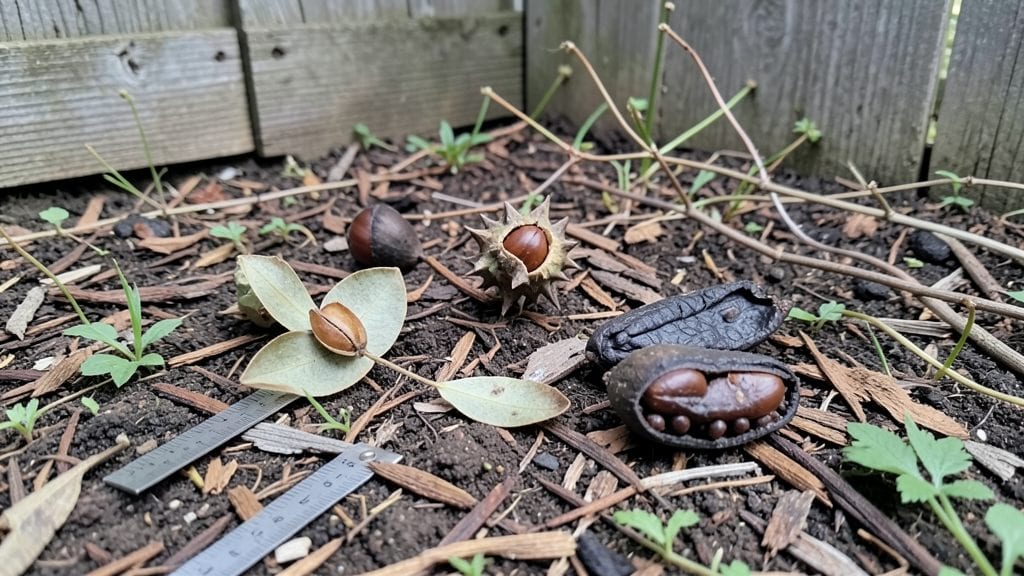
Mastering the identification of tree seed pods can feel like solving a puzzle—until you spot those three key traits: shape, texture, and size. 🌿 I’ve spent years collecting and identifying them, and the trick is focusing on just those.
Most people overlook the subtle differences that separate a sweetgum pod from a hickory nut, but those details make all the difference.
Start with shape—some pods are winged like maples, others spiky like sweetgums, and a few look like tiny footballs (hello, hickory!). Then check texture: smooth, fuzzy, or ridged?
Finally, measure them—most common pods fall between 1 inch and 3 inches long. Grab a notebook and a ruler, and you'll spot species faster than you think.
By the end, you'll recognize pods at a glance and know exactly which trees they belong to. Imagine walking through the woods in fall, spotting a cluster of fuzzy seed pods, and instantly knowing they're from a locust tree—no guessing required.
The confidence grows with every identification, and soon you'll be sharing your finds with fellow gardeners.
Works for backyard trees, park strolls, or even container-grown specimens. Here's how to start matching pods to species with just a few simple steps—no fancy tools needed.
Nature’s Design Triggers Seed Pods
Seed pods aren’t just random botanical oddities—they’re the result of evolutionary strategies that ensure a tree’s survival. Understanding why they form, split, or disperse helps you decode their purpose. Here’s the science behind their creation and behavior.
Every seed pod starts with a tree’s genetic programming. Trees produce pods to:
- Protect seeds: Pods shield developing seeds from predators, harsh weather, and disease. Thick walls (like those in acorns or hickory nuts) act as natural armor.
- Regulate timing: Some pods only open when conditions are ideal—like maple samaras (helicopter seeds) that wait for wind or lupine pods that burst when moist.
- Encourage dispersal: Pods evolve to release seeds far from the parent tree, reducing competition. Dandelion-like pods (e.g., cottonwood) hitch rides on animals, while explosive pods (like touch-me-not) shoot seeds violently.
Pro Tip: 🌡️ Temperature and moisture trigger many pods. A dry lotus seed pod might stay closed until rain swells its seams, while milkweed pods release seeds when warm.
Pods adapt to their ecosystem’s challenges. Key environmental factors include:
| Factor | Example Pod Adaptation | Why It Works |
|---|---|---|
| 🌪️ Wind | Maple samaras (whirly seeds) | Winged pods spin like helicopters, carrying seeds miles away. |
| 🐾 Animals | Horse chestnut (spiky pods) | Spines deter herbivores until seeds are mature, then split open. |
| 💧 Water | Coconut (fibrous husk) | Buoyant pods float on ocean currents, dispersing seeds globally. |
| 🔥 Fire | Banksia (woody, heat-resistant) | Pods survive bushfires, releasing seeds only when scorched. |
Key Insight: 🔥 Fire-adapted pods (like eucalyptus) often have thick, charred exteriors that protect seeds until flames pass, then release them into nutrient-rich ash.
Not all pods come from fertilized flowers—but most do! Here’s how pollination ties to pod development:
- Double fertilization: In flowering trees (e.g., oak or hazel), pollination triggers two sperm cells: one fertilizes the egg (becoming the seed), the other grows into the pod’s tissue.
- Failed fertilization = no pod: If pollination doesn’t occur (e.g., wind-pollinated trees like pine miss the mark), the flower may drop without forming a pod.
- Parasitic tricks: Some trees (like mistletoe) produce pods without fertilization via apomixis, cloning seeds genetically.
Actionable Tip: ✨ Observe flower structures near pods—trees with showy blooms (e.g., magnolia) often have animal-dispersed pods, while conspicuous flowers (e.g., willow) suggest wind dispersal.
By recognizing these evolutionary triggers, you’ll spot patterns in pod shapes, sizes, and behaviors—making identification faster and more intuitive. Next, let’s explore how to match pods to their parent trees.
Quick Fixes for Seed Pod Confusion
Struggling to tell a maple samara from a horse chestnut conker? Or maybe you’re just overwhelmed by the sheer variety of seed pods out there? Don’t worry—with the right tools and techniques, you can go from guessing to identifying like a pro. Here’s how to solve common seed pod mysteries fast, plus tips to keep your knowledge (and your garden) thriving.
Before diving in, arm yourself with the essentials:
- A field guide or app (like iNaturalist or LeafSnap) for instant comparisons.
- A magnifying glass—tiny details (like pod texture or vein patterns) make all the difference.
- A notebook or phone camera to jot down shapes, colors, and any unique features.
- A ruler or measuring tape—pod size is a game-changer for narrowing down species.
Pro Tip: 💡 Snap a photo of the pod and the leaf it came from. Many trees have distinct leaf shapes that pair with their seed pods, cutting guesswork in half.
Not all seed pods are created equal. Start by categorizing them into these broad groups:
| Pod Category | Key Traits | Common Examples |
|---|---|---|
| Winged Samaras | Flat, helicopter-like, often paired | Maple, ash, elm |
| Spiky or Prickly | Sharp edges or barbs | Sweet gum, sweetgum balls |
| Hard-Shelled Nuts | Woody, rounded, or lobed | Acorns, hickory nuts, chestnuts |
| Dry, Papery Cases | Splits open to release seeds | Milkweed, okra, catalpa |
| Fleshy or Berry-Like | Soft, sometimes colorful | Mulberry, holly, hackberry |
Pro Tip: ✨ If the pod is still attached to the tree, observe how it’s arranged—clusters, single pods, or hanging chains can hint at the species.
Size matters!
Grab your ruler and note: - Length/width (e.g., a horse chestnut conker is ~1 inch wide, while a maple samara is ~1–2 inches long). - Thickness (thin and papery vs. thick and woody). - Attachment point (does it hang from a stem, grow in a cluster, or sit alone?).
Example: If your pod is spiky, round, and 1–1.5 inches wide, it’s likely a sweetgum ball. If it’s flat with a wing and 1–2 inches long, it’s probably a maple samara.
When in doubt, let technology lend a hand:
- Plant ID apps (like PlantNet or Google Lens)—upload a photo and let AI suggest matches.
- Online databases (e.g., USDA Plants or Arboretum sites) for regional species lists.
- Local gardening groups—post a photo on Facebook or Reddit for crowd-sourced help.
Pro Tip: 🌡️ Take photos in natural light and include a reference object (like a coin) for scale.
Once you’ve mastered identification, keep your skills sharp with these habits:
- Label your finds: Collect a few pods, press them in a book, and label them with the tree’s name.
- Visit arboretums or botanical gardens: See pods in person alongside their parent trees.
- Join a nature walk: Local groups often host guided hikes where experts point out trees and their seed pods.
- Start a “pod journal”: Sketch or photograph pods you find, noting location, season, and tree type.
Pro Tip: 🎯 Season matters! Some pods (like milkweed) appear in summer, while others (like acorns) drop in fall. Track when you find them to refine your ID skills.
With these steps, you’ll go from scratching your head over a mysterious pod to confidently naming it—and maybe even growing the tree yourself. Happy identifying!
Frequently asked questions
What are the easiest seed pods to identify in my backyard?
Start with maple samaras (helicopter seeds) or acorns—both are common and have distinct shapes. Maple pods are winged and spin in the wind, while acorns are round with a cap. These appear in late summer/fall and are great beginner markers.
How do I tell the difference between a sweetgum ball and a horse chestnut?
Sweetgum balls are spiky, round, and 1–1.5 inches wide with sharp points, while horse chestnuts are smooth, glossy, and covered in soft spines (like a conker). Sweetgums split open when dry, while chestnuts stay intact until mature.
Can I use my phone to identify seed pods?
Apps like iNaturalist or LeafSnap let you upload photos for instant matches. For best results, include a reference object (like a coin) and shoot in natural light. Pro tip: Snap the pod and its attached leaf—many trees have paired traits.
Why do some seed pods explode when touched?
Pods like touch-me-not (Impatiens) or lupine use explosive mechanisms to disperse seeds. When dry, their walls build tension—until a slight touch triggers a rapid release (up to 65 mph!). This works best in dry conditions to maximize seed spread.
Are there toxic seed pods I should avoid?
Yes! Castor bean pods (smooth, glossy, 3-lobed) contain ricin—a deadly toxin. Poison ivy pods (green berries) and yew tree seeds are also dangerous. When in doubt, research the tree’s leaves and pods before handling.