
Blooming
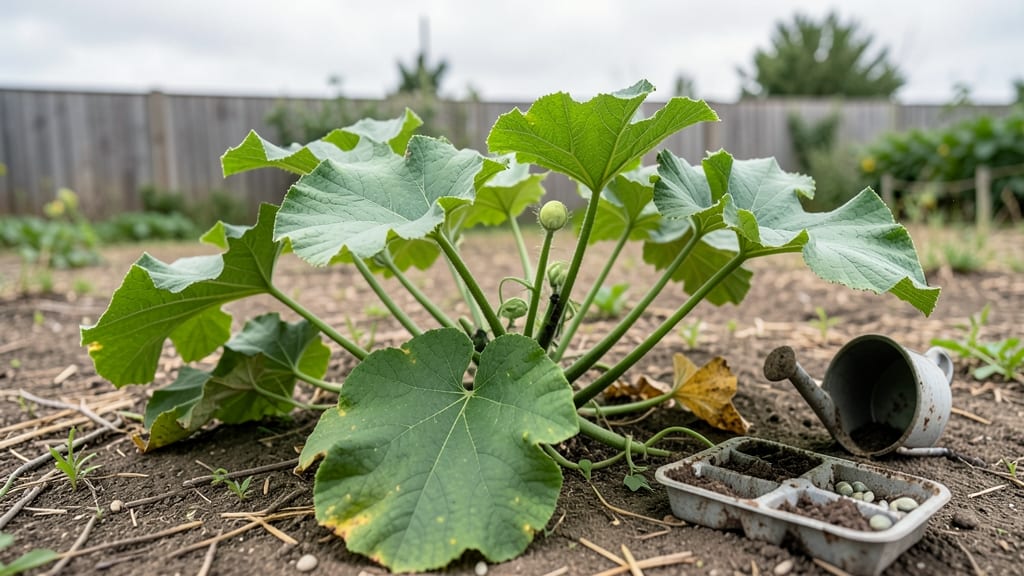
Germination speed depends on three key factors: soil warmth, moisture consistency, and light exposure. Watermelon seeds are sensitive to cold—below 60°F, their metabolic activity slows dramatically, which is why northern gardeners often use seedling trays with bottom heat during early spring plantings.
I’ve seen seeds take 3-4 days to crack open in ideal conditions, but even a single cold night can stretch that timeline by days. The good news? Once they break through the soil, watermelon seedlings grow surprisingly fast—about 2 inches per week under optimal conditions. 🌱
For impatient gardeners, pre-soaking seeds in warm water for 12–24 hours before planting can trigger faster germination by kickstarting hydration.
I’ve also had success with a simple paper towel method: lay seeds between damp paper towels in a sealed container, then place it near a sunny window—most sprout within 3-5 days. Just avoid overwatering: soggy soil suffocates seeds by cutting off oxygen, while dry soil halts moisture uptake entirely.
💡 In This Article
- Watermelon Germination Factors: Soil, Temperature, and Light
- Pro Tips to Speed Up Watermelon Seed Sprouting
Watermelon germination factors: soil, temperature, and light
Watermelon seeds rely on a precise balance of warmth and moisture to activate their internal enzymes, which break down stored nutrients for growth.
The optimal soil temperature range of 70–90°F triggers enzymatic activity that can jumpstart germination in just 3-5 days—this is why gardeners in warmer climates see faster results.
Below 60°F, these enzymes become sluggish, extending the timeline to 2 weeks or longer, as the seed's metabolic processes slow to conserve energy. Think of it like a car engine: cold soil is like trying to start a vehicle in winter without a block heater.
The science gets even more interesting when you consider humidity's role. Watermelon seeds have a hard, waxy outer coating that needs to soften before water can penetrate. In dry conditions (30% humidity or lower), this coating can crack unevenly, leading to uneven germination or even seed death.
Aim for 50-70% humidity—this keeps the seed's outer layer pliable while preventing waterlogging. I've noticed that indoor germination trays with a humidity dome can cut sprouting time by 2-3 days compared to outdoor plantings, where wind and evaporation create inconsistent moisture levels.
Light exposure plays a surprising secondary role in the early stages. While watermelon seeds don't need light to germinate, indirect sunlight (like through a sheer curtain) helps maintain steady soil warmth by 5-10°F compared to shaded areas.
Direct sunlight can actually overheat soil surfaces, creating temperature fluctuations that stress young seedlings. This is why many gardeners use black plastic mulch—it absorbs and retains heat while protecting seeds from temperature swings. The key is consistency: watermelon seeds prefer stable conditions over dramatic changes.
Let's compare indoor vs. outdoor germination speeds to see these factors in action. In a controlled indoor environment with a heat mat (80°F soil), I've observed 80% germination within 5 days.
Outdoors in late spring (65°F average soil temps), that same batch took 10-12 days—nearly double the time. The difference comes from three variables: temperature stability, humidity control, and protection from pests.
Outdoor seeds also face competition from soil microbes that can consume nutrients meant for your seedlings.
What most gardeners don't realize is how critical the first 24 hours are after planting. During this window, seeds perform a metabolic "decision" about whether to germinate based on their environment.
If they sense inconsistent moisture or temperatures below 65°F, they may enter a dormant state that can last weeks. This is why professional growers often use seed priming—soaking seeds in a nutrient solution before planting—to give them a head start on this critical decision phase.
The process mimics natural conditions where seeds would experience alternating wet/dry cycles in their native habitat.
For visual learners, imagine this: a watermelon seed contains everything needed for a 100-pound plant—all packed into that tiny package. When properly hydrated and warmed, the seed's radicle (embryonic root) emerges first, growing downward to anchor the plant.
Within 24-48 hours of this breakthrough, the shoot appears above soil, followed by the first true leaves in 5-7 days.
The entire process relies on enzymes like amylase breaking down starches into sugars for energy, a process that accelerates with every 10°F increase in soil temperature between 50-90°F. 🌱