Vegetables
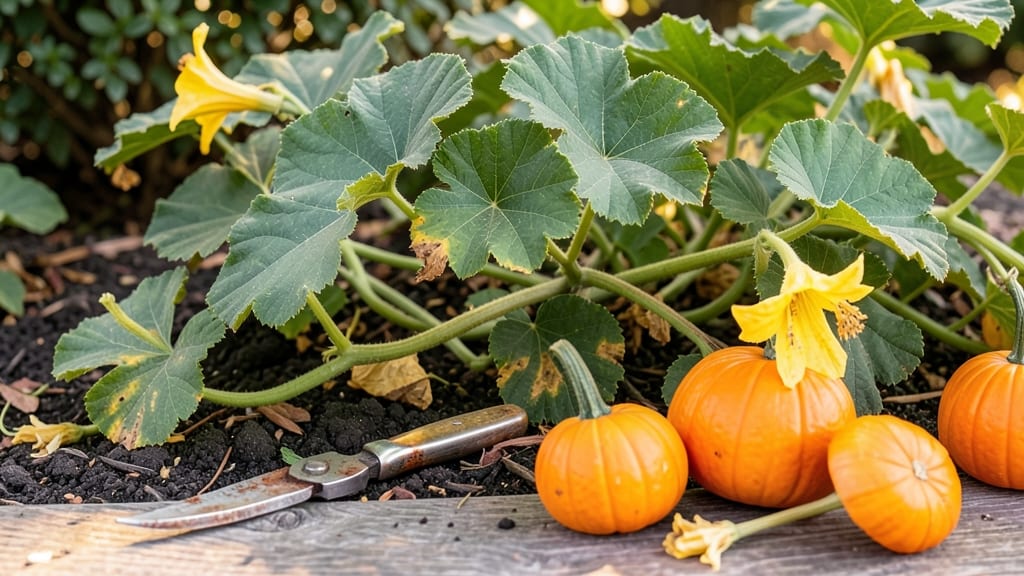
Mini pumpkins do have seeds, though they’re smaller and fewer in number than those in standard pumpkins, typically ranging from 5 to 20 seeds per cavity. Their seeds are edible and can be roasted or saved for planting.
Yes, mini pumpkins contain seeds—just on a smaller scale. 🌱 Their compact size means they allocate energy differently, producing fewer but still viable seeds compared to their larger counterparts.
These tiny seeds pack the same nutritional benefits as regular pumpkin seeds, including healthy fats and protein, though they require careful handling to extract without damage.
What sets mini pumpkin seeds apart is their dual purpose: they’re perfect for snacking when roasted with spices, yet their viability makes them great for growing next season’s pumpkins. Just remember—because of their smaller cavities, you’ll need to check multiple mini pumpkins to collect enough seeds for planting.
💡 In This Article
- Mini Pumpkin Seed Development Compared to Large Varieties
- Harvesting and Using Mini Pumpkin Seeds
Mini pumpkin seed development compared to large varieties
Mini pumpkins follow the same botanical principles as their larger relatives, but with critical differences in energy allocation. Their smaller size forces plants to prioritize fruit development over seed production, resulting in fewer cavities and smaller seed clusters.
A standard pumpkin like Howden or Cinderella can produce 500-1,000 seeds, while mini varieties like Jack-Be-Little average just 10-20 seeds total across their 2-4 cavities. This isn't just about space—it's a genetic trade-off where mini pumpkins invest more energy in fruit growth per unit volume.
The cavity size limitation comes from the plant's vascular system. Mini pumpkins have less internal space for seed development because their ovary walls are thinner and their placenta tissue (where seeds attach) is more compact.
Giant pumpkins like Atlantic Giant varieties can develop 10+ cavities with hundreds of seeds because their plants allocate more resources to reproductive structures. The seed-to-fruit ratio in mini pumpkins is therefore 1:10 (10 seeds per pumpkin), compared to 1:500 in giant varieties. 🌱
Seed viability isn't compromised by size—mini pumpkin seeds contain the same 30% oil content and 25% protein as larger seeds, just in smaller quantities. The key difference lies in their hull thickness: mini seeds have 20-30% thinner seed coats, making them more delicate during extraction.
This thinness also means they dry faster when roasted, achieving crispiness at 300°F in just 8-10 minutes versus 12-15 minutes for larger seeds.
Interestingly, the seed cavity arrangement differs too. Mini pumpkins typically have 1-2 seeds per cavity arranged in a single layer, while large pumpkins develop 3-5 layered clusters. This spatial efficiency allows mini pumpkins to maximize seed distribution within limited cavity space.
The trade-off? Each seed gets slightly less endosperm (the nutrient-rich tissue inside seeds), which is why they're 20-30% lighter individually than standard pumpkin seeds.
Here's what most gardeners don't realize: the seed cavity number correlates directly with the pumpkin's stem diameter. Mini pumpkins with 1-inch stems rarely develop more than 3 cavities, while 2-inch stems can support 5-6 cavities.
This structural limitation explains why you'll often find 5-10 seeds total in a mini pumpkin versus 200+ in a giant. The plant's energy budget simply can't support both massive fruit size and abundant seed production simultaneously. 💫
For those curious about the seed-to-plant ratio, mini pumpkins offer a fascinating efficiency: their seeds are 80% viable for planting compared to 60-70% for giant varieties. This higher viability makes them ideal for home gardeners who want reliable germination without needing to harvest dozens of seeds.
The downside? Their smaller size means you'll need to collect seeds from 5-10 mini pumpkins to get enough for a full planting patch.
The science behind this involves phytohormone allocation. Mini pumpkins produce more auxin (a growth hormone) to stimulate fruit expansion, leaving less for seed development. In contrast, giant pumpkins prioritize cytokinins (cell division hormones) to maximize seed production.
This hormonal balance explains why mini pumpkin seeds are 15-20% smaller in length but maintain identical nutritional profiles per gram. 🌟