
Flowers
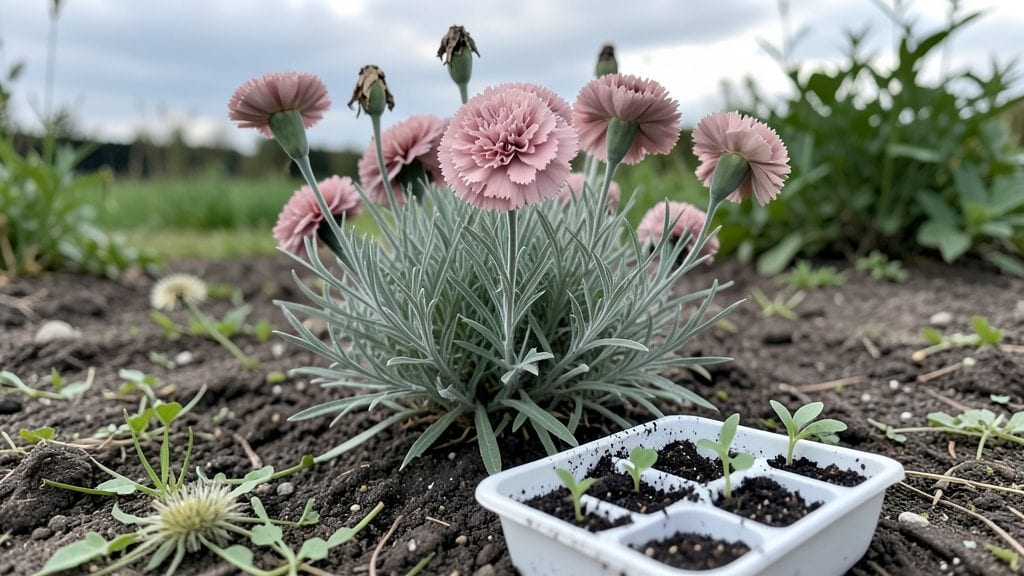
Unlock those dreamy pink-and-white dianthus flower seeds blooms in just 60 days—no nursery wait, just a warm spot and a little patience. 🌸 The trick is coaxing these tiny seeds to sprout. need coaxing before they’ll pop.
I’ve grown dianthus from seed for five summers now, and the secret isn’t fancy—it’s timing, moisture, and a little shade to keep seedlings from stretching too fast.
You’ll need well-draining soil mix, a shallow tray or cell packs, and a heat mat if your home runs cool—dianthus seeds germinate best at 70-75°F.
Start indoors 10-12 weeks before your last frost, and keep the soil barely moist (not soggy) until you see those first green spikes. The biggest mistake? Letting the soil dry out or giving them too much light too soon—both cause leggy, weak seedlings that flop over.
By day 60, you’ll be pinching back the first flush of blooms to encourage bushier growth, and the fragrance—honey-sweet with a clove-like kick—will have neighbors asking where you bought them.
These flowers thrive in full sun but tolerate partial shade, making them perfect for borders, rock gardens, or even container edges. Once established, they self-seed reliably, so you’ll have dianthus popping up for years.
Fair warning: slugs adore young seedlings, so have copper tape or diatomaceous earth ready. But the payoff—bold, long-lasting blooms from early summer through fall—makes it worth the effort. Here’s how to get those first sprouts without the usual seed-starting headaches.
📚 In This Guide
- What you need
- Instructions
- Tips and common mistakes
- Wrapping up and next steps
What you need
- ● Dianthus flower seeds: Choose from varieties like Dianthus barbatus (Sweet Williams) or Dianthus chinensis. Buy a packet with 50–100 seeds for a full display.
- ● Seed-starting trays or pots: 2–4-inch deep trays with drainage holes (biodegradable options work great!). Aim for 12–24 cells per tray.
- ● High-quality seed-starting mix: A lightweight, sterile potting mix (avoid garden soil—it’s too dense!). Look for blends labeled "seed-starting" or "organic potting soil."
- ● Grow lights or sunny windowsill: Dianthus seeds need 6–8 hours of light daily. A full-spectrum LED grow light is ideal if natural light is limited.
- ● Misting bottle or spray nozzle: Keeps seeds moist without drowning them. Aim for fine mist applications.
- ○ Plastic wrap or humidity dome: Helps retain moisture while seeds germinate (optional but recommended for beginners).
- ○ Small fan (optional but helpful): A gentle breeze prevents damping off (a fungal disease). Run it for 10–15 minutes daily once seedlings sprout.
- ● Fertilizer: A balanced, water-soluble fertilizer (like 10-10-10) diluted to half-strength once seedlings have 2–3 true leaves.
- ● Heat mat: Speeds up germination if your space is below 65°F (18°C). Set to 70–75°F (21–24°C) for optimal results.
- ● Transplanting tools: Small trowel, 3–4 inch pots, and peat pots for easy outdoor transition.
- ● Epsom salt: A teaspoon per gallon of water boosts magnesium and improves blooms (add every 4–6 weeks).
- ● Compost or worm castings: Mix 10% compost into soil at transplanting for nutrient-rich growth.
Step-by-Step instructions for growing dianthus from seeds
Here's how to coax vibrant dianthus blooms from tiny seeds with minimal fuss.
🌱 Step 1: Prepare Containers and Seed Starting Mix
Fill 4-inch diameter seed trays with a well-draining seed-starting mix—dianthus roots despise soggy conditions. I press the mix down lightly with my fingers until it's firm but not compacted, creating a smooth surface for even planting. Moisten the soil until it's damp to the touch but not dripping, as excess water can cause seeds to rot before they sprout.
Dianthus seeds are tiny, so I use a toothpick to create small furrows about 1/8 inch deep—just enough to cover them lightly. Space the furrows 1/4 inch apart to prevent overcrowding later. Here's the thing—dianthus seeds need light to germinate, so don't bury them too deeply. A sprinkle of fine vermiculite over the top helps retain moisture while allowing light penetration.
💧 Step 2: Sow Seeds and Maintain Ideal Germination Conditions
Use a clean, fine-tip tweezers to place seeds along the furrows—one seed per spot. I find it helps to dampen the tweezers first so the seeds stick slightly, preventing them from bouncing away. Once all seeds are planted, mist the surface gently with water until the soil looks uniformly moist but not wet.
Cover the tray with a clear plastic dome or wrap it in plastic wrap to create a humid microclimate. Dianthus seeds germinate best at 65-70°F, so place the tray on a seedling heat mat if your home runs cooler. Keep the soil consistently moist by checking daily—you'll see condensation on the plastic, which is a good sign. Germination typically takes 10-21 days, but don't be surprised if it takes longer, especially in cooler conditions.
☀️ Step 3: Provide Light and Thin Seedlings
As soon as you see the first green sprouts, remove the plastic dome immediately to prevent damping-off disease. Place the tray under a grow light or in a spot with bright, indirect light—dianthus seedlings need 14-16 hours of light daily to prevent leggy growth. I position the light 2-3 inches above the seedlings and raise it gradually as they grow to maintain that distance.
Once seedlings have 2-3 sets of true leaves (the first pair are cotyledons, the second and third are true leaves), it's time to thin. Use small scissors to snip the weaker seedlings at soil level, leaving the strongest one in each spot. This ensures the remaining plants have enough space to develop strong roots. You'll notice the remaining seedlings perk up within a few days as they no longer compete for nutrients.
🪴 Step 4: Harden Off and Transplant Seedlings
About 4-6 weeks after sowing, when seedlings are 2-3 inches tall with a sturdy stem, it's time to harden them off. Start by moving the tray to a sheltered outdoor spot for 1 hour daily, gradually increasing the time over 7-10 days. This acclimates them to wind, sun, and temperature fluctuations. Watch for any wilting—if you see it, bring them back inside for another day or two before trying again.
Transplant seedlings into 4-inch pots filled with a well-draining potting mix amended with perlite or sand. Dig a hole slightly deeper than the seedling's root ball, place it in, and firm the soil gently around the base. Water thoroughly to settle the roots, and avoid getting water on the leaves to prevent fungal issues. Dianthus thrives in full sun, so choose a spot with at least 6 hours of direct sunlight daily.
Tips & tricks for growing dianthus from seeds
Here's what I've learned after growing dianthus from seed for years—these tricks make all the difference between struggling seedlings and thriving plants.
Light Requirements: In Step 3, when you're providing those critical 14-16 hours of light daily, I recommend supplementing with a full-spectrum LED grow light if your natural light isn't strong enough. Dianthus seedlings will stretch dramatically toward any light source, creating weak stems that can't support themselves. Position your light just 2-3 inches above the seedlings and adjust the height as they grow to maintain consistent light exposure.
Germination Environment: The 65-70°F temperature range mentioned in Step 2 is crucial—any cooler and germination slows dramatically. If your home runs chilly, place the seed tray on a seedling heat mat set to 70°F. Watch for condensation on the plastic cover daily; this shows you're maintaining the right humidity. If condensation disappears, mist the soil lightly to restore moisture without disturbing the seeds.
Thinning Technique: When you reach the thinning stage in Step 3, I've found that using small scissors instead of pulling seedlings by hand prevents disturbing the roots of the remaining plants. Snip at soil level, leaving the strongest seedling in each spot. This might seem harsh, but the remaining seedlings will grow more robustly without competition. You'll notice their leaves perk up within just a few days.
Harden Off Gradually: During the 4-6 week hardening-off period in Step 4, I start with just 1 hour of outdoor exposure on day one, then increase by 15-30 minutes each subsequent day. Watch for any wilting—this is your signal to bring them back inside for another day. The goal is to acclimate them slowly to outdoor conditions without shocking their delicate systems. A sheltered spot like under a patio cover works perfectly for this process.
Pro Tips for Dianthus Flower Seeds
- Here's what I've learned after growing dianthus from seed for years—these tricks make all the difference between struggling seedlings and thriving plants.
- Light Requirements: In Step 3, when you're providing those critical 14-16 hours of light daily, I recommend supplementing with a full-spectrum LED grow light if your natural light isn't strong enough.
- Germination Environment: The 65-70°F temperature range mentioned in Step 2 is crucial—any cooler and germination slows dramatically.
Frequently asked questions
Got questions about growing dianthus from seeds?
Here are the answers to the most common ones—so you can dive right into your colorful garden adventure!
How long does it take for dianthus flower seeds to germinate?
Dianthus seeds typically germinate in 14 to 21 days when kept in warm, moist soil (around 65–75°F). Patience is key—some varieties may take a little longer, especially in cooler conditions. Use a seedling heat mat if germination feels slow!
What’s the best temperature for growing dianthus from seeds?
For optimal growth, maintain soil temperatures between 60–75°F during germination. Once sprouted, dianthus thrives in full sun (6+ hours daily) and cooler temps (50–75°F). Avoid scorching heat—your plants will reward you with vibrant blooms!
Can I grow dianthus indoors from seeds?
Yes! Start seeds indoors 6–8 weeks before your last frost date using well-draining pots. Use a seed-starting mix and keep them under grow lights until they’re ready for transplanting. Just ensure they get plenty of sunlight later to prevent leggy growth.
Why aren’t my dianthus seeds sprouting?
Check these common issues:
- Dampness: Overwatering can cause rot—keep soil moist but not soggy.
- Light: Seeds need light to germinate; avoid burying them too deep (just 1/8 inch max).
- Freshness: Old seeds (over 1 year) may struggle—opt for fresh packs!
- Temperature: Too cold? Try a heat source or wait for warmer soil.
Are there easy-to-grow dianthus varieties for beginners?
Try these beginner-friendly varieties:
- Sweet William – Fast-growing, fragrant, and colorful.
- China Pink – Compact, heat-tolerant, and great for borders.
- Cheddar Pink – Cold-hardy and drought-resistant.
All three are perfect for seed-starting and thrive with minimal fuss!
Wrapping up and next steps
Growing dianthus flower seeds is a rewarding journey that brings vibrant, fragrant blooms to your garden in just 60 days! With the right soil, sunlight, and care, you’ll enjoy layered colors and sweet scents—perfect for borders, containers, or cutting gardens.
Whether you’re a beginner or seasoned gardener, these cheerful flowers are a delightful addition to any space.
Ready to get started? Pick your favorite varieties, grab those seeds, and watch your garden transform! 🌸 For extra inspiration, explore companion plants or creative ways to display your blooms—happy gardening! 🌱