
Vegetables
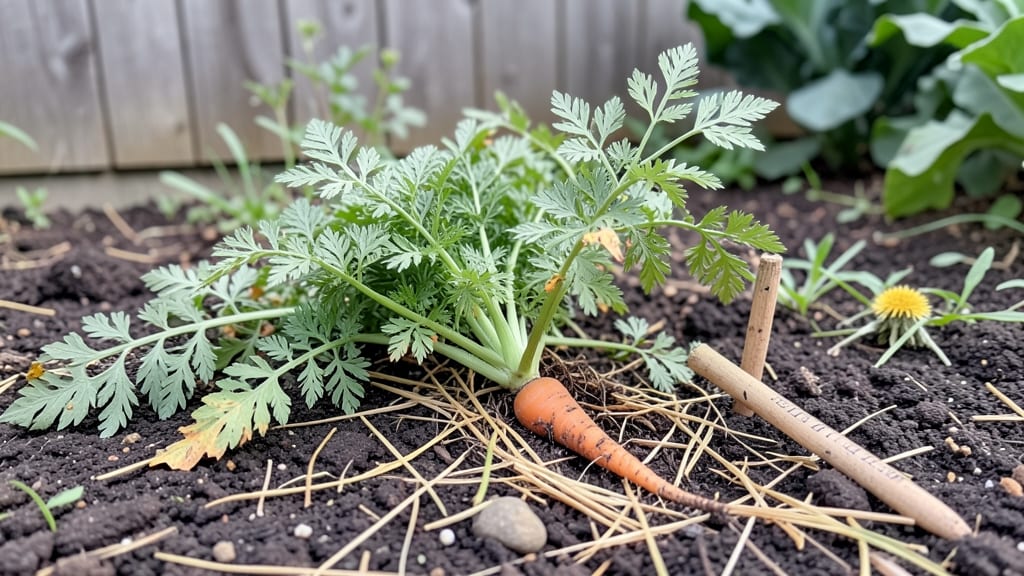
The right carrot seed depth is the secret to crisp, straight roots—plant them too deep, and you’ll end up with stunted harvests or forking 🥕. I’ve seen entire rows fail because of just a ¼-inch miscalculation, and it’s a mistake even experienced gardeners make.
Carrots are finicky about their planting environment, and seed depth is one of the biggest factors in whether you’ll get a bountiful harvest or a patchy disappointment. Too shallow, and the seeds dry out before sprouting; too deep, and they rot underground before ever seeing the light.
In this guide, I’ll break down the exact depth you need for your soil type, how to adjust for clay or sandy ground, and the simple tools that make planting foolproof. No more guessing—just straight, sweet roots every time.
Whether you’re a first-time gardener or a seasoned pro, these tips will help you avoid the most common mistakes and grow carrots that are perfectly sized and ready to harvest in 60 days or less.


The ideal carrot seed depth for perfect root growth
Getting the carrot seed depth right is the difference between a bountiful harvest of crisp, straight roots and a patch of forking disappointments. Carrot seeds are tiny—about 1/8 inch long—and they need just the right conditions to germinate properly.
Plant them too deep, and they’ll struggle to reach the surface. Too shallow, and they may dry out before sprouting. The ideal depth balances moisture, warmth, and light for optimal growth.
Research shows that planting carrot seeds at ¼ to ½ inch deep maximizes germination rates and minimizes forking. This range ensures seeds stay moist while giving seedlings enough energy to push through the soil.
The key is consistency—uneven depth leads to uneven growth, which is why many gardeners use seed tapes or precision drills for even spacing.
Soil temperature plays a critical role in germination. Carrot seeds germinate best when soil is between 60°F and 70°F. If your soil is cooler, planting slightly shallower (¼ inch) can help warm the seeds faster.
Conversely, in hot climates, a deeper planting (½ inch) retains moisture longer, preventing seeds from drying out before sprouting.
Here’s why depth matters so much: Carrots grow downward, and their roots push through the soil as they develop. If seeds are planted too deep, the roots may fork or split as they search for the surface.
Shallow planting can lead to weak seedlings that struggle to establish themselves. The ¼–½ inch rule is a science-backed guideline that aligns with how carrots naturally grow.
| Factor | Optimal Condition | Result |
|---|---|---|
| Seed Depth | ¼–½ inch | Balanced germination, straight roots |
| Soil Temperature | 60°F–70°F | Faster, uniform sprouting |
| Clay Soil Adjustment | Add sand, plant ¼ inch | Prevents compaction, improves drainage |
| Sandy Soil Adjustment | Add compost, plant ½ inch | Retains moisture, supports root growth |
| Rocky Soil Fix | Remove rocks, loosen soil | Straight roots, no obstructions |
Clay soil is notorious for compacting around carrot roots, leading to forking. To counteract this, mix in coarse sand or perlite to improve drainage and loosen the soil. When planting in clay, stick to the ¼ inch depth—this prevents seeds from being buried too deep as the soil settles.
Sandy soil, on the other hand, drains too quickly. Here, planting seeds at ½ inch deep helps retain moisture while giving seedlings enough support to grow straight.
Rocky or stony soil is another challenge. Carrots need deep, loose soil to grow straight, so remove large rocks before planting. If your soil is rocky, consider growing short varieties like 'Paris Market' or 'Little Finger', which tolerate slight obstructions better.
For deeper varieties like 'Danvers', amend the soil with compost to create a smoother growing environment.
One of the biggest myths about carrot planting is that deeper seeds mean stronger roots. In reality, over-deep planting (more than ½ inch) can cause seeds to rot before germinating or lead to weak, forked roots. The ¼–½ inch rule isn’t just a suggestion—it’s based on decades of horticultural research.
For example, studies from the University of Wisconsin-Madison found that seeds planted at ½ inch had a 20% higher germination rate than those planted at 1 inch.
If you’re growing carrots in containers, the depth guidelines still apply, but you’ll need to monitor soil moisture more closely. Container soil dries out faster, so planting at ¼ inch deep and keeping the soil consistently moist is key.
Use a fine-mesh sieve to sift compost into the soil before planting—this creates a loose, aerated environment that encourages straight root growth.
For maximum success, pair your carrot seed depth with proper spacing. Sow seeds ¼ inch apart in rows spaced 12–18 inches apart. Thin seedlings to 2–3 inches apart once they’re 2–3 inches tall. This gives roots room to grow without competing for nutrients, resulting in larger, straighter carrots.
Remember, the goal is consistency. Whether you’re using a seed tape, a precision planter, or your fingers, aim for that ¼–½ inch depth every time. With the right depth, soil amendments, and care, you’ll harvest carrots that are crisp, straight, and free of forks—every single time.
How to adjust carrot seed depth for different soil types
Not all soils are created equal, and your carrot seed depth should change based on whether you're working with clay-heavy, sandy, or rocky soil. The ideal ¼–½ inch depth becomes tricky when soil compacts easily or drains too quickly.
Let’s break down how to adjust for each type while keeping those roots straight and healthy.
For clay soil, the biggest challenge is compaction. Seeds planted at ¼ inch may end up buried deeper after rain or watering. To fix this, loosen the top 4–6 inches of soil and mix in sand or compost to improve drainage.
This helps maintain the right depth while preventing seedling stress.
In sandy soil, seeds can dry out too quickly if planted too deep. Here, aim for the upper limit of ½ inch and keep the soil consistently moist. Mulching with straw or compost helps retain moisture near the seeds without burying them further.
Rocky or stony soil requires extra care—seeds can get displaced or smothered. Create shallow furrows (¼ inch deep) and gently press seeds into the soil, then cover lightly with fine compost. Avoid heavy tools that might push seeds deeper than intended.
Adjusting Carrot Seed Depth by Soil Type
Clay Soil
- Retains moisture well
- Natural nutrients for growth
- Compacts easily, burying seeds deeper
- Poor drainage can cause rot
- Mix in sand or compost
- Plant ¼ inch deep in loosened soil
Sandy Soil
- Drains excess water quickly
- Easy to work with tools
- Seeds dry out fast if too shallow
- Nutrients wash away easily
- Plant ½ inch deep
- Use mulch to retain moisture
Rocky/Stony Soil
- Good drainage prevents rot
- Natural aeration for roots
- Seeds can get displaced
- Limited space for root growth
- Create shallow furrows
- Cover seeds with fine compost
To test your soil’s readiness, do a simple squeeze test: Grab a handful of moist soil. If it crumbles easily, it’s sandy. If it holds shape but breaks when dropped, it’s loamy.
If it stays in a tight ball, it’s clay-heavy and needs amendments. Adjust your seed depth accordingly for the best results.
Pro tip: Use a seed drill or spacing tool to maintain consistent depth, especially in rocky or uneven soil. This ensures every seed gets the same ¼–½ inch coverage, reducing forking and improving germination rates.
With these adjustments, you’ll avoid the frustration of uneven roots or poor germination. Happy planting—your crisp, straight carrots are just a few inches away! 🥕