
Watering
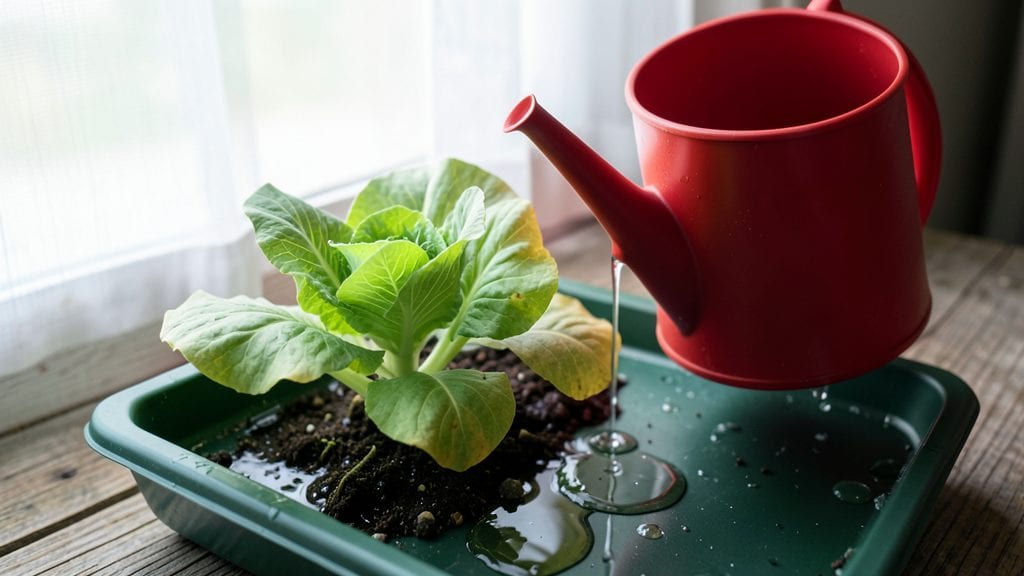
You can overwater seeds, which stifles root development, encourages mold growth, or causes seed rot before sprouting. Maintain gentle moisture at the soil base while ensuring excess water drains freely.
Overwatering seeds disrupts their delicate balance of hydration and oxygen—too much moisture smothers emerging roots and creates the perfect conditions for harmful fungi. 💫 The key is to keep the soil evenly damp (like a wrung-out sponge) rather than soggy, as seeds need air to metabolize and grow.
I’ve found that using a spray bottle or bottom-watering tray gives me better control than pouring from above, which can displace seeds or compact the soil.
Different seeds have unique needs—some, like lettuce, tolerate slightly wetter conditions, while others, like tomatoes, demand precise moisture levels. Always check your seed packet for specific guidance, and never let water pool in the tray for more than 15 minutes.
Adjust your approach based on humidity and temperature, too—hotter environments dry out faster, while cooler spaces may need less frequent watering.
💡 In This Article
- How Overwatering Damages Seed Germination
- Proper Watering Techniques for Seed Starting
How overwatering damages seed germination
Seeds require a precise balance of moisture and oxygen to germinate, and overwatering disrupts this equilibrium by creating an anaerobic environment. When soil stays saturated, water fills the tiny air pockets between particles, suffocating the seed's embryonic roots.
This deprivation forces the seed to rely on fermentation for energy—a process that produces toxic byproducts like ethanol, which can halt or even kill the seed before it sprouts. 🔥
The real damage begins at the cellular level. Seeds contain starches and proteins that need enzymes to break down during germination. Excess water leaches these nutrients from the seed coat while simultaneously promoting microbial activity. Fungal spores, which thrive in damp conditions, outcompete the seed for resources, leading to rot.
For example, Phytophthora and Pythium fungi can attack seeds within 24-48 hours of constant moisture, turning healthy seeds into mushy, discolored messes.
Another critical factor is the seed's natural protective layer. Many seeds have a hard outer coating designed to regulate water absorption. When submerged in water, this barrier softens and weakens, making the seed vulnerable to pathogens.
Imagine a seed's protective shell acting like a waterproof jacket—once it gets soaked through, the wearer (in this case, the seed) becomes exposed to the elements. 💫
Temperature also plays a hidden role. Overwatered soil stays cooler longer, slowing metabolic processes that seeds need to activate. While most seeds germinate best at 65-75°F, prolonged saturation can drop soil temps by 5-10°F, creating a double whammy of oxygen deprivation and metabolic slowdown.
This is why you might see seeds "dormant" in soggy soil—what appears to be waiting is actually survival mode.
Consider this comparison: A properly hydrated seed bed maintains 10-20% moisture content by weight, similar to a damp sponge that won't drip. Overwatered soil, however, can reach 30-50% moisture**, turning the growing medium into a bacterial breeding ground.
The difference between success and failure often comes down to these precise measurements and the invisible battle raging at the microscopic level.
What most gardeners don't realize is that even temporary overwatering can leave lasting damage. While seeds might survive brief periods of excess moisture, repeated incidents create a feedback loop: compacted soil reduces drainage, which leads to more standing water, which in turn encourages more fungal growth.
This cycle explains why some seeds appear healthy one day and rot the next—what seemed like harmless overzealous watering actually set off a chain reaction of biological warfare. ✨