
Trees
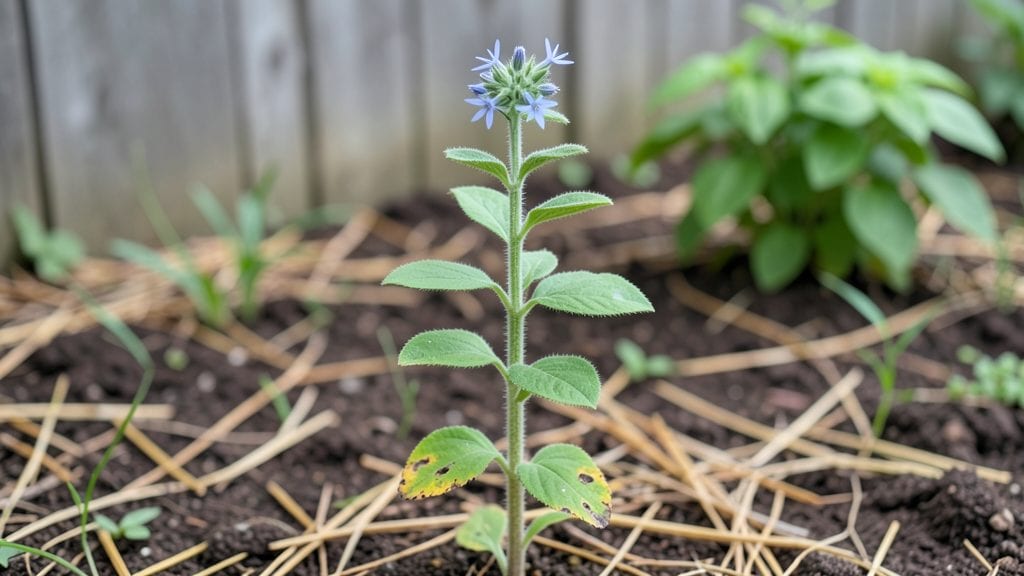
Mastering borage seedling identification early ensures you’ll never mistake those delicate sprouts for weeds—look for those smooth, rounded cotyledons and the telltale star-shaped leaves that follow. 🌱 seed tray.
Most gardeners confuse young borage with purslane or chickweed, but borage’s stems are the giveaway: they’re covered in fine, soft hairs and grow upright like little bluebonnet stalks. Even at the cotyledon stage, the stems feel slightly fuzzy to the touch, while purslane’s stems stay smooth and succulent.
Once the true leaves appear, you’ll spot the classic five-pointed, lobed shape—like a tiny starburst—with a waxy sheen that repels water. Healthy seedlings keep that vibrant green color even in cool weather, while stressed ones develop yellowing at the edges or stunted growth from overwatering.
This skill becomes your secret weapon for transplanting at the perfect time—when seedlings are 2-3 inches tall with 4-6 true leaves. That’s when they’re sturdy enough to handle without legginess, and you can still spot the telltale hairy stems before they get lost in the garden.
Mistaking Borage Seedlings For Others
Identifying borage seedlings correctly can be tricky, especially when they’re young or growing alongside other plants. Misidentification often happens due to a mix of visual similarities, environmental conditions, and lack of botanical knowledge.
Below, we break down the most common reasons why even experienced gardeners might struggle with accurate borage seedling identification—and how to avoid these pitfalls.
Borage (Borago officinalis) seedlings share leaf shapes with other plants in the Boraginaceae family, like comfrey or forget-me-nots. Their hairy, oval leaves with serrated edges can easily be confused with:
- Comfrey (Symphytum spp.): Similar fuzzy leaves, but comfrey grows larger and has a more robust, woody stem.
- Hare’s ear (Bupleurum rotundifolium): Rounded leaves with a silvery hue, but borage leaves are more elongated and star-shaped when mature.
- Young okra seedlings: Both have hairy stems, but okra leaves are more triangular and grow in a distinct pattern.
Why it happens: Young borage leaves start small and heart-shaped, mimicking other early-stage seedlings. Without mature markers (like blue star-shaped flowers or branching stems), confusion is inevitable.
Borage seedlings can develop yellowing leaves, stunted growth, or unusual patterns due to environmental factors, not just poor identification. Common culprits include:
| Symptom | Actual Cause | How to Tell the Difference |
|---|---|---|
| Yellowing leaves | Overwatering or nutrient deficiency (e.g., nitrogen lack) | Check soil moisture—borage prefers well-draining soil. Yellowing from deficiency starts at leaf edges, while overwatering causes mushy stems. |
| Purple-tinged stems | Phosphorus deficiency or cold stress | Purple stems in borage are normal under cool temperatures (below 50°F). If soil tests low in phosphorus, amend with bone meal. |
| Crinkled or curled leaves | Herbicide drift or pest damage (e.g., aphids) | Inspect undersides for pests. Herbicide damage causes uneven distortion, while pests leave sticky residue. |
Why it happens: Gardeners may dismiss environmental stress as a sign of poor health or misidentification, leading to unnecessary removal of healthy seedlings. Borage is hardy but sensitive to wet roots and extreme temperature swings.
While leaves get the spotlight, stem texture and root structure are often overlooked—yet they’re critical for accurate identification. Borage seedlings have:
- Square, hairy stems (a key trait of the Boraginaceae family). Other plants with square stems (like mint) have opposite leaves, while borage’s are alternate.
- Shallow, fibrous roots that spread horizontally. Taproots (like those in dill or parsley) are a dead giveaway for misidentification.
- Glandular hairs that may look like mold but are actually protective trichomes.
Why it happens: Gardeners often focus on leaves because stems are harder to examine without uprooting. Skipping this step leads to assumptions—like thinking a fuzzy stem is "just a weird borage"—when it might be Anchusa azurea (a close cousin with similar but slightly different leaf patterns).
Mislabeling in seed packets is a real and frustrating issue, especially for heirloom or open-pollinated seeds like borage. Common mistakes include:
- Selling borage seeds as "bee bush" (Buddleia davidii) or vice versa.
- Mixing borage with Lithospermum (puccoon) seeds, which have similar tiny, round seed shapes.
- Assuming "organic herb seeds" are all the same—some blends include Borago mixed with Echium (viper’s bugloss), which has toothed leaves instead of smooth edges.
Why it happens: Seed companies may prioritize aesthetics over accuracy, or sellers might repurpose packets without updating labels. Always cross-reference with reputable sources (like the Missouri Botanical Garden’s plant database) or grow a known sample for comparison.
To avoid misidentification, use this quick method:
- 🌿 Leaf shape: Are they hairy, oval, and serrated? Hold up to light—borage leaves are translucent when young.
- 🌱 Stem texture: Gently squeeze the stem—borage feels velvety due to trichomes.
- 🌍 Growth habit: Borage seedlings branch early and grow upright, while imposters (like comfrey) sprawl.
If two out of three don’t match, double-check or wait until the plant flowers—borage’s blue, five-petaled blooms are unmistakable.
Quick Fixes for Borage Seedling Confusion
Got tangled up in borage seedling identification? Don’t panic—these practical fixes will help you spot the difference fast, whether you're dealing with misidentification, growth issues, or garden mix-ups.
Cause: Young borage seedlings can resemble other plants like comfrey or even wild mustard, especially if they’re still tiny and haven’t developed their signature star-shaped leaves.
Fix:
- 🌱 Compare Leaf Shapes: Hold a seedling up to a reference photo of mature borage. Look for the distinctive five-lobed leaves—even young ones will show hints of this pattern.
- 👃 Smell Test: Crush a leaf—borage has a mild cucumber-like scent, while comfrey smells earthy and mustard-like plants have a sharp, peppery aroma.
- 📏 Measure Growth: Borage seedlings grow fast—if yours is under 2 inches tall but already has broad leaves, it’s likely borage. Slower growth with narrow leaves? Probably not.
Prevention Tip: 💡 Plant borage in a dedicated section of your garden to avoid cross-contamination with lookalikes. Use row markers or labels early to track progress.
Cause: Poor growth, yellowing, or stunted seedlings often mean environmental stress, pests, or disease—but they’re fixable!
Fix:
| Problem | Likely Cause | Solution |
|---|---|---|
| Yellowing Leaves | Overwatering or nutrient deficiency | 💧 Let soil dry slightly between waterings. Add compost or a balanced fertilizer. |
| Stunted Growth | Compacted soil or cool temps | 🌡️ Warm soil with black plastic mulch. Loosen soil gently with a fork. |
| Holes in Leaves | Pests (e.g., slugs, aphids) | 🪰 Handpick pests at dawn. Use neem oil spray for aphids or beer traps for slugs. |
| Wilting Despite Water | Root rot (overwatered) | ⏰ Stop watering for 2–3 days. Trim mushy roots and repot in fresh, dry soil. |
Prevention Tip: ✨ Start seeds indoors in biodegradable pots—this gives them a head start and reduces transplant shock. Use well-draining soil mixes to prevent rot.
Cause: Borage seedlings can get lost in a sea of weeds or volunteer plants (like wild borage or starflower).
Fix:
- 🌿 Pull and Compare: Snag a few suspect seedlings and lay them side by side. Borage’s hairy stems and star-shaped leaves are dead giveaways.
- 🔦 Use a Flashlight: At dusk, borage flowers glow faintly under UV light (if you have a blacklight). Weeds won’t.
- 🗑️ Cull Confidently: If a seedling lacks borage’s key traits (like the star-shaped leaves or cucumber scent), pull it out before it competes with your crop.
Prevention Tip: 🎯 Mulch heavily around borage plants to suppress weeds. A thick layer of straw or wood chips blocks light, giving your seedlings the upper hand.
Fix: Snap photos of your seedlings at different stages (leaf shape, stem texture, flower buds) and save them in a labeled folder. Next year, you’ll spot borage in seconds!
Prevention Tip: 💡 Grow a "test patch" of borage in a visible spot—this creates a living reference for when new seedlings pop up.
Frequently asked questions
What do borage seedlings look like at the cotyledon stage?
Borage cotyledons are smooth, rounded, and slightly fuzzy with a light green color. They’re heart-shaped and lack the serrated edges of true leaves. The key detail is the hairy stem—even at this early stage, it’ll feel soft and velvety to the touch, unlike most weeds.
How can I tell borage seedlings apart from comfrey?
Check the stem texture and leaf arrangement: borage has hairy, square stems with alternate leaves, while comfrey stems are woody and leaves grow in opposite pairs. Also, borage’s true leaves develop into star-shaped patterns, whereas comfrey leaves stay broad and oval.
Why are my borage seedlings turning yellow?
Yellowing usually means overwatering or nutrient deficiency. Let soil dry slightly between waterings, and add compost or a balanced fertilizer. If edges turn yellow first, it’s likely nitrogen deficiency. Mushy stems indicate root rot from too much moisture.
Can I transplant borage seedlings too early?
Yes, but wait until seedlings are 2-3 inches tall with 4-6 true leaves. Transplanting too early stresses fragile roots. Harden them off first by placing pots outside for 1-2 hours daily before moving to the garden.
What’s the best way to confirm borage vs. wild starflower?
Crush a leaf—borage smells faintly like cucumber, while starflower has no distinctive scent. Also, borage’s flowers are blue with five petals and grow in clusters, whereas starflower blooms are smaller and often white or pale blue.