
Size
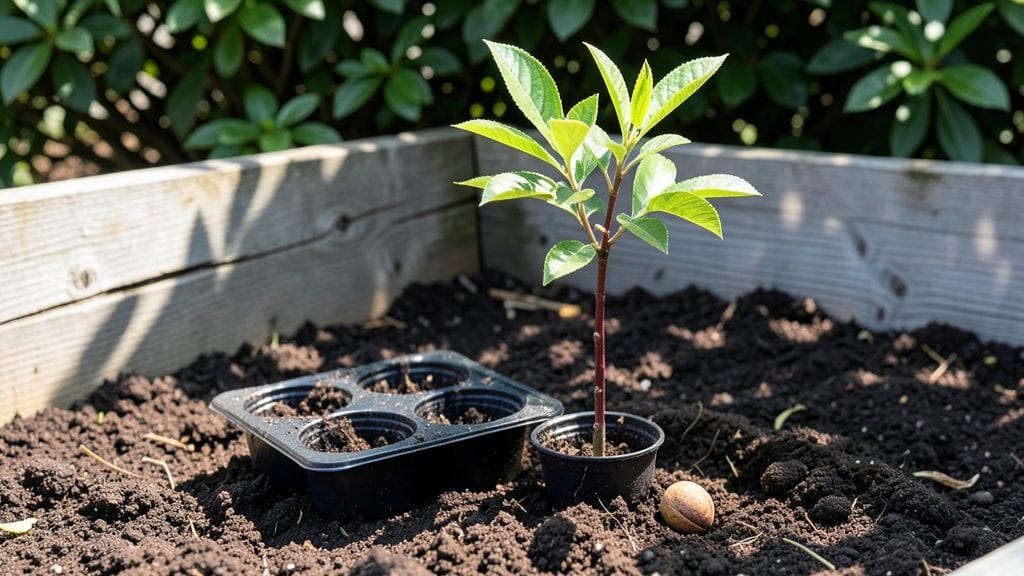
Turn that peach seed into a garden legacy—if you’re willing to wait, because growing a peach tree from seed transforms a forgotten snack into a backyard treasure. 🌱 The process starts with that pit you saved from last summer’s peach, but here’s the catch: patience is the real ingredient.
Seed-grown trees take 7-10 years to bear fruit, but the journey itself is rewarding, especially when you watch a sapling you nurtured become a towering tree.
You’ll need just three things: a warm, moist paper towel, a small pot with drainage, and a sunny spot for transplanting later. The real work happens in the first few weeks—keeping seeds consistently damp at 70-80°F until they sprout, then giving seedlings bright light to prevent leggy growth.
Most people quit here, but sticking with it means you’ll have a tree with roots deeper than any nursery-bought sapling.
By year three, you’ll have a 6-foot-tall tree with stubborn branches, and by year five, it’ll start showing real promise—maybe even a few blossoms. The fruit? Probably not the same as the parent peach, but that’s the magic of seed-growing: unpredictability.
You might end up with a tree that produces tiny, tart peaches or something entirely new, like a disease-resistant hybrid no one’s seen before.
Fair warning: this isn’t the fastest route to fruit, but it’s the most rewarding for gardeners who love stories. If you’re in it for quick peaches, grafting is the way to go—but if you’re in it for the adventure, a seed-grown tree becomes part of your family’s history.
Ready to start?
📚 In This Guide
- What you need
- Instructions
- Tips and common mistakes
- Wrapping up and next steps
What you need
- ● Peach pit (seed): 1-2 fresh, plump pits from ripe, organic peaches (avoid store-bought peaches treated with fungicides).
- ● Well-draining potting mix: 1 small pot (4-6 inches deep) filled with a blend of cactus/succulent mix or 50% peat moss + 50% perlite/sand.
- ● Plastic bag or humidity dome: A clear, sealable bag or a small greenhouse lid to maintain moisture.
- ● Spray bottle: For gentle watering (avoid over-saturating the soil).
- ● Permanent garden spot (later stage): A sunny location (6+ hours of sunlight/day) with well-draining soil (pH 6.0-7.0).
- ● Pruning shears: For trimming sprouts or transplanting.
- ● Fertilizer: Balanced 10-10-10 or organic compost (apply sparingly after germination).
- ○ Heat mat (optional): To speed up germination in cooler climates.
- ○ Grow lights (optional): For indoor seedlings if natural light is limited.
- ● Mulch: Straw or wood chips to retain moisture in the garden bed.
Step-by-step instructions for growing peach trees from seed
Here’s how to turn a single peach pit into a thriving tree—no green thumb required.
🌱 Step 1: Extract and Stratify the Seed
Start by cleaning the peach pit thoroughly under running water, removing all remaining fruit flesh. Let it dry completely for 24 hours—this prevents mold. I like to place it on a paper towel in a warm, dry spot until fully dry to the touch.
Next, place the pit in a small plastic bag with a damp paper towel. Seal it loosely and refrigerate for 6-8 weeks. This cold treatment (called stratification) mimics winter conditions and tricks the seed into thinking it’s time to grow. Check the towel weekly—it should stay moist but not soggy. If it dries out, add a few drops of water.
☀️ Step 2: Plant the Seed After Stratification
After 6-8 weeks, remove the pit and plant it 2 inches deep in a small pot filled with the 3 gallons of potting mix. Use a pencil to make a hole just deep enough for the pit, then cover it lightly with soil. Press gently to ensure good contact with the mix.
Place the pot in a sunny spot where it gets at least 6 hours of direct sunlight daily. I keep mine on a south-facing windowsill or under a grow light. Water lightly every 3-4 days, keeping the soil moist but never waterlogged. You’ll see a sprout in 4-8 weeks—this is your signal that germination has worked!
🌿 Step 3: Transplant and Care for the Seedling
Once the seedling reaches 6-12 inches tall, it’s ready for its first transplant. Choose a 5-gallon container or a garden spot with well-draining soil. Dig a hole twice as wide as the root ball but only as deep as the container it’s in. Gently remove the seedling, place it in the hole, and fill with soil, pressing lightly around the base.
Peach trees need full sun and regular watering—about 1 inch per week. Mulch around the base with 1 bag of mulch to retain moisture and protect roots. In colder climates, move the pot indoors or wrap the trunk in burlap for winter protection. With patience, your seedling will grow into a full-sized tree in 5-7 years.
Tips & tricks for growing peach trees from seed
Here's what I learned after growing several peach trees from seed—these tricks make all the difference between a thriving tree and a failed experiment.
Stratification is Non-Negotiable: That 6-8 weeks in the fridge isn't just a suggestion—it's what breaks the seed's natural dormancy. I tried skipping it once and waited months for germination. The cold period mimics winter conditions, signaling to the seed that spring has arrived. If you're impatient, you can speed up the process slightly by using a seed stratification mat, but don't go under 4 weeks—you'll likely end up with poor results.
Planting Depth Matters: The 2-inch depth recommendation isn't arbitrary—it's the sweet spot for peach seeds. Planting too shallow can expose the seed to temperature fluctuations, while planting too deep may prevent proper sprouting. Use a pencil to mark your planting depth before you start, and make sure the soil around the seed stays firmly pressed down to eliminate air pockets.
Sunlight is Your Most Critical Factor: Those 6 hours of direct sunlight daily are non-negotiable for peach trees. I've seen seedlings grow beautifully on windowsills but then struggle once transplanted outdoors—always place your pot where it gets full sun. If you're using a grow light, position it just 6 inches above the plant and keep it on for 12-14 hours daily to mimic natural sunlight patterns.
Patience Pays Off: The 4-8 weeks germination window can feel like an eternity, but don't be tempted to dig up the seed to check. Peach seeds need complete darkness to sprout. Instead, keep the soil consistently moist (but never soggy) and wait for the first green shoot to appear above the soil line. Once you see that, you'll know your stratification worked perfectly.
Pro Tips for Peach Seed Grow A Garden
- Here's what I learned after growing several peach trees from seed—these tricks make all the difference between a thriving tree and a failed experiment.
- Stratification is Non-Negotiable: That 6-8 weeks in the fridge isn't just a suggestion—it's what breaks the seed's natural dormancy.
- Planting Depth Matters: The 2-inch depth recommendation isn't arbitrary—it's the sweet spot for peach seeds.
Frequently asked questions
Got questions about growing peaches from seed?
You’re not alone! Here are answers to the most common queries to help you navigate this rewarding (but patient) process.
Can I really grow a peach tree from a grocery store seed?
Yes—but expect surprises! Store-bought peach seeds often won’t produce fruit identical to the parent tree. Grafting is needed for true-to-type fruit. Still, it’s a fun experiment for a unique heirloom tree. Pro tip: Save seeds from organic, homegrown peaches for better results!
How long does it take for a peach seed to sprout?
Germination can take 2–4 weeks in warm, moist conditions (70–80°F). Cold stratification (refrigerating seeds for 3–6 months) mimics winter and speeds up sprouting. Patience is key—some seeds may take months or even a year to break dormancy.
What’s the best climate to grow a peach tree from seed?
Peach trees thrive in USDA Zones 5–9, where they need 6–8 hours of sunlight daily and well-draining soil. They’re sensitive to frost—young trees may need winter protection. If you live in a hot, dry area, mulch heavily to retain moisture.
Will my seedling peach tree bear fruit?
Probably not for 3–5 years—and even then, it may be sparse or inedible. Peach trees grown from seed are not reliable for fruit production. For edible peaches, buy a grafted tree from a nursery. Your seedling could still be a stunning ornamental tree, though!
What pests or diseases should I watch for?
Common issues include:
- Peach tree borers: Watch for holes in bark or sawdust-like frass.
- Leaf curl: Fungal disease causing twisted, puckered leaves.
- Aphids/mites: Tiny pests that suck sap—spray with neem oil if spotted.
What if my seed doesn’t sprout?
Don’t give up! Try these troubleshooting steps:
- Check seed viability: Soak in water for 24 hours—if it sinks, it’s still alive.
- Re-stratify: Place seeds back in the fridge for another month.
- Try a different method: Some growers score the seed coat lightly with sandpaper to break dormancy.
Wrapping up and next steps
Growing a peach tree from seed is a rewarding journey that connects you to nature’s sweetest gifts! 🌱 While patience is key—remember, it may take years for your seedling to bear fruit—the joy of nurturing a tree from scratch is unmatched.
Start small, stay consistent, and soon you’ll be harvesting homegrown peaches straight from your own backyard.
Ready to take the next step? Research local climate zones to ensure your peach tree thrives, then plant your seedling in a sunny spot and watch it grow. Happy gardening! 🌞