
Trees
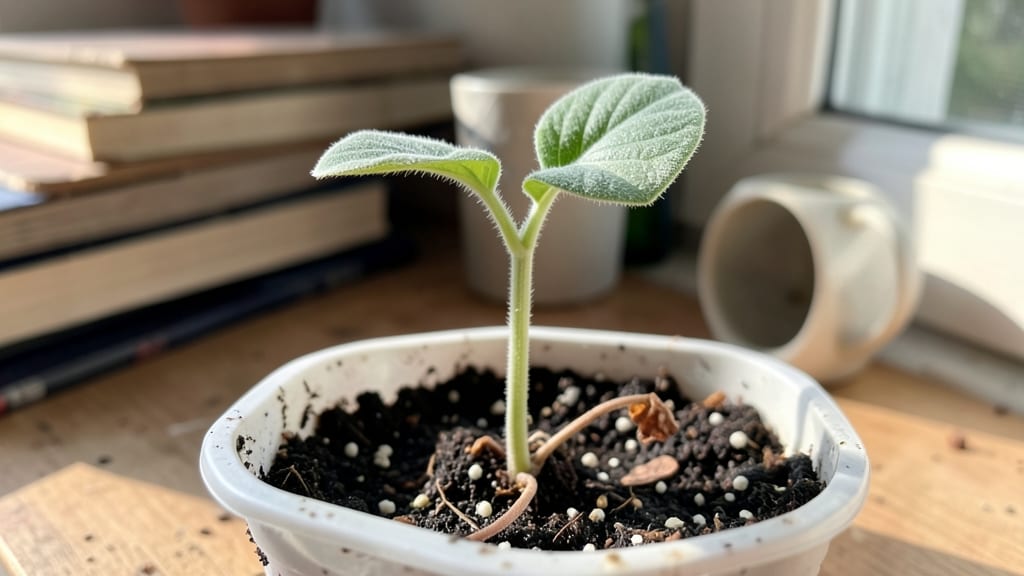
Mastering moonflower seedling identification begins with spotting those heart-shaped true leaves—delicate as miniature maple leaves, with smooth edges and a faintly pointed tip. 🌱 I’ve spent years watching these fragile plants emerge, and the first clue is always those telltale leaves.
The cotyledons (those first two leaves) are round, but the real moonflower identity shows up when the third or fourth leaf unfurls with that classic shape.
True moonflower stems are thin but sturdy, climbing almost immediately with tiny tendrils. The growth is fast—within two weeks, you’ll see those heart-shaped leaves climbing higher each day. If your seedlings look leggy with no tendrils, they might be something else, like morning glory, which has more jagged leaf edges.
You’ll know you’ve got genuine moonflowers when those leaves start growing in opposite pairs along the stem. The plants will also develop a slightly waxy coating, which helps them conserve moisture. This is your confirmation that you’ve got the real deal, not an imposter.
Keep an eye out for these clues, and you’ll spot moonflower seedlings before they even think about blooming. The key is patience—those first true leaves are your best bet for accurate identification. Once you recognize them, you’ll never confuse them again.
📚 In This Guide
- What you need
- Instructions
- Tips and common mistakes
- Wrapping up and next steps
What you need
- ● Moonflower seeds (or seedlings): Ensure they’re from a trusted source (e.g., Ipomoea alba or Ipomoea alba var. radiata). Pro tip: 💡 If starting from seed, soak them in warm water for 12–24 hours to speed up germination!
- ● Growing containers: Small pots (3–4 inches in diameter) with drainage holes for seedlings, or a seed-starting tray with individual cells.
- ● Well-draining potting mix: A blend of 50% peat moss or coco coir, 30% perlite or vermiculite, and 20% compost (sterilized to prevent mold).
- ● Watering can or spray bottle: A fine-mist sprayer works best for delicate seedlings.
- ● Grow lights or sunny windowsill: Seedlings need 6–8 hours of light daily. A full-spectrum LED grow light (12–15 watts per square foot) is ideal if natural light is limited.
- ● Humidity dome or plastic wrap: Keeps moisture levels high (80–90% humidity) until seedlings sprout (typically 7–14 days).
- ○ Thermometer (optional but helpful): Moonflower seeds germinate best in 70–85°F (21–29°C) soil.
- ● Seedling heat mat: Maintains consistent warmth for faster germination.
- ● Fertilizer: A balanced, water-soluble fertilizer (5-5-5 or 10-10-10) diluted to half-strength once true leaves appear.
- ● Magnifying glass: Helps inspect leaf shapes and stem details for accurate identification.
- ● Garden journal or camera: Document growth stages to track progress and compare with moonflower seedling guides.
- ● Pruning shears: For trimming leggy seedlings to encourage bushier growth.
How to identify moonflower seedlings by leaf and stem characteristics
Here’s how to tell true moonflower seedlings from weeds or false starts—no guesswork.
🌱 Step 1: Look for the First True Leaves
The first leaves (cotyledons) on moonflower seedlings are round and fuzzy, but don’t mistake them for the real deal. True moonflower leaves appear after the cotyledons drop or shrivel—these are the key identifiers. Wait until you see 3-5 heart-shaped leaves with jagged edges and a slightly hairy texture. These leaves are 4-6 inches long when mature, but even small ones will show the same shape.
If you’re unsure, gently pinch the cotyledons—they’ll crumble easily while true leaves stay firm. Moonflower seedlings also grow fast, so check daily after germination. I’ve seen them reach 12 inches tall in just 3 weeks under ideal conditions.
🌿 Step 2: Examine the Stem and Growth Pattern
Moonflower stems are hairy and square (not round), a dead giveaway when comparing to weeds. Run your fingers along the stem—you’ll feel fine, soft hairs if it’s a true moonflower. The stems also grow upright and sturdy, never weak or sprawling like some imposters.
Watch for rapid vertical growth—this is a hallmark of moonflowers. If the plant is growing mostly sideways or has thin, smooth stems, it’s likely not a moonflower. True seedlings also develop small, white root hairs at the base when gently pulled from the soil.
✂️ Step 3: Check for Vine Tendrils and Leaf Arrangement
Moonflower seedlings produce tiny, coiled tendrils between the leaves, even at this early stage. These tendrils are a dead giveaway—they’re how the plant climbs later. Look closely at the leaf arrangement: true moonflower leaves grow in a spiral pattern along the stem, not opposite each other like some weeds.
If you spot 3-4 leaves with tendrils, you’ve found a moonflower. Weeds often have simpler leaves or no tendrils. I once mistook a fast-growing morning glory for a moonflower—until I saw the tendrils. That’s when I knew I had the right plant.
💧 Step 4: Confirm with Soil and Moisture Clues
Moonflowers thrive in well-draining soil, so check the soil around the seedling. If it’s moist but not soggy, the plant is likely healthy. Overwatered seedlings often develop yellow leaves or weak stems—signs of stress or disease. True moonflower seedlings stay deep green and vibrant.
Gently tug on the seedling—if the roots resist and the soil clumps around them, it’s a good sign. Moonflowers have deep taproots early on, unlike shallow-rooted weeds. If the seedling pulls out easily, it’s probably not a moonflower.
⏰ Step 5: Monitor Growth Speed and Leaf Development
Moonflowers grow quickly, so track progress daily. Within 2 weeks, true seedlings will have 6-8 leaves and start developing their signature heart shape with serrated edges. If growth stalls or leaves look pale, the plant may be struggling—check for pests or light issues.
Here’s the thing—moonflowers won’t flower until they’re established, but their leaves tell the story early. If you see large, fuzzy leaves with tendrils by 4 weeks, you’re on the right track. Keep an eye out for those first blooms at night—they’re worth the wait!
Tips & tricks for moonflower seedling identification
Spotting true moonflower seedlings can be tricky—here's how to avoid common mistakes and sharpen your plant detective skills.
Leaf Texture Matters: In Step 1, don't just look at leaf shape—run your fingers over the surface. True moonflower leaves should feel slightly fuzzy, especially along the veins. I learned this the hard way after mistaking smooth-leaved morning glory seedlings for moonflowers. The fuzzy texture is your secret weapon for identification, especially when comparing to weeds with smooth leaves.
Tendril Timing is Critical: Those tiny coiled tendrils in Step 3 appear earlier than you might think. Start checking for them as soon as you see 3-4 leaves—don't wait for mature plants. I've seen tendrils develop on seedlings just 2-3 weeks old under good conditions. If you're still not seeing them by 4 weeks, it's probably not a moonflower.
Root Test Reveals the Truth: The gentle tug test in Step 4 is more reliable than it seems. True moonflower seedlings develop surprisingly strong taproots early on. If you're growing in containers, try this test before transplanting—it's the best way to confirm you've got the real deal without damaging the plant.
Growth Rate Comparison: Remember that 3-week growth spurt from Step 1? That's your benchmark. If your seedlings aren't showing noticeable growth by week 2, they're either not moonflowers or struggling with light/nutrients. Keep a growth log—true moonflowers should show at least 2-3 inches of vertical growth per week under ideal conditions.
Pro Tips for Moonflower Seedling Identification
- Spotting true moonflower seedlings can be tricky—here's how to avoid common mistakes and sharpen your plant detective skills.
- Leaf Texture Matters: In Step 1, don't just look at leaf shape—run your fingers over the surface.
- Tendril Timing is Critical: Those tiny coiled tendrils in Step 3 appear earlier than you might think.
Frequently asked questions
How do I tell if my moonflower seedling is healthy?
A healthy moonflower seedling has glossy, heart-shaped leaves with a deep green hue and a thick, upright stem. Check for no yellowing or brown spots—these signal overwatering or disease. The plant should also exhibit vigorous growth (1-2 inches per week) and no wilting even in dry conditions.
When is the best time to transplant moonflower seedlings?
Transplant moonflower seedlings after the last frost (typically mid-to-late spring) when soil temps reach 60°F+. Seedlings should have 3-4 true leaves and a well-developed root system (gently tug—roots should resist pulling). Avoid transplanting in direct sunlight; opt for overcast days to reduce stress.
What if my moonflower seedling looks like a weed?
Moonflower seedlings can resemble morning glories or bindweed early on. Key differences: Moonflowers have smooth, hairless stems and broader, less pointed leaves. Weeds often have thorny stems, jagged edges, or vines with tendrils. If unsure, check the seed packet or snap a photo for comparison with a local gardening forum.
Why are my moonflower leaves curling?
Curling leaves usually mean underwatering (edges crispy) or overwatering (mushy stems). Pests like spider mites can also cause distortion—inspect the undersides of leaves. Adjust watering to 1 inch per week (less in shade) and use well-draining soil. If pests are the issue, spray with neem oil or insecticidal soap.
Can I grow moonflowers from store-bought seeds?
Yes! Store-bought moonflower (Ipomoea alba) seeds are viable for 1-2 years if stored in a cool, dry place. For best results, soak seeds overnight before planting in warm soil (70°F+). Germination takes 7-14 days. Avoid seeds from hybrid varieties—they may not bloom true to type.
Wrapping up and next steps
Identifying moonflower seedlings is all about paying attention to leaf shape, stem texture, and growth patterns—those delicate, heart-shaped leaves and velvety stems are your best friends! 🌱 With the right knowledge, you’ll confidently spot true growth and nurture thriving plants.
Ready to take the next step? Plant your identified seedlings in well-draining soil, give them sunlight (but not too much!), and watch them bloom into stunning evening beauties.
Happy gardening—your moonflowers will thank you! 🌙✨