
Trees
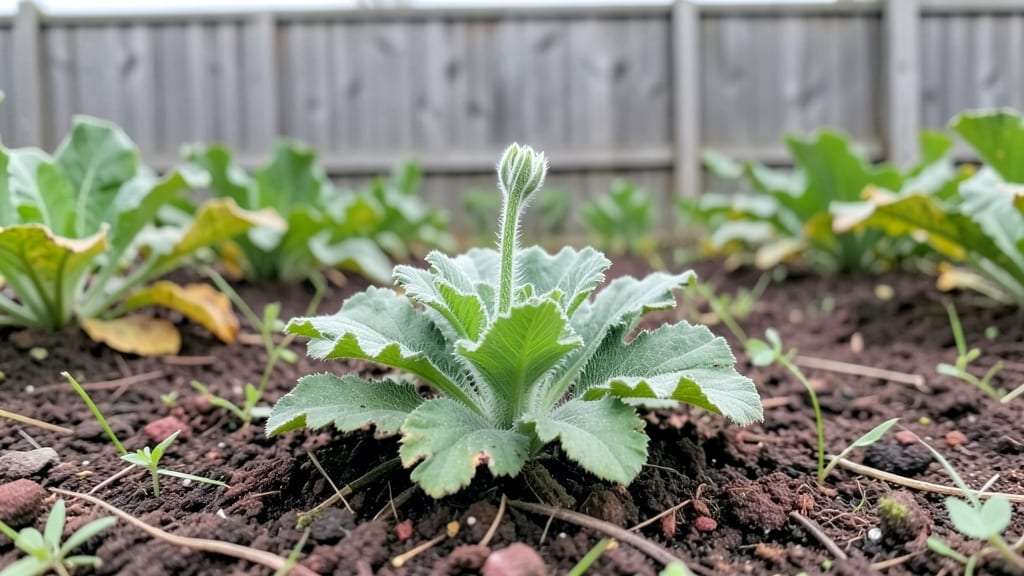
The identification of a larkspur seedling early saves you from weeding out what you thought were weeds—those first leaves look like tiny, fuzzy blue-green mittens stacked along a hair-thin stem, and nothing else in the garden mimics that exact combo. 🌱 The real giveaway?
The stems stay pale and almost translucent, while most weeds develop thicker, darker stalks.
Here’s the thing—most beginners mistake them for chickweed or forget they even planted larkspur until the flowers appear. The key is checking for those fuzzy, lobed leaves spaced every inch or so along the stem.
If your seedlings look like they’re wearing mittens, you’ve got larkspur. Ignore the color for now; even pale seedlings will develop the signature blue-green hue as they mature.
Once you spot them, give those seedlings bright but indirect light and keep the soil barely moist—not soggy. Overwatering turns those delicate stems to mush, and underwatering makes them stretch like overgrown toothpicks.
Within 3-4 weeks, you’ll see the first true leaves form, and by then, you’ll never confuse them with weeds again.
This works for both direct-sown seeds and transplants, whether you’re growing in full sun or partial shade. The trick is catching them before they get crowded—thin them to 6 inches apart once they hit 2 inches tall. That’s when the real magic begins.
Mistaking Young Plants for Weeds
Identifying larkspur seedlings correctly starts with understanding why they’re often confused with other plants—or even dismissed as weeds. These tiny sprouts share traits with many garden invaders, and their delicate appearance can make them easy to overlook or misjudge.
Below, we break down the key reasons why misidentification happens, so you can spot the real deal (and avoid pulling out your future blooms!).
Larkspur seedlings resemble other garden plants in their early stages, particularly those in the Ranunculaceae (buttercup) or Boraginaceae (borage) families. Their thin stems and lobed leaves can mimic:
- Sweet peas (Lathyrus odoratus) – Both have compound leaves, but larkspur’s are more deeply divided and grow in a rosette pattern.
- Delphiniums (Delphinium spp.) – Close relatives, but delphinium seedlings often have broader leaflets and a slightly hairier texture.
- Wild violets (Viola spp.) – Their heart-shaped leaves can fool gardeners, but violets lack the distinct "finger-like" lobes of larkspur.
💡 Pro Tip: Compare the leaf arrangement—larkspur seedlings grow in a basal rosette (close to the ground), while many weeds spread in a more erratic pattern.
Weeds like chickweed (Stellaria media) or dandelion (Taraxacum officinale) thrive in the same conditions as larkspur seedlings—moist, well-drained soil with partial shade. Their rapid growth and similar leaf shapes (especially when young) make them easy to mistake for:
- Chickweed: Both have small, rounded leaves, but chickweed’s are smooth and oval, while larkspur’s are lobed and slightly serrated.
- Dandelion: Early-stage dandelions have a single, undivided leaf, whereas larkspur’s first true leaves are deeply divided into 3-5 segments.
✨ Key Difference: Larkspur seedlings never have the milky sap of dandelions or the sticky stems of some weeds.
Lighting and soil conditions can alter how seedlings appear, leading to misidentification:
- Pale or yellowing seedlings: If grown in low light or poor soil, larkspur leaves may look weak and resemble nutrient-deficient weeds like purslane (Portulaca oleracea).
- Red or purple stems: Some larkspur varieties (like Consul Blue) develop purplish tinges under stress, mimicking red-stemmed weeds such as redroot pigweed (Amaranthus retroflexus).
- Variegated or spotted leaves: Environmental stress (e.g., overwatering) can cause larkspur seedlings to develop irregular patterns, confusing them with mottled-leaf weeds.
🔍 Actionable Fix: Use a hand lens (10x magnification) to inspect leaf edges—larkspur’s lobes are sharp and angular, while weed leaves are usually rounded or smooth.
Larkspur seedlings emerge in early spring, overlapping with:
- Early wildflowers (e.g., bluebonnets in Texas, columbines in the Pacific Northwest).
- Cool-season weeds (e.g., henbit in northern climates, spiderwort in the South).
📊 Regional Note:
Region
Common Look-Alikes
How to Tell Apart
Pacific Northwest
Columbia larkspur vs. foxglove seedlings
Foxglove leaves are lance-shaped and smooth; larkspur’s are deeply lobed.
Southern U.S.
Larkspur vs. blackfoot daisy
Daisy seedlings have hairy stems; larkspur stems are glabrous (smooth).
Mountain West
Larkspur vs. lupine seedlings
Lupine leaves are palmate (hand-shaped); larkspur’s are pinnately lobed.
Even experienced gardeners mix up seedlings when:
- Transplanting too early: If moved before true leaves form, larkspur may resemble grass-like weeds (e.g., crabgrass).
- Overcrowding: Dense plantings can cause seedlings to lean or stretch, mimicking legume weeds like clover.
- Ignoring stem texture: Larkspur stems are hollow and slightly waxy; many weeds have solid, fibrous stems.
💡 Quick Test: Gently pinch a seedling’s stem—if it snaps cleanly (like a stalk), it’s likely larkspur. If it fibers or resists, it’s probably a weed.
Quick Fixes for Seedling Confusion
Identifying larkspur seedlings can feel like solving a botanical puzzle—especially when similar-looking plants throw you off. But with the right approach, you can turn uncertainty into confidence. Below, we’ve mapped common challenges to practical solutions, so you can accurately spot and nurture your seedlings (or rule out lookalikes).
Problem: Larkspur seedlings often resemble delphiniums, snapdragons, or even foxgloves, making identification tricky.
Fix:
- 🔍 Compare leaf shapes: Larkspur leaves are deeply lobed or pinnate (feather-like) with sawtooth edges, while delphiniums have palmate lobes (like fingers spreading from a hand). Snapdragons, meanwhile, have simple, elongated leaves without deep cuts.
- 🌿 Check stem color: Young larkspur stems are hollow and often tinged purple or blue, whereas foxglove stems are solid and green.
- 📏 Measure growth rate: Larkspur seedlings grow taller and thinner faster than snapdragons, which stay bushier.
Prevention Tip: 💡 Label seedlings immediately after germination to avoid mix-ups later. Use toothpicks with plant names written in pencil for a temporary, eco-friendly marker.
Problem: Poor growth or yellowing leaves can mean misidentification—or an environmental issue.
Fix:
- 💧 Water wisely: Larkspur seedlings hate soggy soil but wilt in drought. Water deeply 2–3 times a week (not daily) to encourage strong roots.
- ☀️ Adjust sunlight: Too much direct sun scorches young leaves, while too little stretches seedlings. Aim for partial shade (morning sun, afternoon shade) until they’re 4–6 inches tall.
- 🌱 Transplant carefully: If seedlings are crowded, thin them out to 6–8 inches apart. Use a small trowel to avoid damaging roots.
Prevention Tip: ✨ Start seeds indoors 8–10 weeks before the last frost for a head start. Use seed-starting mix (not garden soil) to prevent damping-off disease.
Problem: Chewed leaves, spots, or wilting could signal pests (like aphids) or fungal issues.
Fix:
- 🐜 For pests: Spray seedlings with neem oil (mix 1 tsp per quart of water) or introduce ladybugs to control aphids naturally.
- 🍄 For fungus: Remove affected leaves and water at the base (not overhead) to keep foliage dry. A baking soda spray (1 tsp baking soda + 1 quart water + drop of dish soap) can prevent powdery mildew.
- 🌡️ Monitor soil temp: Larkspur seeds need 60–70°F soil to germinate. If too cold, use a seedling heat mat to speed up growth.
Prevention Tip: 🔥 Rotate planting spots yearly to avoid soil-borne diseases. Avoid planting larkspur where delphiniums or other Delphinium family plants grew last season.
Stuck? Run through this quick ID quiz: 1. Leaves: Deeply lobed or feather-like? ✅ Larkspur | Simple or palmate? ❌ (Probably not.)
- Stem: Hollow and purple-tinged? ✅ Larkspur | Solid and green? ❌
- Flowers (if any): Tall spikes with irregular, two-lipped blooms? ✅ Larkspur | Symmetrical flowers? ❌
Pro Tip: 🎯 Take photos of seedlings at different stages (leaf, stem, flower bud) and compare them to a larkspur growth chart online for side-by-side visuals.
Remember: The key to larkspur seedling success is patience and precision. With these fixes, you’ll go from guessing to gardening like a pro! 🌸
Frequently asked questions
How do I tell larkspur seedlings apart from chickweed?
Larkspur seedlings have deeply lobed leaves that look like tiny mittens, while chickweed leaves are smooth and oval. Also, larkspur stems stay pale and translucent, whereas chickweed stems are thicker and darker. Check for these fuzzy, finger-like lobes—if they’re there, it’s larkspur!
Why are my larkspur seedlings stretching so tall and thin?
This usually means they’re not getting enough light. Move them to a sunnier spot (but avoid direct midday sun) or use a grow light for 12-14 hours daily. Overcrowding can also cause stretching—thin seedlings to 6 inches apart once they’re 2 inches tall.
Can I transplant larkspur seedlings too early?
Yes, but avoid it if seedlings are smaller than 2 inches tall. Their delicate roots can get damaged, and they may resemble weeds like crabgrass. Wait until they have 2-3 true leaves (not just the first seed leaves) before transplanting.
What’s the best way to label my larkspur seedlings?
Use toothpicks with plant names written in pencil for a temporary, eco-friendly marker. Avoid plastic tags that can damage stems. Label immediately after germination to prevent mix-ups with weeds or other plants.