Size
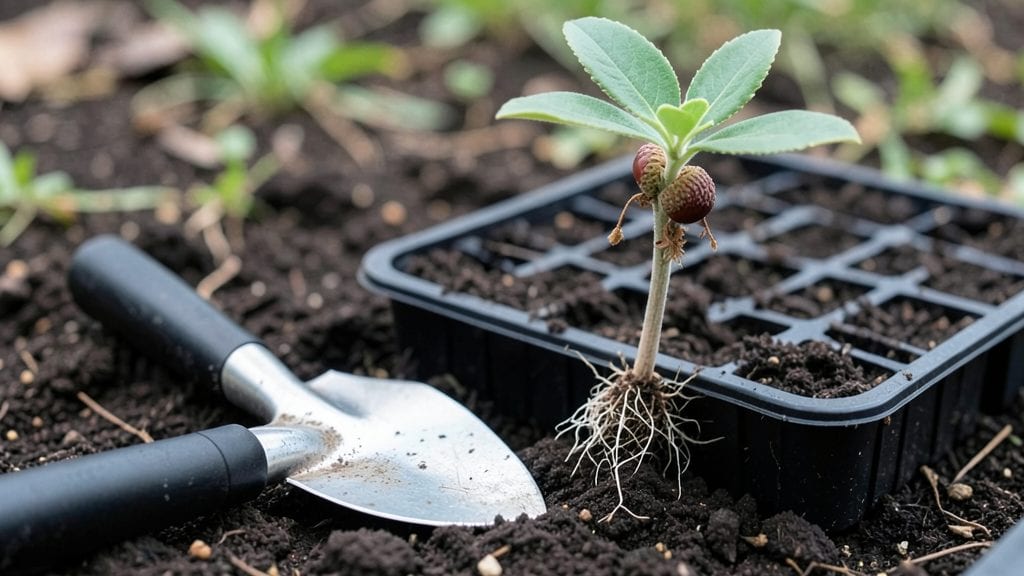
Growing acorn seeds into mighty oak trees starts with a single nut and a little winter magic. 🌰 I’ve watched tiny acorns transform into towering shade providers, and the process is simpler than most gardeners realize—though it does require patience.
The key lies in mimicking nature’s own germination tricks, like cold stratification, which tricks the seed into thinking spring has arrived.
You’ll need white oak or red oak acorns (bur oak works too), a damp paper towel or peat moss, a plastic bag, and a sunny spot for later.
The real work happens in the fridge for about 6-8 weeks, where the acorn soaks up moisture and chills just like it would buried in the forest floor. Most people skip this step and wonder why their acorns never sprout—don’t make that mistake.
Once stratified, plant the acorn 1 inch deep in well-draining soil and keep it moist but not soggy. Sunlight becomes critical after germination, with young saplings needing 6+ hours daily to thrive.
By year two, you’ll see real growth—though it’s a 10-year wait before the tree casts meaningful shade. Every stage feels like a reward for the wait.
Common challenges include mold during stratification or pests nibbling seedlings, but a little vigilance keeps them at bay. Native oaks also attract wildlife, making your yard a mini ecosystem. This isn’t a quick project—it’s a legacy. Ready to plant the future?
📚 In This Guide
- What you need
- Instructions
- Tips and common mistakes
- Wrapping up and next steps
What you need
- ● Fresh acorns: Collect 10–20 acorns from white oak (Quercus alba) or red oak (Quercus rubra)—avoid black oak (Quercus velutina) as they’re harder to grow.
- ● Potting soil: 1–2 gallons of well-draining, sterilized potting mix (avoid garden soil—it can harbor pests!).
- ● Small pots or seed trays: 3–5 containers (4–6 inches deep) with drainage holes.
- ● Spray bottle: For gentle watering (a 16–32 oz. misting bottle works best).
- ● Plastic wrap or humidity dome: To maintain moisture while seeds germinate.
- ● Label markers: To track planting dates and oak species.
- ● Seed stratification setup: A refrigerator (for cold treatment) or a peat moss/vermiculite mix in a sealed bag.
- ● Grow lights: A full-spectrum LED bulb (12–14 hours/day) if natural light is limited.
- ● Fungicide: A mild solution (like hydrogen peroxide at 3%) to prevent mold.
- ● Transplanting tools: A small trowel and biodegradable pots for easier outdoor transfer.
Step-by-step instructions for growing acorn seeds into oak trees
Here's how to transform acorns into towering oaks—patience and precision are key.
🌱 Step 1: Collect and Prepare Acorns for Stratification
Gather acorns from mature, healthy oaks in late fall—avoid those with holes or cracks, as they won’t germinate. Remove any remaining cap and rinse them in lukewarm water to clean off debris. Place them in a quart-sized container with a mix of moistened peat moss and perlite (equal parts). This mimics the natural winter chilling period oaks need to break dormancy.
Cover the container loosely with plastic wrap and refrigerate for 90-120 days at 35-40°F. Check monthly to ensure the mix stays damp but not soggy. You’ll see tiny white roots emerge after about 60 days—this is your signal stratification is working. Real talk: Skipping this step means waiting years for germination, if it happens at all.
💧 Step 2: Sow Stratified Acorns in Germination Trays
Once roots appear, plant each acorn ½ inch deep in individual 2-inch pots filled with a sterile seed-starting mix. Press the soil gently around the acorn to ensure good contact. Place the trays in a warm, bright location (65-75°F) with indirect light—direct sun will dry out the delicate seedlings. A humidity dome or plastic wrap helps retain moisture until germination.
Water lightly every 2-3 days, keeping the soil consistently moist but never waterlogged. You’ll see the first cotyledons (tiny leaves) push through the soil in 2-4 weeks. This is the moment that matters: If nothing emerges after 6 weeks, the acorn may have failed to break dormancy properly. Don’t give up—try another batch.
☀️ Step 3: Transplant Seedlings to Larger Pots
When seedlings reach 3-4 inches tall (usually 4-6 weeks after germination), transfer them to 5-inch pots with fresh potting mix. Handle the roots gently—oaks are sensitive to disturbance. Place each seedling 1 inch deeper than it was in the germination tray to encourage strong root development. Keep them in partial shade for the first 2 weeks to reduce transplant shock.
Gradually introduce them to morning sun over 10-14 days, then full sun by 8 weeks. You’ll notice new leaves developing with a deeper green hue—this signals the plant is adapting. Water deeply once a week, allowing the top 1 inch of soil to dry between waterings. Overwatering now will rot the roots before they’re established.
🪴 Step 4: Acclimate and Plant Outdoors
By spring of the second year, your seedlings should be 12-18 inches tall with a sturdy stem. Choose a permanent outdoor location with full sun and well-draining soil. Dig a hole twice as wide as the root ball but no deeper. Amend the native soil with compost to improve fertility—oaks thrive in slightly acidic to neutral soil (pH 6.0-7.5).
Water the hole thoroughly before placing the seedling in, then backfill with soil, tamping gently to remove air pockets. Stake only if the stem is top-heavy (young oaks rarely need support). Mulch with 2 inches of wood chips, keeping it 6 inches away from the trunk to prevent rot. Water deeply once a week for the first month, then taper to every 2 weeks as roots establish.
Tips & tricks for growing acorn seeds into oak trees
Turning acorns into towering oaks requires more than just patience—it demands understanding the delicate balance of nature's timing and conditions. Here's what I've learned from years of growing oak seedlings that thrive.
Stratification Success: The 90-120 day cold stratification at 35-40°F is non-negotiable for breaking dormancy. I've found that using a refrigerator's crisper drawer—where humidity is naturally higher—mimics forest conditions perfectly. Place a small dish of water in the container to maintain consistent moisture without making the mix soggy. This is where most failures happen: either too dry or too warm.
Germination Environment: When you see those first white roots after 60 days, resist the urge to rush germination. The ideal warm location should be bright but indirect—think of it as morning sun through sheer curtains. I've had the best results with a south-facing window with sheer curtains or a grow light 6-12 inches above the trays. Direct sunlight at this stage will cook the delicate seedlings before they even sprout.
Transplanting Technique: The 1-inch deeper planting in Step 3 is crucial for developing strong root systems. When transferring to 5-inch pots, I make a small trench in the soil and lay the seedling at a slight angle, then cover it. This encourages roots to grow downward while still allowing the stem to stand upright. Handle the roots like you would a newborn's fingers—gentle but firm contact only.
Sunlight Transition: The gradual sunlight introduction over 10-14 days prevents transplant shock that can kill young seedlings. I start with just 1 hour of morning sun on day one, then add 30 minutes each subsequent day. By week 2, they're ready for full sun by 8 weeks. Watch for the leaves—if they turn yellow or crisp at the edges, you're moving too fast. The deeper green hue is your success signal.
Pro Tips for Grow Acorn Seeds
- Turning acorns into towering oaks requires more than just patience—it demands understanding the delicate balance of nature's timing and conditions.
- Stratification Success: The 90-120 day cold stratification at 35-40°F is non-negotiable for breaking dormancy.
- Germination Environment: When you see those first white roots after 60 days, resist the urge to rush germination.
Frequently asked questions
Got questions about growing acorn seeds?
You’re not alone! Here are some of the most common ones—plus straightforward answers to help you succeed.
How long does it take for an acorn to sprout?
Most acorns sprout in 4 to 12 weeks, depending on species, moisture, and temperature. White oaks (like bur oaks) can take up to 6 months or longer. Patience is key—keep the soil consistently moist and warm (60–70°F) to speed things up!
Can I plant acorns in winter?
Not ideal! Acorns need warmth and moisture to germinate. Plant them in early fall (just before the ground freezes) or spring (after the last frost). If you must store them, refrigerate in damp peat moss for 3–4 months to break dormancy. →
What if my acorn won’t sprout?
Try these fixes:
- Check viability: Float the acorn in water—if it sinks, it’s likely viable. If it floats, it’s rotten.
- Scarify it: Lightly sand the hard shell to help water penetrate.
- Stratify longer: Extend cold treatment to 3–6 months for stubborn species.
- Use rooting hormone: Dip the acorn in hormone powder before planting for a boost.
Can I grow acorns indoors?
Yes! Plant them in a small pot with well-draining soil and place near a sunny window. Keep the soil moist and transplant outdoors after the last frost when the seedling is 3–4 inches tall. Just be prepared for slower growth indoors—oaks love space! →
How do I know if my acorn is from a good tree?
Look for these signs of a healthy acorn:
- Plump, heavy for its size (not shriveled).
- Firm, not moldy or soft shell.
- Collected from a mature oak tree (avoid acorns from young trees—they’re less viable).
Pro Tip:
Label your acorns! Different oak species have unique growth rates and care needs. A simple toothpick with the tree name and date saves future headaches.
Wrapping up and next steps
Growing acorn seeds into mighty oak trees is a rewarding journey that blends patience, care, and a touch of nature’s magic! 🌱 With the right techniques—from proper stratification to consistent moisture and sunlight—you’re well on your way to nurturing a future giant.
Remember, every oak starts as a tiny seed, and your effort today could shape a legacy for generations.
Ready to take the next step? Once your saplings are thriving, explore transplanting tips or join local conservation groups to share your green thumb with others. The world needs more trees—and your garden could be the start of something extraordinary! 🌳✨