Propagation
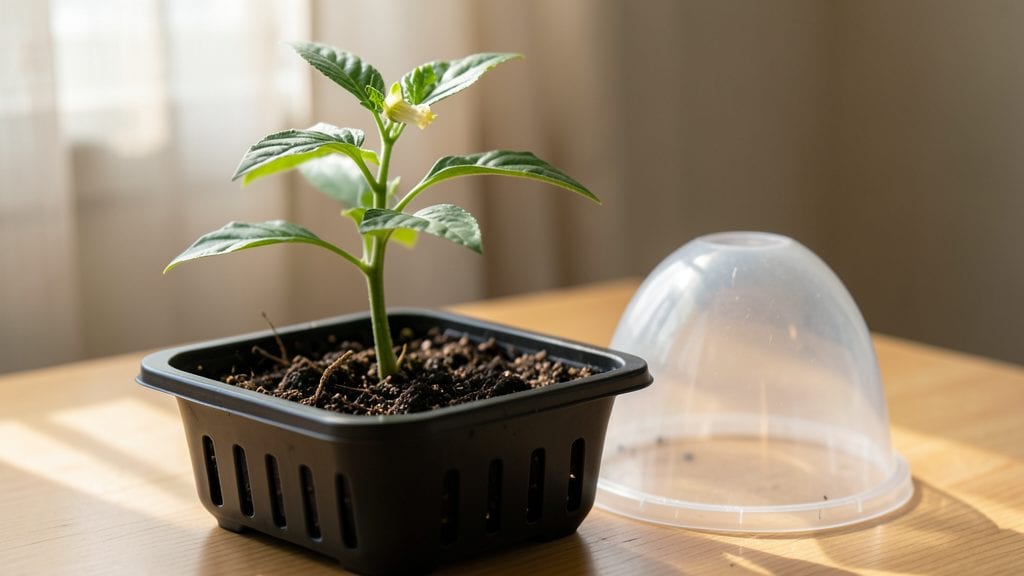
My first batch of early jalapeño seedlings taught me that layered chill prep is the secret to stocky, heat-resistant plants that outperform store-bought transplants. 🌱 The trick isn't just cold treatment—it's timing it right with your last frost date and matching it to your growing zone.
I've lost count of how many leggy, weak seedlings I started before I cracked this system.
Start seeds indoors 8-10 weeks before your last frost, using a 70-75°F seedling heat mat to speed germination. Once sprouts appear, move them under 12-14 hours of bright light daily—no windowsill will cut it. The key to avoiding leggy seedlings?
Keep them 1-2 inches from the light source and use a T5 grow light if natural light is weak. Most beginners overwater here, drowning the roots before they even get a chance.
After 2-3 weeks, your seedlings should be 3-4 inches tall with 3-4 true leaves—that's when you introduce the cold treatment. Place them in a refrigerator (36-40°F) for 10-14 days, then bring them back to warm conditions.
This mimics their natural mountain habitat and hardens them off for transplanting. You'll see thicker stems and disease-resistant foliage that can handle real-world heat waves.
Transplant outdoors 2 weeks after your last frost, when soil temps hit 60°F consistently. Bury stems deeper than usual—half the seedling's height—to encourage stronger root growth. Mulch heavily to retain moisture and prevent soil temp swings.
The payoff? Plants that bolt later, produce more peppers, and handle summer heat like they were born for it.
Root Causes Of Premature Growth
Understanding why your early jalapeño seedlings bolt or mature too quickly is key to preventing it—and saving your harvest. These issues often stem from environmental or cultural mismanagement. Below, we break down the real culprits behind early development, so you can adjust your approach before it’s too late.
Jalapeños (Capsicum annuum) are tropical plants that thrive in consistent warmth (70–85°F during the day, 60–70°F at night). When seedlings experience sudden heat spikes (above 90°F) or cold snaps (below 50°F), they trigger a stress response that mimics maturity signals.
This can cause: - Premature flowering (bolting) due to ethylene gas release from stress. - Stunted growth if roots can’t keep up with metabolic demands. - Weak stems that snap under pepper weight.
Why it happens:
- Daytime heat waves accelerate metabolic processes, tricking the plant into thinking it’s time to reproduce.
- Nighttime chills disrupt photosynthesis, forcing the seedling to redirect energy toward survival instead of vegetative growth.
- Poor airflow (from overcrowding or humidity) traps heat, exacerbating the problem.
Actionable fix:
- Use row covers or shade cloth (30–50%) during extreme heat.
- Move containers to partial shade if outdoors.
- Use a seedling heat mat (70–75°F) to stabilize nighttime temps.
Jalapeños need 12–16 hours of light daily to grow strong and slow. Without enough light:
- Leggy, weak seedlings stretch toward any available light (etiolation).
- Chlorophyll production drops, reducing energy for growth.
- Early flowering occurs as the plant prioritizes reproduction over foliage.
Why it happens:
- Natural daylight shortens in early spring or late fall (below 12 hours).
- Indoor grow lights are too weak or placed too far (e.g., >12 inches away).
- Cloudy or rainy weather blocks sunlight for extended periods.
Actionable fix:
- Supplement with LED grow lights (12–16 hours/day, 2–4 inches above seedlings).
- Rotate seedlings daily for even light exposure.
- If outdoors, extend the season with a low tunnel or cold frame.
Jalapeños hate soggy roots. Excess moisture leads to:
- Root rot (fungal infections like Phytophthora), which stresses the plant.
- Oxygen deprivation in roots, slowing nutrient uptake.
- Early bolting as the plant perceives "flood conditions" as a survival trigger.
Why it happens:
- Overzealous watering (especially with hard water, which raises soil salinity).
- Compacted or clay-heavy soil that doesn’t drain well.
- Lack of containers with drainage holes, causing waterlogging.
Actionable fix:
- Use well-draining soil mixes (50% potting soil, 30% perlite, 20% compost).
- Water only when the top inch is dry—stick your finger in to check!
- Elevate pots on saucers or racks to prevent water pooling.
While nitrogen (_N_) fuels leafy growth, too much (especially in early stages) can:
- Delay flowering at first, but later cause premature bolting as the plant shifts energy.
- Weaken stems by promoting soft, fragile tissue.
- Attract pests (like aphids), which further stress the seedling.
Why it happens:
- Over-fertilizing with high-N formulas (e.g., 30-10-10) before seedlings are established.
- Using fresh manure or compost too early (can "burn" tender roots).
- Ignoring soil tests—some garden soils are already nitrogen-rich.
Actionable fix:
- Wait 3–4 weeks before fertilizing seedlings (let them grow 2–3 true leaves first).
- Use a balanced fertilizer (10-10-10 or 5-5-5) at half-strength.
- Side-dress with compost tea (low-N, rich in microbes) instead of synthetic boosts.
Not all jalapeños react the same! Some varieties are more prone to early bolting due to:
- Short-day plant traits (common in heirloom or open-pollinated types).
- Hybrid sensitivity to temperature shifts (e.g., 'Early Jalapeño' vs. 'Big Jim').
- Age-related triggers—older seedlings (beyond 8 weeks) may bolt faster.
Why it happens:
- Seed source matters: Some seeds are bred for longer vegetative phases, while others prioritize early fruit.
- Daylength changes (e.g., moving from indoors to outdoors in spring) can confuse the plant’s internal clock.
- Stress from transplant shock (even mild) can trigger bolting in sensitive varieties.
Actionable fix:
- Choose bolt-resistant varieties like 'Carolina Reaper' (slower to bolt) or 'Jalapeño M' (hybrid).
- Start seeds indoors 8–10 weeks before last frost to avoid rushed transitions.
- Use blackout grow tents indoors to control light cycles if needed.
Pests like aphids, spider mites, or fungal pathogens (e.g., powdery mildew) stress seedlings by:
- Sapping nutrients (aphids inject toxins that alter growth hormones).
- Damaging foliage, reducing photosynthesis.
- Triggering ethylene production, which can induce early flowering.
Why it happens:
- Crowded seedlings create humid microclimates ideal for pests.
- Weak seedlings (from poor light or nutrients) are easier targets.
- Outdoor placement exposes them to local insect populations.
Actionable fix:
- Isolate new seedlings for 1–2 weeks to monitor for pests.
- Spray with neem oil (preventative) or insecticidal soap (for infestations).
- Encourage beneficial insects (ladybugs, lacewings) with companion plants like basil.
When seedlings are too close together, they:
- Compete for light, water, and nutrients, leading to weak, stressed plants.
- Develop shallow root systems that can’t support later growth.
- Release stress hormones that accelerate maturity.
Why it happens:
- Thin seedlings too late (after they’ve already outgrown their space).
- Using small pots (under 4 inches in diameter) that restrict root growth.
- Skipping the "hardening off" process before transplanting.
Actionable fix:
- Thin seedlings to 12–18 inches apart once they have 2–3 true leaves.
- Upot into 5–7 inch containers if growing indoors before transplanting.
- Space rows 18–24 inches apart in the garden to allow airflow.
Pro Tip: 💡 Keep a growth journal! Track temps, light hours, and watering to spot patterns. If bolting happens repeatedly, adjust one variable at a time (e.g., light first, then heat) to isolate the cause.
Quick Fixes for Stalled Seedlings
Reviving early jalapeno seedlings starts with diagnosing their struggles—but once you know the root cause, the solutions are often simpler than you think. Below, we’ve mapped common issues to practical, step-by-step fixes, plus prevention tips to keep your peppers thriving from seed to harvest. No green thumb required!
Signs: Yellowing leaves, mushy stems, or seedlings that topple like Jenga towers.
Fix It:
- 🔥 Pause Watering Immediately – Let the soil dry out completely before watering again. Stick your finger 1 inch deep; if it’s damp, wait.
- 🍳 Repot in Fresh, Dry Mix – Gently remove seedlings and transfer them to a well-draining pot (like a seedling tray with drainage holes) filled with a 50/50 mix of potting soil and perlite or coconut coir.
- ⏰ Monitor Moisture – Water only when the top inch feels dry. Use a spray bottle for misting if needed, but avoid soggy soil.
- 🌡️ Boost Airflow – Place a small fan (on low) near the tray for 10–15 minutes daily to prevent fungal growth.
Prevent It:
- Use terracotta pots (they wick away moisture).
- Bottom-water seedlings by placing pots in a tray of water for 10 minutes—never from above.
- 💡 Pro Tip: Add a handful of sand or vermiculite to your soil mix for extra drainage.
Signs: Tall, spindly stems with tiny leaves, leaning toward the light like sunbathing cats.
Fix It:
- 👨🍳 Move Them Closer to Light – Seedlings need 12–16 hours of bright light daily. If using grow lights, position them 2–3 inches above the plants (adjust as they grow).
- 🔪 Prune the Stems (Gently!) – Snip the top 1–2 inches of the longest stems to encourage bushier growth. Use clean scissors and make cuts at a 45-degree angle.
- 🥘 Rotate Daily – Turn the tray 180° each day so seedlings grow straight (not lopsided).
- ✨ Supplement with Sun – If natural light is weak (e.g., winter), add a full-spectrum LED grow light on a timer.
Prevent It:
- Start with light-optimized setups: Place trays on a south-facing windowsill or under lights from day one.
- 🎯 Use reflective surfaces (like aluminum foil on walls) to bounce light around.
- Avoid overcrowding—seedlings compete for light. Thin to 1 plant per 2-inch cell if needed.
Signs: White fuzzy mold (powdery mildew), black spots (damping-off), or seedlings collapsing suddenly.
Fix It:
- 🔥 Remove Infected Seedlings – Toss them in the trash (not compost!) to stop the spread.
- 🍳 Treat with Natural Fungicide – Mix 1 tsp baking soda + 1 quart water + a drop of dish soap, then spray lightly on soil and leaves. Repeat every 5–7 days.
- 🌡️ Improve Airflow – Space seedlings 1–2 inches apart and use a fan on low to dry leaves quickly.
- 🔪 Sterilize Tools – Wash pots, trays, and scissors with 1 part bleach to 9 parts water to kill spores.
Prevent It:
- 💡 Water at the base (avoid wetting leaves).
- Use sterilized soil – Bake potting mix at 200°F for 30 minutes to kill pathogens, or buy fungicide-treated seedling mix.
- Rotate crops – Never reuse soil from infected seedlings without sterilizing.
Signs: Slow growth, purple stems (phosphorus deficiency from cold stress), or seedlings wilting despite moist soil.
Fix It:
- 🌡️ Move to a Warmer Spot – Ideal temp: 70–85°F during the day, 60°F at night. Avoid drafts (AC vents, open windows).
- 🍳 Use a Heat Mat – Place a seedling heat mat (or a warm water bottle wrapped in a towel) under the tray for gentle warmth.
- 🥘 Cover with Plastic – Tent seedlings with clear plastic wrap (remove daily for airflow) to trap heat and humidity.
- ✨ Add Mulch – Sprinkle a thin layer of straw or shredded leaves on the soil to insulate roots.
Prevent It:
- Start seeds indoors 8–10 weeks before the last frost (jalapeños hate cold!).
- Hardening off gradually – Once seedlings are 3 inches tall, acclimate them to outdoor temps over 7–10 days before transplanting.
💡 Bonus Tip: Keep a seedling journal! Note watering schedules, light sources, and growth patterns. This helps you spot issues before they become crises.
Frequently asked questions
How do I know when my early jalapeño seedlings are ready to transplant?
Seedlings are ready when they have 3-4 true leaves and are about 3-4 inches tall. They should also be sturdy enough to handle gentle tugging without toppling. Transplant outdoors 2 weeks after your last frost date, once soil temperatures reach 60°F consistently.
Why are my jalapeño seedlings growing too tall and leggy?
Leggy seedlings usually mean they're not getting enough light. Move them to a sunnier spot or use a grow light (2-4 inches above plants) for 12-16 hours daily. Rotate the tray daily so they grow straight, and consider pruning the top 1-2 inches to encourage bushier growth.
What's the best soil mix for early jalapeño seedlings?
Use a lightweight, well-draining mix like 50% potting soil, 30% perlite, and 20% compost. Avoid garden soil—it compacts easily and can harbor diseases. For extra drainage, add a handful of vermiculite or sand. Always use containers with drainage holes to prevent waterlogging.
How often should I water jalapeño seedlings?
Water when the top 1 inch of soil feels dry—usually every 2-3 days depending on humidity. Use a spray bottle for misting or water at the base to avoid wetting leaves. Overwatering is the #1 killer of seedlings, so always check moisture before watering again.
Can I use the cold treatment method with container-grown seedlings?
Yes! Place your seedlings in a refrigerator (36-40°F) for 10-14 days to harden them off. This mimics their natural mountain habitat and helps prevent transplant shock. Return them to warm conditions afterward, and they'll develop thicker stems and better disease resistance.