
Companion Plants
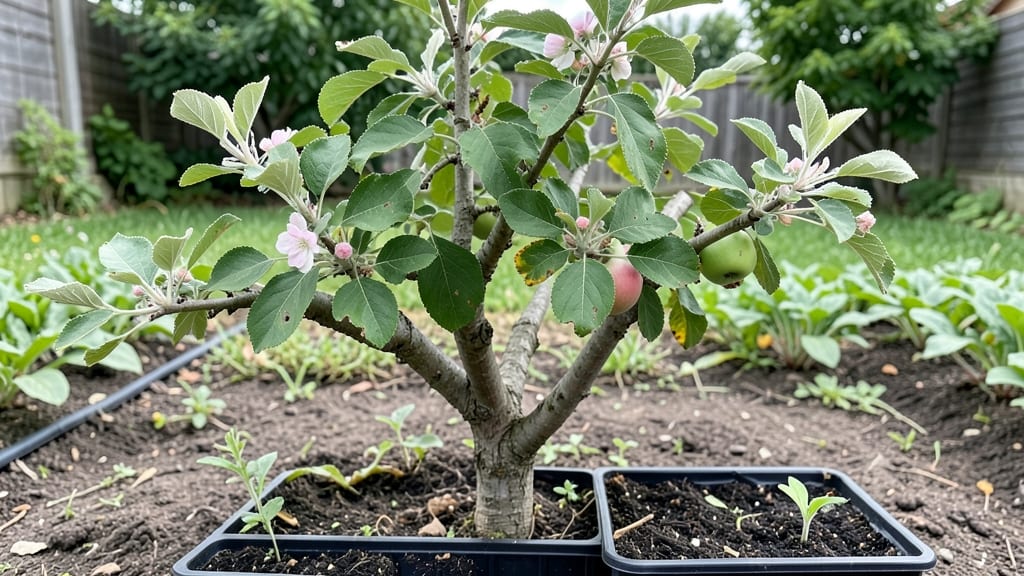
You can plant an apple seed to grow a tree, but the resulting fruit won't match the parent apple—seeds produce unpredictable offspring due to genetic variation from cross-pollination. Fruit production may take years or never happen, and the apples will likely be smaller, tart, and unlike the original variety.
Apple seeds come from cross-pollinated flowers, meaning each seed carries a unique mix of traits from two different parent trees. 🌱 This natural variation is why seed-grown apples rarely resemble store-bought varieties.
For consistent fruit quality, commercial growers use grafting—attaching a scion (desired variety) to a rootstock—rather than relying on seeds. Even if your seedling survives, it might take 10-15 years before it bears fruit, if at all, and those apples could be tiny or overly tart.
If you're still curious, try planting seeds in well-draining soil with full sunlight and keep the soil moist but not soggy. Just remember: patience is key, and the tree might surprise you with unexpected traits! 🌳
💡 In This Article
- Why Apple Seedlings Rarely Match the Parent Tree
- How to Grow an Apple Tree from Seed (Step-by-Step)
Why apple seedlings rarely match the parent tree
Apple seeds carry genetic information from two parent trees because apple flowers are cross-pollinated by bees, wind, or other pollinators. This means each seed contains a unique combination of traits from different varieties, creating what scientists call hybrid vigor—but also unpredictable results.
For example, a seed from a Granny Smith apple might grow into a tree producing tart, yellow fruit resembling a Golden Delicious instead of the original green variety. 🌳 The genetic lottery makes seed-grown apples a gamble rather than a guarantee.
Commercial orchards avoid this unpredictability by using grafting, where a scion (a branch from the desired apple variety) is attached to a rootstock. This ensures the tree produces identical fruit to the parent.
Seed-grown trees, however, may take 10-15 years to bear fruit—and even then, the apples could be small, misshapen, or lack the sweetness of the original. The genetic variation also means disease resistance isn't guaranteed, unlike grafted trees bred for specific conditions.
Pollen plays a critical role in this variation. A single apple tree can receive pollen from dozens of other varieties within a 2-mile radius, depending on wind and bee activity. This cross-pollination creates offspring with traits like size, color, or flavor that differ wildly from the parent.
For instance, a seed from a Honeycrisp might grow into a tree producing apples with a Fuji-like crunch but a McIntosh-style tartness. 🍏 The unpredictability is part of nature’s design, but it’s why gardeners and farmers rarely rely on seeds for fruit production.
Seed-grown apple trees also face other challenges. Many seeds carry polyembryonic traits, where multiple embryos develop from a single seed, leading to genetically identical seedlings—but even these often lack the desirable traits of the parent.
Additionally, apple seeds contain cyanogenic glycosides, compounds that can be toxic if ingested raw. This is why seeds must be stratified (chilled for 60-90 days) to break dormancy and ensure safe germination.
For consistent results, orchardists use controlled pollination and grafting. But if you’re experimenting at home, seed-grown trees can still be fascinating—just don’t expect the same apples you started with. The journey from seed to tree is a lesson in genetic diversity and the beauty of nature’s unpredictability. 🌱
Even if your seedling doesn’t produce perfect fruit, it might develop unique traits worth preserving. Some gardeners collect seeds from their favorite apples, plant them, and document the results over decades.
This patient approach has led to accidental discoveries of new varieties, like the Anna apple, which originated from a seed planted in the 1800s. The key is embracing the experiment!