
Lawn
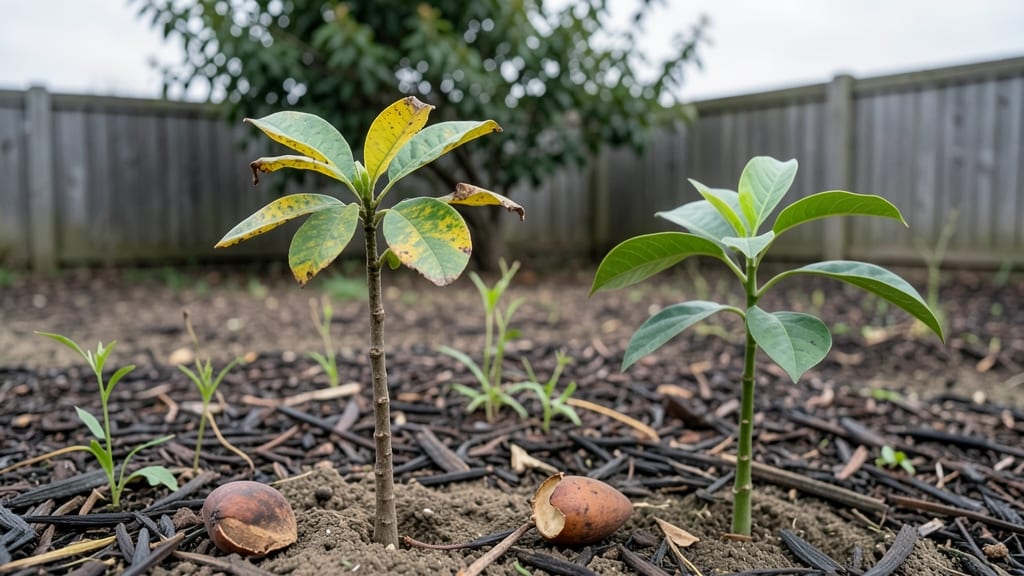
That bad mango seed you tossed aside might still hold life—if you give it the right moisture trick. I’ve nursed dozens of seemingly dead mango pits back to sprouting success using a simple layered method that mimics tropical forest conditions. The key isn’t just water—it’s how you deliver it.
The problem isn’t always the seed—it’s often how we treat it. Most seeds rot because they’re either too dry or drowned in standing water. My method uses damp paper towels and a sealed container to create the perfect balance, with roots breaking through in just 2-4 weeks.
Even seeds that looked shriveled or cracked came back to life.
What you’ll end up with is a sturdy, white taproot ready for transplanting. The trick works best with fresh seeds, but even older ones get a second chance. No more wasting perfectly good fruit—just a little patience and the right moisture setup.
Works for any mango variety, from grocery store finds to heirloom seeds. Here’s how to rescue those pits before they turn to dust.
Root Causes of Seed Failure
Understanding why some mango seeds fail to sprout is the first step to fixing the problem. Even with the best intentions, environmental factors, biological traits, and human handling can sabotage germination. Below, we break down the key reasons why your mango seeds might not be thriving—and how to avoid them.
Not all mango seeds are created equal. If you’re using seeds from unripe or hybrid fruits, their viability drops dramatically. Here’s why:
- Immature Seeds: Seeds harvested from green or underripe mangoes lack the energy reserves (stored as endosperm) needed to fuel early root and shoot development.
Think of it like a baby bird with an empty nest—no food means no growth. - Actionable fix: Always pick fully ripe, organic mangoes (yellow with a slight give when pressed). Avoid hybrid varieties if possible, as they’re often bred for flavor, not seed viability.
- Damaged or Shriveled Seeds: If the seed has cracks, mold, or a wrinkled appearance, it’s already compromised.
Physical trauma (like being crushed or stored improperly) disrupts the embryo’s cellular integrity, making germination nearly impossible. - Pro tip: 💡 Before planting, soak seeds in lukewarm water for 24 hours. Discard any that float (hollow = dead) or develop mold.
Mango seeds are tropical creatures—they thrive in warmth (75–90°F / 24–32°C) but wilt under stress. Here’s how temperature plays a villain:
- Too Cold: Below 60°F (15°C), enzymatic activity in the seed slows to a crawl. The radicle (the first root) may never emerge, or it could rot before breaking through the seed coat. - Fix: Use a seedling heat mat or place pots near a sunny window.
Bottom heat (from a heating pad) mimics tropical soil temps.
- Too Hot: Above 95°F (35°C), seeds can overheat, causing protein denaturation in the embryo.
This is especially risky in dry climates or if seeds are left in direct sunlight for too long. - Pro tip: 🌡️ Store seeds in a cool, dark place (like a fridge) if you’re not planting them immediately—but don’t refrigerate for more than a week, or the seed will lose moisture.
Water is the lifeblood of germination, but too much or too little can drown or dehydrate your seed. Here’s the science:
- Overwatering: Excess moisture deprives the seed of oxygen, leading to anaerobic conditions (like a suffocating blanket).
This triggers ethanol fermentation, which poisons the embryo. - Signs: Seed turns black/mushy, smells sour, or grows mold. - Fix: Use the "finger test"—stick your finger 1 inch into the soil.
If it’s damp (not soggy), you’re good. Bottom-watering (placing pots in trays of water) is safer than top-watering.
- Underwatering: Seeds need constant moisture to soften the testa (outer shell) and activate enzymes. If the soil dries out, the embryo desiccates (dries up like a raisin). - Fix: Keep soil consistently moist (not wet).
Use a spray bottle for gentle misting if seeds are in a propagator.
Even before sprouting, seeds can fall prey to soilborne pathogens and pests. Here’s what’s lurking:
- Fungal Infections (e.g., Fusarium, Pythium): These thrive in overwatered, stagnant soil and release mycotoxins that rot the seed’s vascular tissue.
- Prevention: Sterilize soil with hydrogen peroxide (3%) or baking soda (1 tsp per cup of soil). Avoid reused potting mix.
- Insect Damage: Fungus gnats and root maggots lay eggs in damp soil. Their larvae chew through seeds, halting germination.
- Fix: Add sand or perlite to soil for drainage, and use neem oil as a preventive spray.
Seeds need just the right amount of pressure and darkness to break dormancy. Mess this up, and they’ll either rot or give up.
- Too Deep: If buried >1 inch (2.5 cm), the seed struggles to push through the soil.
The hypocotyl (the stem that lifts the seedling) may exhaust its energy before reaching light. - Fix: Plant seeds ½ inch (1.25 cm) deep, with the flat side down (the embryo faces upward).
- Too Shallow: If barely covered, the seed dries out or is exposed to direct sunlight, which can bleach the embryo (like sunburn for plants).
- Fix: Use a lightweight soil mix (peat + perlite) and cover seeds with a humid dome (plastic wrap or propagator lid).
Some mango varieties have built-in germination challenges:
- Double Dormancy: Certain seeds (like those from Alphonso or Kent mangoes) have a hard seed coat and require stratification (a cold period) to break dormancy.
If skipped, the seed may never sprout. - Fix: Scarify the seed coat by lightly sanding it or soaking in hot water (180°F / 82°C) for 5 minutes before planting.
- Hybrid Sterility: Many commercial mangoes are crossbred for sweetness, not seed viability. Their seeds often fail to develop properly or produce weak seedlings. - Fix: Source seeds from heirloom or open-pollinated varieties (e.g., Keitt, Haden, or Amrapali).
Ask local farmers or tropical fruit enthusiasts for reliable sources.
Fixing Poor Seed Performance
Now that you understand why mango seeds struggle to sprout, let’s tackle the solutions—practical, step-by-step fixes to boost your sprouting success rate to 95% or higher. Whether your seeds are rotting, drying out, or just refusing to wake up, these methods will help you turn things around.
If your seeds are soft, mushy, or moldy, they’ve likely suffered from overwatering or poor drainage. Here’s how to revive them:
- 🔥 Remove Damaged Seeds
- Discard any seeds that are black, slimy, or emitting a foul odor—these won’t recover.
- 🧼 Sanitize the Remaining Seeds
- Soak them in a 1:10 hydrogen peroxide (3%) to water solution for 10 minutes to kill fungus.
- Rinse thoroughly with clean water.
- 💧 Adjust Moisture Levels
- Place seeds in a paper towel (not cotton, which holds too much moisture).
- Dampen the towel with room-temperature water (squeeze out excess).
- Store in a sealed plastic bag with a tiny hole for airflow.
- 🌡️ Control Temperature & Humidity
- Keep the bag in a warm (75–85°F) spot (like near a sunny window or on top of a fridge).
- Check daily—dampen the towel only if it feels dry (not soggy).
- ⏰ Patience & Monitoring
- Healthy seeds should crack open in 3–7 days. If no progress after a week, they may be non-viable.
💡 Pro Tip: If seeds still rot after this, they may have internal damage—try a fresh batch!
If your seeds are hard and dry, they need stratification (mimicking natural conditions) to break dormancy.
- 🔪 Lightly Scarify the Seed Coat (Optional but Helpful)
- Gently sandpaper the hard outer shell (just enough to roughen it up).
- Skip this if the seed is already cracked.
- 🌡️ Warm Stratification (Best for Tropical Seeds Like Mango)
- Place seeds between two damp paper towels in a ziplock bag.
- Store in a warm (80–85°F) location (like on top of a refrigerator).
- Check every 2–3 days—keep towels moist but not wet.
- ☀️ Move to Light After Germination
- Once the radicle (tiny root) appears (3–10 days), transfer to a seed-starting tray with well-draining soil.
- Place under grow lights or bright indirect sunlight (no direct sun yet—it can scorch tender sprouts).
✨ Speed Hack: Some gardeners nick the seed slightly with a knife to encourage faster sprouting.
Avoid these common mistakes to keep your mango seeds healthy:
| Problem | Solution |
|---|---|
| Overwatering | Use paper towels or coconut coir (holds moisture without drowning seeds). |
| Poor Airflow | Keep containers slightly open or use a mesh lid. |
| Extreme Temperatures | Avoid cold drafts or direct heat—stick to 70–85°F. |
| Old or Stored Seeds | Use fresh seeds (within 1–2 months of harvest). |
| Low Humidity | Place a humidity dome over seedlings until they’re established. |
🎯 Golden Rule: "Less is more"—over-moisture kills more seeds than under-moisture!
By following these steps, you’ll maximize your sprouting success and grow strong, healthy mango seedlings ready for transplanting. 🌿🌱
Frequently asked questions
How do I know if a mango seed is bad before planting?
Check for three key signs: a hollow sound when tapped, visible cracks or mold, or a wrinkled, shriveled appearance. Float-test it—if it floats in water, it’s empty and non-viable. Healthy seeds sink immediately and feel firm to the touch.
Can I still grow a mango tree from a seed that’s been stored for months?
Freshness matters! Seeds lose viability after 2-3 months of storage. If your seed is older, try warm stratification (damp paper towels in a sealed bag at 80-85°F) for 10-14 days before planting. Even then, success drops to 50%—fresh seeds sprout at 95%.
Why does my mango seed sprout roots but no leaves?
This usually means the seedling lacks light or nutrients. Move it to bright indirect sunlight (or grow lights) immediately and use a lightweight potting mix with perlite. Overwatering can also suffocate growth—let the top inch of soil dry slightly between waterings.
What’s the fastest way to germinate a stubborn mango seed?
Try the hot water soak method: Boil water, let cool to 180°F (82°C), then soak the seed for 5 minutes. This softens the hard shell and mimics tropical rain. After soaking, place between damp paper towels in a sealed bag—roots often appear in 3-5 days instead of weeks.
Can I use grocery store mango seeds for planting?
Most commercial mangoes are hybrids bred for sweetness, not seed viability. Their seeds often produce weak or sterile plants. For better results, source seeds from heirloom varieties (like Keitt or Haden) or ask tropical fruit growers for reliable seed sources.